‘The Pacific is family’ is a truth we hold close. We are wantok, vuvale, drawn together not just by geography but by culture, and by a shared understanding of a world that is not only interconnected but dependent on the health of the vast oceans and seas that connect us.
When we extend our Pacific family to include Australia, we find a family member that dwarfs the rest of us, with an economy and population many times larger. Our links with Australia matter for our economies, our social services, and for the ongoing connections between the Pasifika diaspora and their home communities.
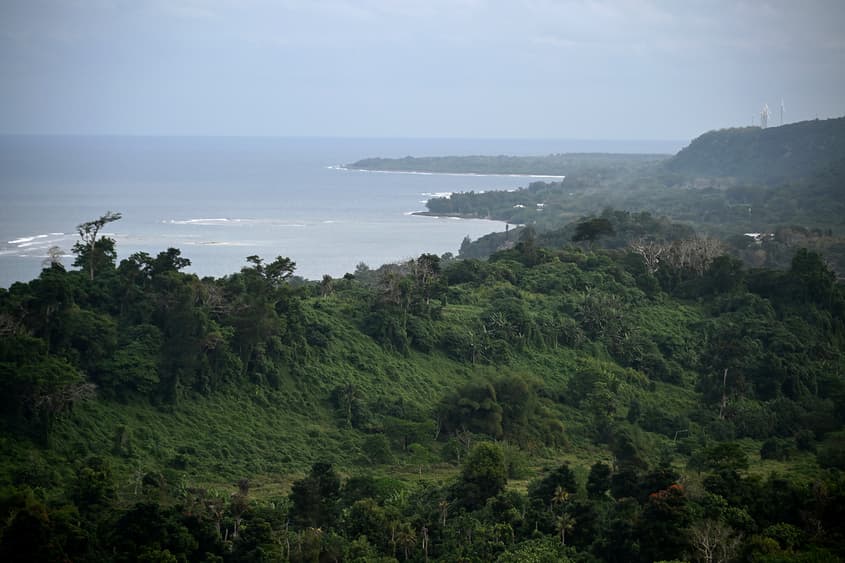
But there is something that is hitting our family hard, and it is getting harder and harder to excuse the actions of one of our family members. It’s no secret that climate change is already reshaping life in the Pacific. Rising seas are taking our coastlines, saltwater is creeping into our gardens and wells, and stronger cyclones tear through our homes and crops. This is our land, our food and our culture, and we are losing it through no fault of our own.
While Australia itself experiences climate impacts, and says the right words, it is increasingly clear that there is a contradiction between what Australia says about the Pacific and what it does. It is an unavoidable truth that Australia is one of the world’s biggest exporters of the very thing that is drowning our islands: fossil fuels.
Australia can rightly be proud of the work it is doing to move to clean, green, renewable energy, and it is helping the Pacific make that shift too, something we are in greater and greater need of. But electrification and renewables are only half of the equation. Ending fossil fuels is the other, and it is the half the Australian Government seems unwilling to commit to beyond words. Australia attended the talks in Colombia about transitioning away from fossil fuels, but seems to have no plan to end new coal and gas. The words are there, and perhaps even the intent. The action isn’t. Either you are with us in our vaka seeking global climate justice, or you are not.
This one-foot-in-the-canoe approach was on display in the recent UN General Assembly vote to endorse the International Court of Justice opinion on climate change. Australia voted yes, but would not join the extensive list of cosponsors; among Pacific nations, only it and New Zealand stayed off. And while it said it was “pleased to have worked closely and constructively with Pacific countries throughout the negotiation process,” it took care to note that its support “should not be interpreted as our agreement with every element of the advisory opinion.”
It is this picking-and-choosing approach that concerns us, and it needs to change.
This year, Australia holds an important global role. COP31 will be hosted by Turkey in Antalya, but Australia is President of Negotiations, presiding over the talks, with the Pacific hosting a pre-COP in Fiji and Tuvalu to bring the world’s attention to our region. It is a promise to elevate Pacific priorities to stop the climate crisis. That means leading the negotiations with a focus on holding the line on 1.5, unlocking public finance that doesn’t push us into debt for dealing with a crisis we didn’t cause, and guiding the world to a roadmap without fossil fuels.
We are not naive. We know there are competing forces in Australia, in business and even within the Government itself. But if 2026, the year of climate action in which the Pacific has been promised a special role, isn’t the year we turn the corner on the climate crisis, when can it be?
Our position is not unachievable, nor is it unreasonable. It is built on our lived experience and on international law. The world’s highest court has confirmed that states bear responsibility for the harm their emissions cause. That includes Australia. We are not asking for charity, but for consistency, and for Australia to act with leadership and integrity and earn its place in our family with the courage to stop fuelling the crisis that threatens us.
Vishal Prasad is the Director of Pacific Island Students Fighting Climate Change (PISFCC). Vishal is from Fiji and has been part of the International Court of Justice Climate Advisory Opinion campaign for more than 4 years, helping guide it from the classrooms of Vanuatu to the Hague and New York.