Things are not exactly looking up for Australia’s gas industry. One of the biggest reasons for this is a short-term boon turning into a long-term curse.
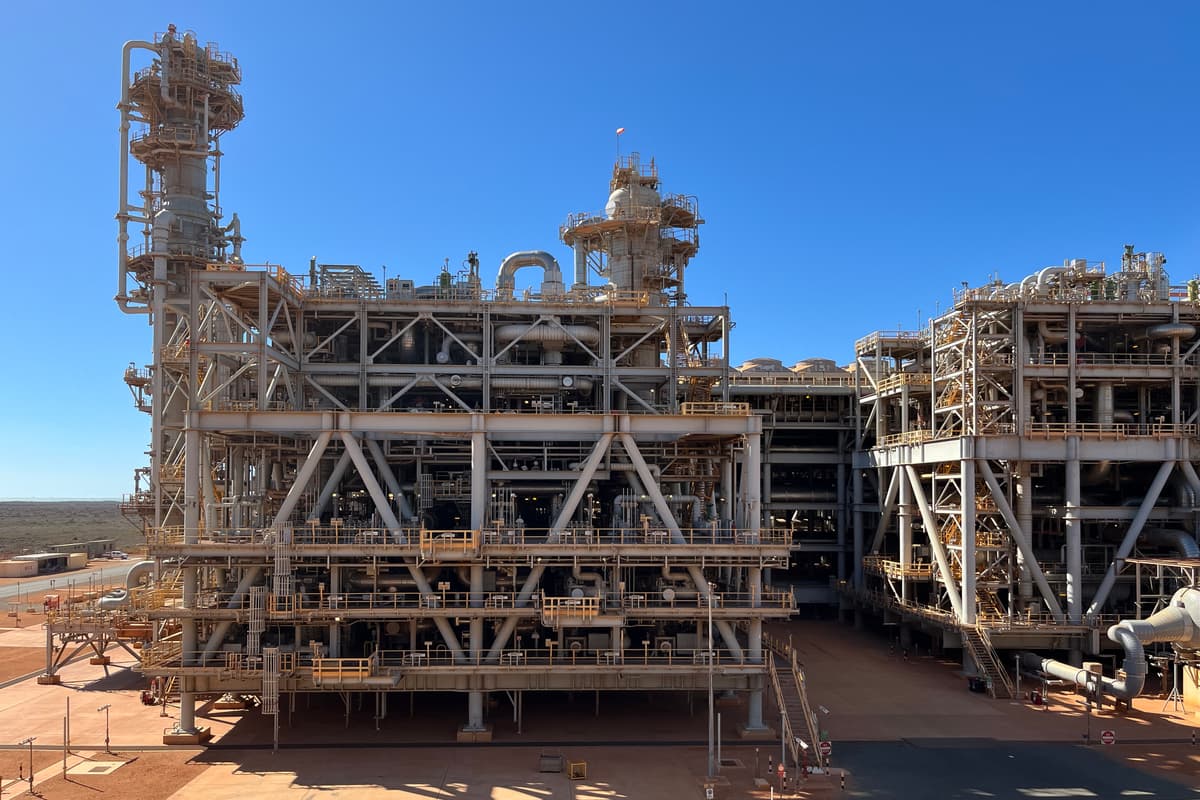
Demand for gas turbines has skyrocketed, driven largely by demand from hyperscalers operating data centres in the United States. This is very bad: if those turbines get bought, built and eventually burn fossil fuels, their emissions will be country-sized.
The planned gas-fired capacity **JUST FOR DATA CENTRE ON-SITE USE** in the US is the same as *all* planned gas capacity in India, Africa, Latin America, Southeast Asia, Japan, Korea and China *combined*.
[image or embed]
— Ketan Joshi (@ketanjoshi.co) June 10, 2026 at 4:19 PM
But a new report from the CSIRO released this week shows that this demand for gas turbines has driven the cost of building new gas power through the roof. The first dot point from the summary of the CSIRO’s “GenCost” report states: “Battery technologies continue to deliver cost reductions while rising demand for gas turbines to power US data centres is increasing costs for gas-based technologies”.
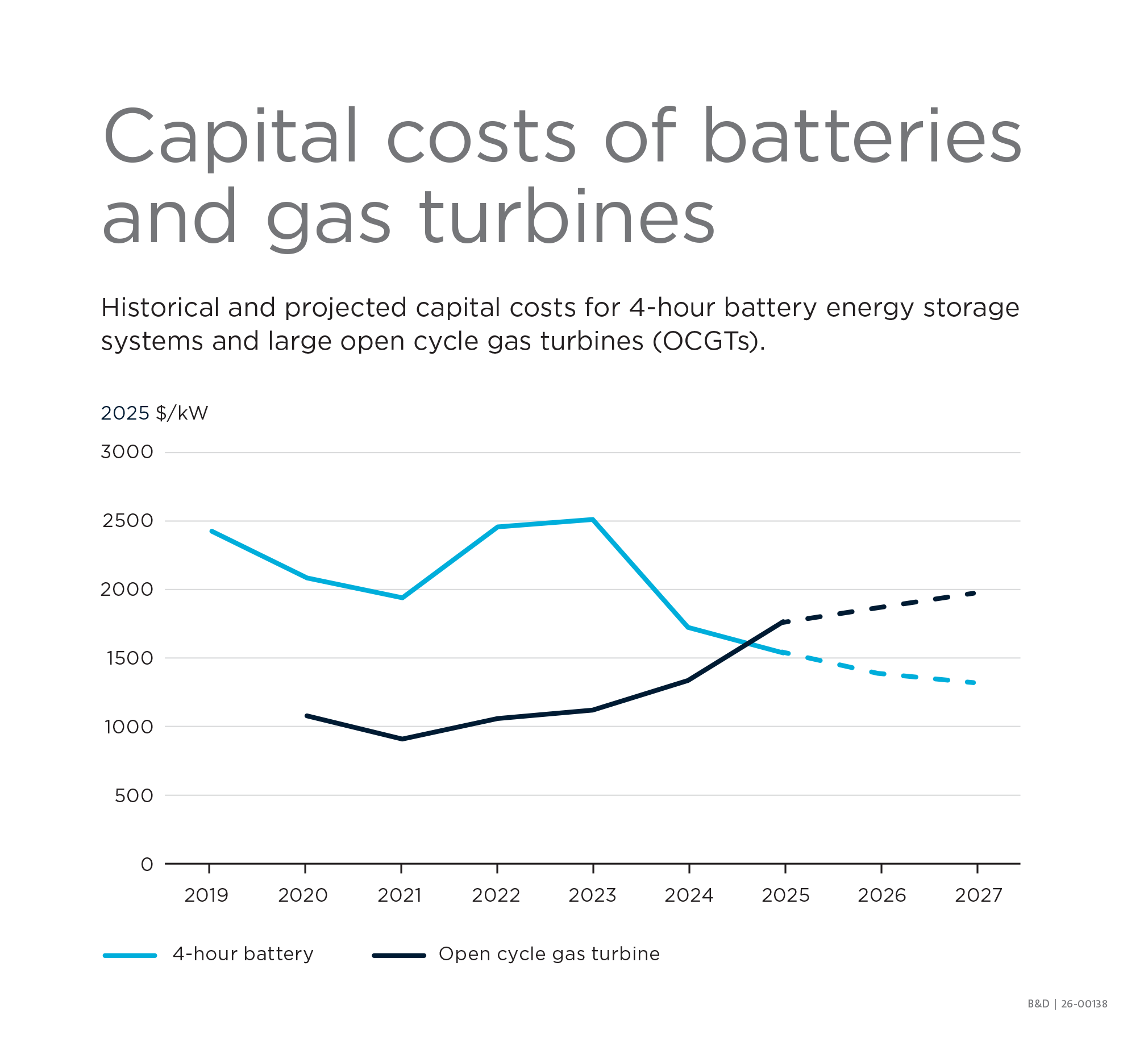
- Caption: The CSIRO GenCost report shows how the cost of gas turbines is rising
As we’ve covered before, the falling costs of batteries are having significant positive effects on Australia’s energy transition; specifically towards reducing reliance on gas-fired power in peak times. Notably, the CSIRO highlights in the full report that “significant global deployment of CCS is not expected until after 2030”, meaning CCS isn’t a solution or an excuse for more gas.
Australia is grappling with the consequences of a domestic data centre boom that will have massive impacts on the energy transition. The Labor government has previously stated, surprisingly strongly, that these new power hungry facilities should be powered by ‘100% new renewables’ – meaning they can’t just piggy-back off existing renewable projects, as I’ve found they often do. The Australian Energy Markets Commission was even tasked with implementing this.
But Labor’s latest AI rules have deleted the word “renewable” from any connection to obligations or requirements. The press release doesn’t even mention the words ‘renewable’ or ‘clean’. Albanese’s speech and the press release both now refer nebulously to new ‘power supply’, ‘energy’ and ‘generation’, rather than clean energy or renewables specifically.
Albanese’s speech does mention renewables, but it seems to have been demoted, and importantly, does not feature the all-important “100%”, meaning a data centre operator could feasibly build 95% gas and 5% renewables, and still meet this new formulation (“hey, we built SOME new renewables, didn’t we?”).
We know that companies will need to invest in skills and training to be successful.
And we know they will need energy too.
We will create a legal obligation for the next generation of large-scale data centres to underwrite new power supply.
To pay their full share of grid connection, so no costs are passed on to homes or businesses.
And to put at least as much energy into our grid as they take out of it.
To be net-generators, not net-users.
To build new renewable generation — and firming — to strengthen our national energy resilience.
And ensure data centres do not increase power prices for Australians.
Australia is the sunniest continent on earth but we’re also the driest.
Which is why our rules will require data centres to minimise their water use, maximise their energy efficiency, and pay for additional water infrastructure required.
These location, energy and water obligations take in every level of government and their overlapping powers.
You can see this already becoming part of project proposals, such as this ultra-polluting NT fossil-fuelled data centre that packages that bad deal with new renewables, to deflect criticism.
As we warned in the Greenpeace AP report I led, greed-driven data centre growth naturally gravitates towards fossil fuels.
Another big new gas plant has been announced, this time 1GW in the NT. By my calcs, the *best case* scenario is that it causes a 53% increase in NT’s power sector emissions
[image or embed]
— Ketan Joshi (@ketanjoshi.co) July 6, 2026 at 9:00 AM
The most ominous part is “and firming”, in Albanese’s speech. As I’ve written here before, this is Albo-speak for fossil gas: a fuel which does nothing to firm renewables clean sources can’t already do.
Andrew Charlton, Assistant Minister for Science, Technology and the Digital Economy, admitted as much in the Sydney Morning Herald. ““The government is certainly not anti-gas,” Charlton said. “More important than where that power comes from, I’m focused on the consumers”. As if energy consumers don’t exist in the atmosphere that’s overheated by fossil gas use. There is no hope the Albanese government will take any action to clamp down on a massive AI fossil fuel frenzy.
This isn’t a formal turn-around on their position, but it is a very noticeable rearranging of terms. I would bet big money it has something to do with major AI company Anthropic setting its sights on Australia’s energy resources. Anthropic’s sole priority is rapid data centre construction above all other concerns. They recently agreed to lease capacity from Elon Musk’s ultra-polluting data centres in Memphis, for instance.
This is the job ad Anthropic just posted for their Australian data centre ‘energy lead’.
No mentions of climate, sustainability, clean tech, emissions. Lots of explicit mentions of urgency, impatience and speed. A few cryptic but blatant references to behind the meter fossil fuel plants:
[image or embed]
— Ketan Joshi (@ketanjoshi.co) June 19, 2026 at 7:42 AM
Think, for a moment, how absurd this situation is. While the data centre industry’s own hunger for gas causes a massive price spike that is helping the case for batteries, those same companies are almost certainly successfully lobbying the Australian government to open the door to more fossil gas.
As many others have now covered, this is a shockingly bad deal for Australia, and a shockingly good deal for a panicking gas industry. Labor creaking the door open an inch wider for gas is a bad sign this dodgy deal is getting closer to becoming a reality.