For decades, fossil fuel advocates have been pushing the line that we “need” to burn methane as a ‘vital component of the energy transition’. It is an ancient talking point, predicated on the idea that integrating wind and solar power can only be done by using fossil methane-fuelled turbines, which can be turned up and down with some degree of flexibility and adjustability.
Mon 9 Feb 2026 01.00
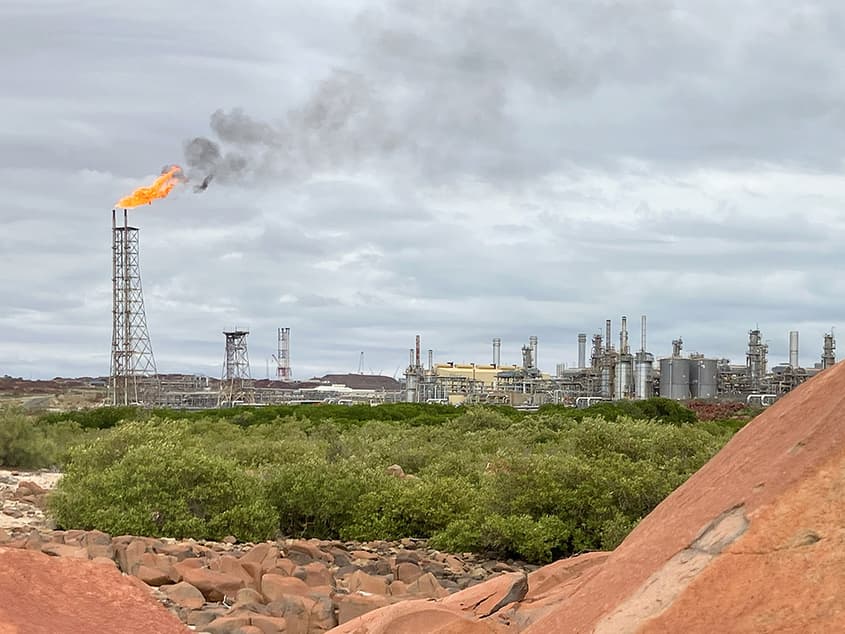
Photo: AAP Image/Supplied by Save Our Songlines


For decades, fossil fuel advocates have been pushing the line that we “need” to burn methane as a ‘vital component of the energy transition’. It is an ancient talking point, predicated on the idea that integrating wind and solar power can only be done by using fossil methane-fuelled turbines, which can be turned up and down with some degree of flexibility and adjustability.
Here are some recent examples, compiled from Prime Minister Anthony Albanese’s transcripts page:
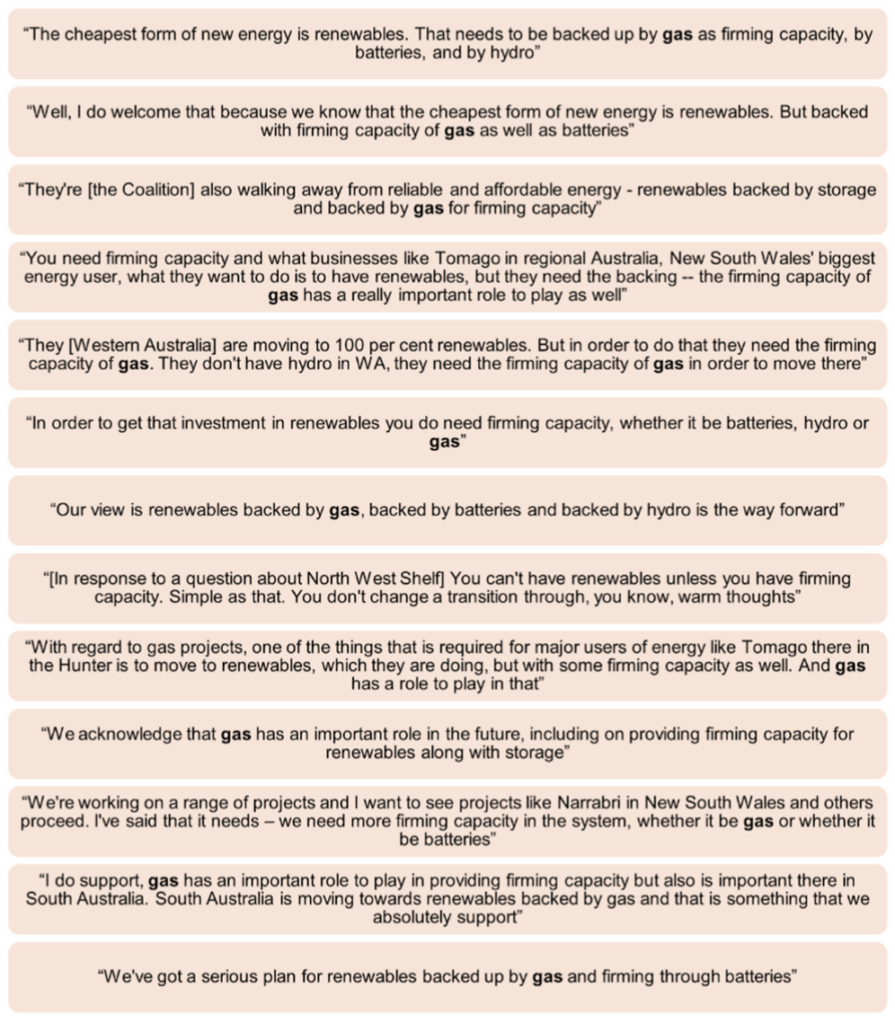
As you can see above, this argument has been used by politicians to justify the massive, and largely untaxed, export of fossil gas. As I’ve shown here at The Point: (a) the country destinations of that gas aren’t using it to get rid of coal and (b) only a comically tiny fraction of gas dug up in Australia gets used in the power sector.
To debunk the idea Australia “needs” gas to help wind and solar, I usually refer to the grid operator’s models of the future power sector, which shows full reliability and skyrocketing wind and solar alongside plummeting gas consumption.
The objection to this has always been that it is a model of the future, not measured reality. We are well and truly in the demonstration phase of the long-overdue death of power sector fossil gas.
We have already had a good year of data from California, where batteries have enabled the state’s massive solar growth and taken a massive chunk out of gas, resulting in California being the only state in 2025 in the US with falling emissions.
Australia is now formally having its California moment. While gas power hasn’t been erased from the grid, it has taken a massive and unprecedented hit, thanks to a battery boom that is unlocking the power of new Australian wind and solar.
Batteries are booming in Australia. Like solar, lithium-ion battery storage is split into household and grid-scale booms. Generous subsidies for household batteries have driven a surge in installations, but (perhaps more importantly), the big batteries that connect to the grid have seen massive growth, too. As the AFR reports, the volume of battery storage capacity operational or under construction is three quarters the total installed capacity of existing coal-fired power in the eastern grid.
Just looking at the grid batteries alone, and only for last year, you can see how recent and how significant the change is:
Battery discharge has taken a huge chunk out of the gas peak
One of the most remarkable bits of data from the Australian Energy Market Operator’s latest quarterly report shows very, very clearly how batteries are picking up solar output in the middle of the day, and dumping it out in the evening: cutting very deep into the output of fossil gas.
The chart below shows the change in output between the last quarter of 2024 and the last quarter of 2025: battery charging and discharging grew significantly, and gas output fell significantly too.
It’s worth being specific on the dynamics here. Looking at January as a single month, we can see that while gas did generate more than batteries discharged overall, for the hour of 1900 specifically (peak load), batteries generated more than in total than gas. As batteries grow and gas plummets, this will spread further out on either side. Again: this is for the entire national electricity market, not a small region like South Australia.
The last quarter of 2025 saw the lowest gas-fired power generation since the year 2000, for the eastern electricity market. For the evening peak between 5pm and 9pm, by my calculations battery discharging had higher total generation than gas for 12 of the total days in January this year. And all of this is the same for Western Australia’s power grid, where a massive increase in battery output displaced a similar amount of gas output.
Look at the long term trend here: gas output is falling, and battery output is climbing, with a very significant lurch upwards in the last few months of last year. It won’t be long before the NEM sees its first month where battery discharge was greater than gas-fired power output. It won’t happen during the winter solar lull, but it may well happen next summer.
This is it folks: the batteries are coming, for real.
The claim is true. Japanese companies are on-selling a lot of Australian LNG and making a lot of profit while doing it.
Advertisement

Right now, right across the country, communities are being forced to come to terms with the rapidly escalating frequency, intensity and cost of climate disasters.
The Albanese Government is quietly exploring options for a new tax on gas and coal giants reaping windfall profits from the war in the Middle East.