In late June, as 120 people died of heat exhaustion over a single weekend in Cologne, and 40 people drowned in France desperately seeking relief from record-shattering temperatures, the global advertising industry was busy.
While Europe recorded over 10,000 excess deaths fueled by the emissions of the carbon majors, those same corporations were fighting to keep their logos plastered across the continent’s public spaces.
Responding to the moral urgency of the moment, cities are reclaiming public space from the polluters responsible for the climate crisis. But not without a contest.
In May, Amsterdam banned ads for planet heating products across the city’s billboards, buses, bus shelters, trams, trains and metro stations. Gone are ads for Shell and BP, BMWs and Range Rovers, as well as promotions of cheap flights by the likes of Ryanair and easyJet. The Dutch capital’s ban even extends to meat products from fast food joints like McDonalds and KFC.
Amsterdam is only the most recent example of a global city taking action.
Florence, Stockholm, Edinburgh and Sheffield have all sent the big polluters and their carbon-intensive products packing, along with other Dutch cities including the Hague, Harlem and Utrecht. In 2023, France became the first country to introduce a nation-wide ban on fossil fuel advertising, and new laws passed this year will expand the existing restrictions on oil producers towards a comprehensive ban on ads for all carbon-intensive products.
As lethal heatwaves strike across the Northern Hemisphere, the logic of these moves is self-evident.
Two years ago, the UN Secretary-General António Guterres called on all governments to ban fossil fuel advertising, exhorting the world to stand up to the “Mad Men fuelling the madness.” And he made the obvious comparison: governments prohibit tobacco ads because they harm human health. And as greenhouse gas emissions endanger the complex systems on which life depends, cause the melting of ice sheets and threaten catastrophic sea-level rise, the desertification of massive tracts of agricultural land and the destruction of coral reefs, the case for constraining what the world’s top diplomat called the “enablers of planetary destruction” is even more urgent.
The mad men themselves know the argument is gaining traction. They are treating the challenge to their control of public space as tantamount to a declaration of war, and just like the tobacco companies, they are determined to fight back. When marketers from around the world met in Sydney recently, they decried the global policy momentum, insisting that the “domino effect has to be stopped.” The conference was briefed on a “coordinated global policy response to growing regulatory pressures.”
“It’s our project to stop this roll-on effect,” a representative of the international peak body for outdoor advertisers told his colleagues. The detailed strategy he outlined includes an “early-warning policy radar”, a suite of advocacy and legal tools to fight regulation, and “knowledge transfer” across countries so the lessons learned from fighting climate defenders and elected representatives can be applied widely.
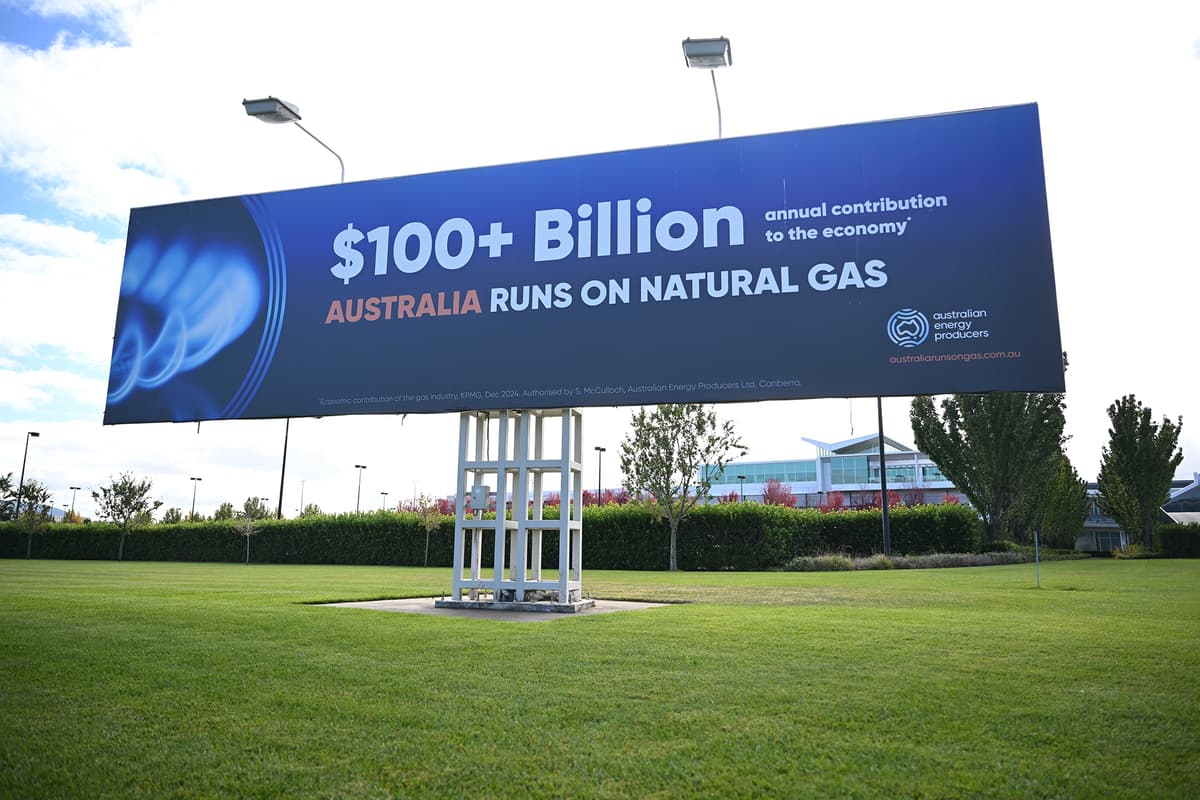
It was perhaps fitting that the marketers met in Sydney to plan their resistance. Australia is something of a model nation when it comes to climate-polluting propaganda.
Just as the fossil fuel giants employ political donations and the revolving door to capture parliaments, they use advertising to monopolise the public discourse. Such is the free-for-all that companies like Woodside, Shell, Chevron and Santos can directly target children by sponsoring schools, sporting clubs and science programs.
In June, the advocacy group, Comms Declare, revealed the existence of at least 260 such programs, including 60 sponsorship arrangements with schools. Examples featured in the From Cradle to Career report include the Queensland Museum taking more than $10 million from Shell to fund its children’s education programs; the “Woodside Nippers” programme run by Surf Life Saving Western Australia; and children in WA public schools kitted out with BHP merch. In response to the revelations, lawmakers in the ACT have prohibited fossil fuel companies from targeting minors inside educational institutions, but elsewhere in the country the practice continues unabated.
In this light, it’s little surprise that the big polluters are still permitted to constantly target Australian adults with appeals to consume more carbon-intensive products. While local governments like the City of Sydney have taken admirable steps to rein in fossil fuel ads on council-controlled assets, it is state and federal governments that possess the powers to introduce broader advertising bans, in the manner seen around the world. Instead of using those powers, they have chosen to let the industry regulate itself.
Nowhere are the consequences of this abdication of responsibility more plain to see than on the nation’s roads. By massively increasing spending on ads for SUVs and utes, and urging people to “Go big” and “Conquer the weekend”, the Australian automotive industry has executed a hugely profitable shift in the nation’s car fleet.
As the Raptors and Ram Trucks have taken over our streets, they have largely cancelled out the emissions reductions achieved by hybrid and electric vehicles. And so, like a driver accelerating and slamming on the brakes at the same time, Australia ostensibly pursues a society-wide programme of decarbonisation while permitting corporations to urge consumers to do the opposite.
Twenty years since Al Gore’s An Inconvenient Truth arrived in cinemas, we need to reckon with this basic cultural contradiction. At one level we know that ever-increasing concentrations of carbon dioxide in the atmosphere are heating the planet, causing sea-levels to rise and endangering the water security of billions. At another level, we continue our slow sleepwalk to catastrophe.
The reason why the marketers are so determined to maintain their control of the public square is because advertising works. It enables the polluters to dominate our cultural agenda, pervade our perceptions of the world, and give special prominence to some carefully curated images, expressions and concerns while relegating others to the periphery.
Planet-destroying industries are normalised through constant exposure and imbued with an aura of progress and positivity while the real long-term consequences are banished off-stage, out of sight and out of mind. A small shift in sentiment or salience is enough not only to change consumer behaviour but also to blunt political opposition. It doesn’t change what we know; it just makes it easier to forget.
Inevitably, moves to control corporate advertising will be met with charges of “nanny state” interventionism. But this gets it exactly backwards. As one of the politicians behind the new law in Amsterdam said, “actually we are trying to get the big companies not to tell us all the time what we need to eat and buy.”
Indeed, there is nothing democratic about the public realm being used to pressure us towards behaviours that are socially and environmentally destructive. Like reining in the corporate capture of politicians, breaking the big polluters’ grip on the public sphere is a prerequisite for the collective action needed to avert the worst of the climate crisis. In doing so, such a ban will strengthen our democracy into the bargain.
Tom Greenwell is co-author with Chris Bonnor of Waiting for Gonski: How Australia Failed Its Schools. He teaches History and Politics in the ACT public education system.