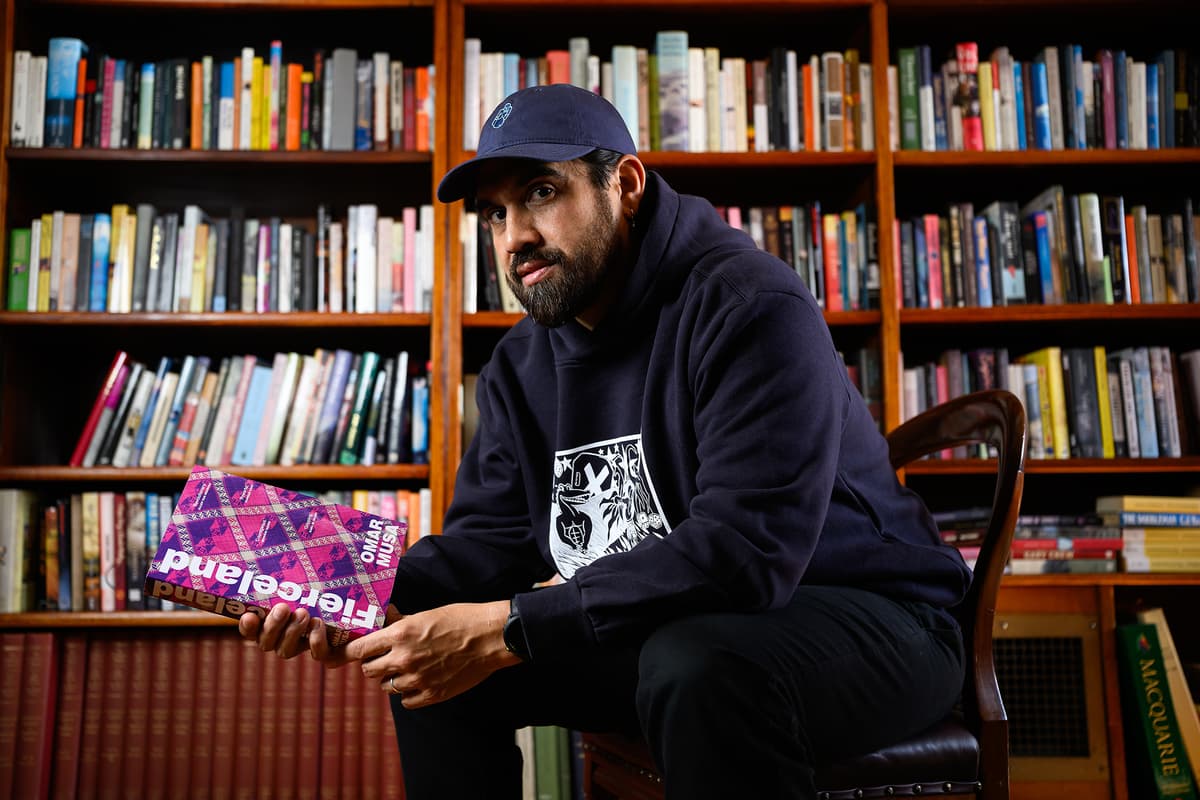
Last night, Queanbeyan local Omar Musa won the 2026 Miles Franklin award for the ‘novel with the highest literary merit which presents Australian life.’ He received a $60,000 prize, only he won’t get to keep it all because, like all arts prizes, it will be subject to income tax.
Meanwhile, the first episode of The Block’s latest season aired over the weekend. Unlike winners of literary awards, the winners of The Block do not pay tax on the hundreds of thousands in prize money they could take home.
Like Musa and his Miles Franklin award, writers pay tax on most prizes because the money they receive counts as ‘income’ for their work. This ‘income’ is taxed the same as any other income an author might earn by teaching English, editing corporate reports, or being paid for a short story published in a magazine.
But that prize money from The Block? Well, the Australian Taxation Office
determines that a gift or prize is generally regarded as a personal “windfall gain”, and not ordinary income. A “windfall gain” is something like lotto, something that has no relationship to your paid work. That’s why contestants on The Block take home their money tax-free. That’s why winnings at the racetrack or at the casino also go untaxed.
The only exception is if they were given the prize “because of, in respect of, or in relation to any income-producing activity of the taxpayer” — like, if you’re a writer and you win a writing prize…
If Australia wanted to award our most celebrated artists for their contributions to our culture, the government could make prizes for literature, visual art, playwriting and music tax free.
Some critics argue that an overhaul of the whole tax system is preferable to putting in exceptions for things like literary prizes. But, as the Stage 3 tax cuts and capital gains tax demonstrated, large changes to taxation take a very long time.
Meanwhile, artists in Australia are struggling. A 2022 survey found the average author’s annual income from their writing was just $18.200.
Making arts prizes tax free would represent a tiny cost in the Federal Budget, but would make an enormous difference in the lives of Australia’s artists, as previous Miles Franklin winners Charlotte Wood and Melissa Lucashenko
have argued.
Australia spends far less than the OECD average on the arts. If the government were to meet the average of other developed countries, that would mean
an extra $5 billion in arts funding.
Governments can choose to support Australian artists to make the work that only Australians can create, or can leave things as they are and let artists struggle while multinational corporations go untaxed … along with who wins this season of the Block.
Dr Alice Grundy is a research manager at the Australia Institute and the managing editor of Australia Institute Press.