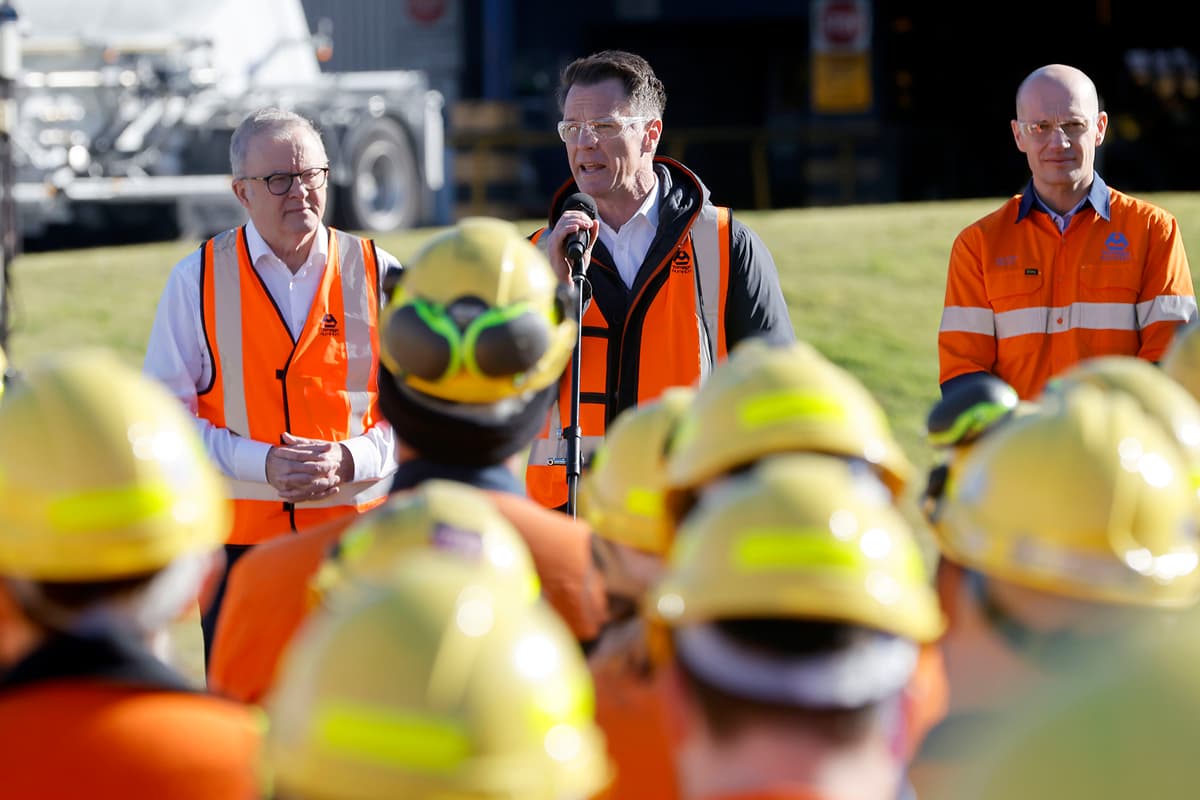
The deal to save the Tomago aluminium smelter is no ordinary bail-out.
It’s the result of more than a year’s negotiations, with a return to the taxpayer, the workforce, the shareholders, and the planet.
Hard to believe? Stick with me; this is the new approach to industrial policy.
Tomago is Australia’s largest aluminium smelter. It contributes $2.2 billion annually to the Australian economy with exports of $3 billion. The facility employs a thousand workers directly and many more in local supply chains.
Tomago is not only critical to the Hunter region’s manufacturing base but is also an important part of the national energy transition. Aluminium is pivotal to the jobs and industries of the future.
As Industry and Innovation Minister Tim Ayres noted back in May, “The full benefits of new industrial firms and technologies are less likely to materialise if there are smelter-sized holes in regional industry”.
However, the fundamental challenge for Tomago is its power price, which accounts for around 40 per cent of its costs. This is the largest electricity load in Australia, representing 12 per cent of NSW’s entire electricity demand.
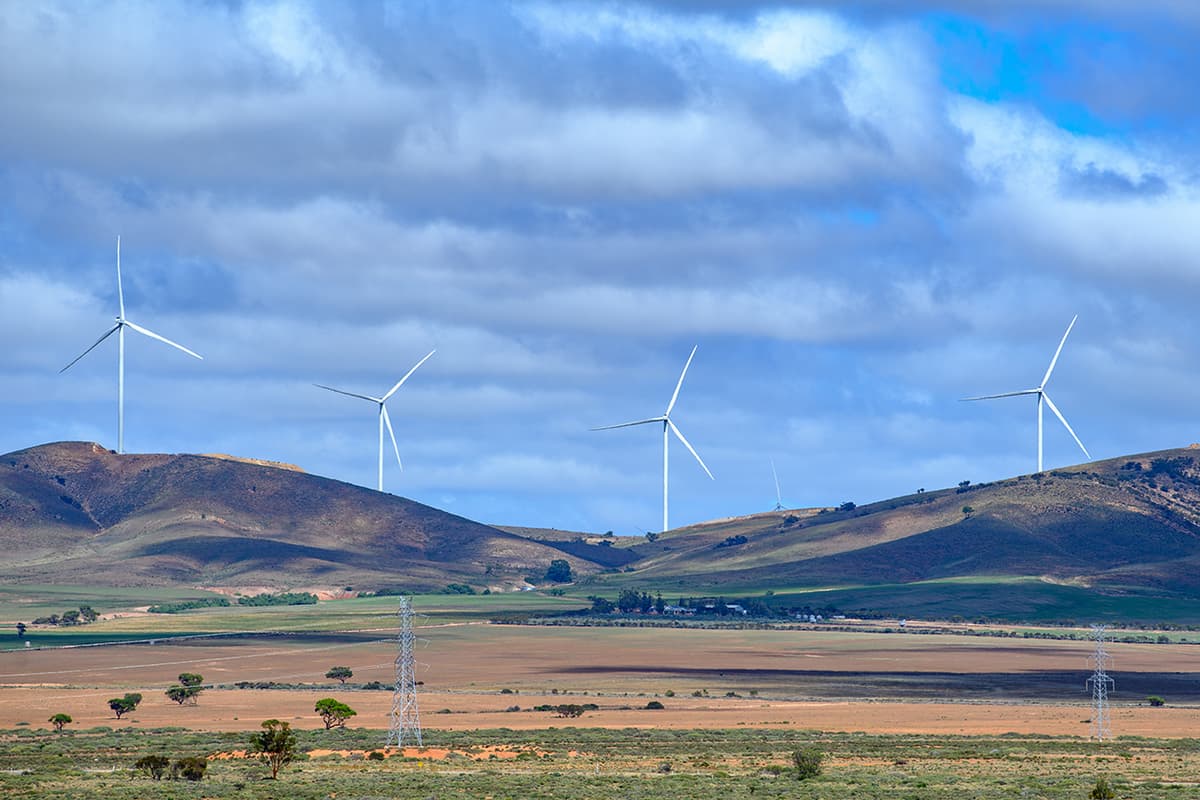
Tomago has announced it wants to shift to 50 per cent renewable energy by 2030 and 100 per cent by 2035. This makes good sense as solar and wind are now recognised to be the cheapest form of new power generation.
However, with its electricity supply contract expiring in 2028, Tomago was unable to secure power, either coal-fired or renewable, at a commercially viable cost. The prospect of closure loomed with a massive loss of jobs and industrial capacity.
After bail-outs of smaller facilities around the country, the Federal government was averse to directly subsidising a global company of the scale and profitability of Tomago’s majority owner, Rio Tinto. But nor could it allow Tomago to close.
The government was in a bind, until an ingenious solution emerged.
This solution is based on the government’s ability to create ‘special investment vehicles’ (SIVs), which provide equity or loans across a range of co-investment opportunities, including clean energy.
What if the government were to use one of these special investment vehicles to provide an electricity offtake to Tomago at a price that enabled its operation to remain competitive in global markets and value chains?
And what if the SIV at the same time provided concessional loans to investors prepared to build the renewable energy capacity that would supply the offtake? Government-backed finance would lower the cost of capital for new projects, guaranteeing Tomago a stable, long-term power price.
Even better, what if the SIV was Snowy Hydro, whose business model is already geared up to supply renewable energy and to optimise its use through pumped hydro? It is well positioned to bring more renewables into the grid by de-risking investment.
Crucially, for every 1 per cent reduction in the cost of capital, end-user energy costs are reduced by around 10 per cent.
This is not a new idea. It’s a proven financial structure, used by the former Neville Wran NSW government in the 1980s to secure coal-fired power for industry, and it can be applied just as effectively today for the new era of clean energy transition.
However, there will inevitably be a gap at the initial stages between the market price for electricity and the price negotiated as part of a ‘power purchase agreement’ (PPA) with the company. And this is where the Federal and NSW governments come in to underwrite the difference.
They will provide $250 million a year from 2028 over the following 10 years in a time-limited arrangement, with the prospect of taxpayers recouping their investment through a combination of aluminium revenues and the contribution of Tomago to stabilising the grid.
In other words, there is every chance that this arrangement will be cost-neutral over the decade, while at the same time turbocharging the energy transition and economic diversification of Australia’s most prominent industrial region.
For its part, Tomago has committed to investing a minimum of $1.1 billion in reducing energy usage and switching to renewables. Not only will closure be avoided, but there will be a value-add to the region.
Too often in the past, governments have leant on economic orthodoxy to justify inaction, or at most to confine themselves to addressing market failure. The consequence has been a hollowing out of Australia’s sovereign manufacturing capability, declining business R&D and stalled productivity growth.
The approach taken to save the Tomago aluminium smelter is an example of how governments can also shape markets. It’s an approach that has been characterised as ‘green energy statecraft’. And it can be replicated and built upon as part of the government’s Future Made in Australia plan.
Significantly, the Federal and NSW governments have sent a clear signal to investors, workers and the community that Australia is prepared to address the overdue task of diversifying its narrow, resources-heavy trade and industrial structure.
The foundations have been laid at Tomago not for bail-outs but for a modern and sophisticated industrial policy.
Roy Green is Emeritus Professor and Special Innovation Adviser at the University of Technology Sydney. He chairs the Advanced Robotics for Manufacturing (ARM) Hub and is on the board of CSIRO and the Industry Capability Network (ICN).