Beer tax has had a fair bit of attention lately. Thanks to David Pocock’s viral video, more people know the term “beer excise” than ever before.
Australians now realise the remarkable fact that beer excise delivers more for the Australian Government than multinational gas exporters pay in Petroleum Resource Rent Tax.
This is a ludicrous state of affairs. But other aspects of beer excise deserve just as much attention.
First, some context. The Australian beer market is dominated by multinational companies, particularly Japan’s Kirin and Asahi, that own once-Australian brands like Carlton United, XXXX, Boags and even “craft” pioneers such as Stone and Wood, Balter and 4 Pines.
Independent breweries have less than 10 per cent of the Australian beer market. Yet our economic and social impact is far greater.
Whilst operating in single-digit market share, independent brewers employ nearly 60 per cent of the people working in Australian brewing, predominantly in small businesses spread across metropolitan, suburban, regional and rural Australia.
Many are family businesses. They are run by husbands and wives, brothers and sisters, parents and their kids. The people who own these breweries often live in the same towns as the people they employ. Their kids go to the local school. They shop locally, use local trades, coach junior sport and stand on the boundary at the local footy on a Saturday.
They aren’t an Australian subsidiary of a global corporation. Their community isn’t simply a market to them. It’s their home.
Yet tax policy settings make it harder for these Australian businesses to grow, mainly benefiting the multinational corporations.
For example, before the last election, the Federal Government decided not to increase excise on draught beer for two years to help “take the pressure off” prices. Usually, the excise would increase with inflation.
The government estimates the freeze on excise will cost the budget $95 million over five years.
Unfortunately, of this $95 million, at least $90 million will go to multinational beer. Independent Australian beer will be lucky to get $5 million.
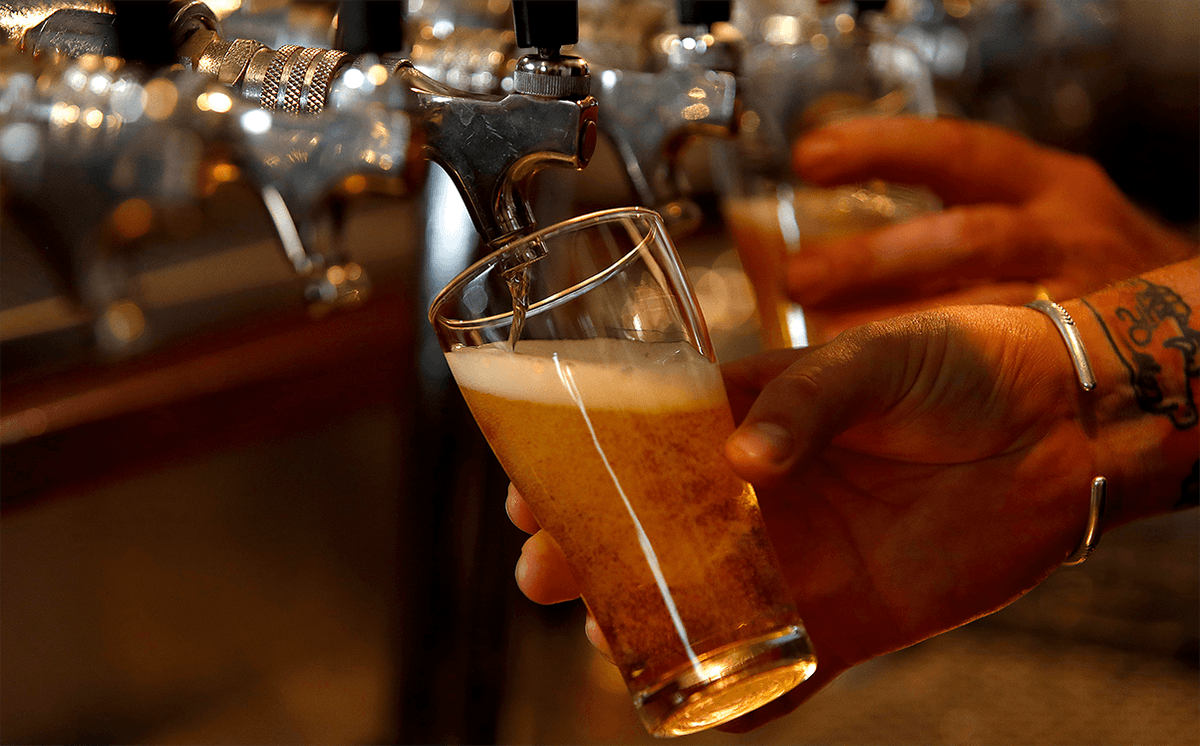
That’s because the large foreign-owned brewers not only have the large overall market share, but this excise freeze only applies to draft beer, poured from taps in pubs, clubs and bars.
Independent brewers tend to sell their beer in cans and bottles, which don’t get this excise freeze. If pausing excise indexation makes sense for a schooner poured from a keg, why shouldn’t the same logic apply to a 6-pack, or a slab of Australian independent beer?
Similarly, neither small nor large brewers pay excise on the first $400,000 worth of beer sold. This “remission” of excise was recently increased from $350,000.
This increase represents pocket change for multinational brewers, but is genuinely important for independent brewers, who fought hard for it. We estimate it will benefit independent brewing by almost $31 million.