You would think the months of public scrutiny on serious governance failures might give the leadership of NSW universities pause for thought. But apparently this is too much to ask of the 69 NSW university executives paid more than the state’s premier.

Mon 9 Nov 2026 11.12 AEDT
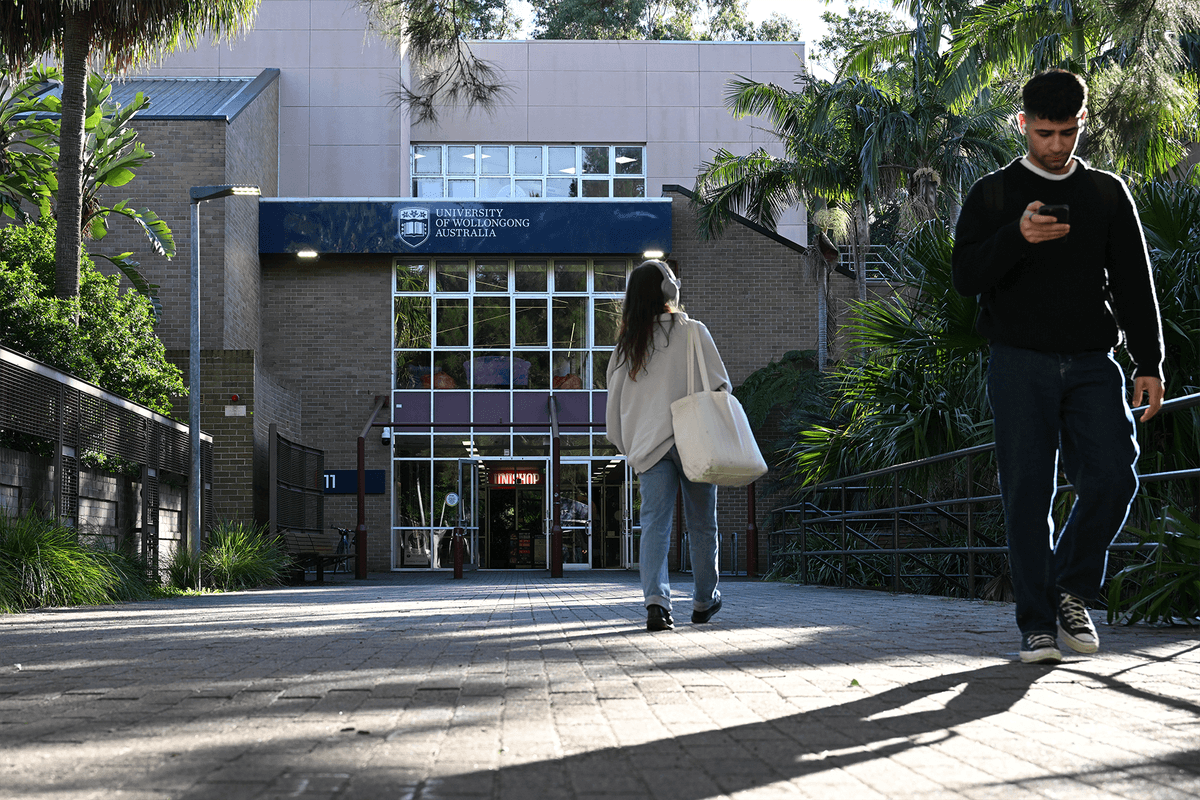
Photo: AAP Image/Dean Lewins


Months of public scrutiny through the NSW Upper House Inquiry into NSW Universities that I chaired, uncovered systemic governance issues, harsh cuts justified by dodgy accounting practices, excessive spending on consultants often without competitive tendering processes, and the humiliation of a full ICAC investigation, all to the detriment of staff, students and surrounding communities.
Last month, the Committee tabled its report, making 21 findings and 23 recommendations and delivering a framework to strengthen transparency, accountability and public confidence and re-orient the sector to benefit the people of New South Wales.
You would think the months of public scrutiny on serious governance failures might give the leadership of NSW universities pause for thought. Perhaps the people of NSW might expect to see behavioural and cultural change or even engagement with our recommendations. But apparently this is too much to ask of the 69 NSW university executives paid more than the state’s premier.
Instead, they have responded with a defiant ‘business as usual’ posture bordering on contempt; they continue to repeat the same behaviours we saw before the inquiry. Just this month, UNSW reportedly awarded a $40 million IT contract to KPMG.
This is the same KPMG that several Australian governments have frozen engagement with while its breaches of confidential data are investigated.
This is the same KPMG that a 2022 NSW parliamentary inquiry found simultaneously provided contradictory advice to two different government departments regarding the establishment of a $20 billion state corporation.
This is the same KPMG whose sordid history extends to the tertiary education sector. Remember that the firm was internal auditor for the University of Wollongong (UoW) in 2021. This was the year that the NSW Auditor General required the university to revise its audited accounts due to irregularities, including a previously undisclosed $169 million expense stemming from a failed Public Private partnership for student accommodation. All of this occurred while a KPMG partner sat on UoW council and was part of the committee overseeing the preparation of those ‘irregular’ accounts.
Yet UNSW has decided to ignore the example set by governments, as well as a recommendation from our report. This is perplexing – after all, most of the university’s funding comes from the public and the students it is supposed to serve. One can only assume that UNSW management thinks it knows better.
Quality research, analysis, explainers and factchecks from experts you can trust.
UoW have signalled much the same attitude and hubris. UoW Council has decided to lead the search for a new Chancellor – this is largely the very same council that presided over the governance failures culminating in the ICAC investigation and resignation of the previous Chancellor.
While university executives have been at pains to point out that their decisions exist in a difficult environment, this does not sufficiently explain their failures. While universities are operating in financially uncertain times, intensified by recent changes to migration and visa conditions, this does not absolve university management from responsibility for the decision-making that led to an over-reliance on international students in the first place. How is it that the same leaders who took these decisions, aided by their university councils stacked with corporate sector appointments, act as if changing policy settings had never been factored into their operational plans, as if they have been blindsided and ill-equipped to survive such change? As if their business models did not take into account that authorising environments change, that public budgeting priorities change, that geopolitics change?
Even introductory business strategy courses at these same universities teach basic risk assessment requiring attention to exactly those factors.
Perhaps university leaders would have been better served by consulting some of their experts in residence, their own staff. They have easy access to experts in business strategy, in education and research, experts in university administration, all with an actual stake in the future of the institution. Instead, their corporate approach has encouraged a type of risk taking that might be appropriate in private businesses, but in the context of the significant public asset that is our university sector, has resulted in a trajectory of scandal, excess and reputational damage.
We need systemic change. Without it, we risk the corporate rot undermining the foundations of our universities and the genuinely positive contributions they make to our society and economy.
This starts with a comprehensive overhaul of the legislation that establishes each of our universities to ensure that it enshrines student and staff voice, transparency and accountability.
We must reclaim our universities and recommit to their public purpose.
Dr Sarah Kaine is a member of the NSW Legislative Council.

