As climate impacts escalate, so will the government's liability — until politicians address the harm they’re causing.

Mon 27 Jul 2026 09.49 AEST
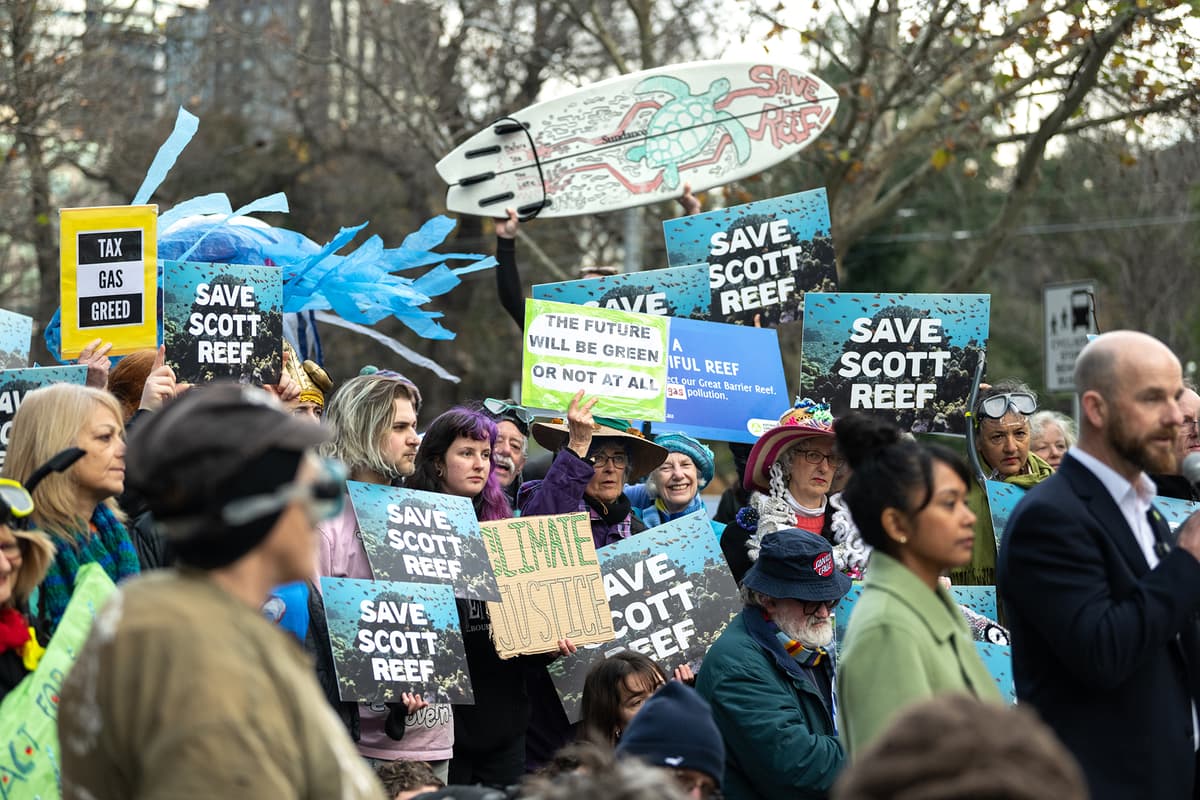
Photo: AAP Image/Jay Kogler


This fortnight, three major climate cases are running back-to-back in Australia.
In Melbourne, the Federal Court spent last week hearing two challenges to the Environment Minister’s approval of Woodside’s North West Shelf ‘carbon bomb’ gas extension, brought separately by the Friends of Australian Rock Art and the Australian Conservation Foundation. Both argue the Minister failed to properly weigh the project’s climate impacts, including on the 50,000-year-old Murujuga rock art it sits beside, before waving through a development that could produce around four billion tonnes of emissions over its life.
That hearing wraps up today. Tomorrow, in the same city, Uncle Pabai Pabai and Uncle Paul Kabai return to the Full Federal Court to appeal a ruling that found the Commonwealth owes Torres Strait Islander communities no legal duty of care to protect them from climate harm, even as their islands face inundation within a generation.
The stakes for Uncle Pabai, Uncle Paul and their communities could not be higher. In January, king tides pushed water higher across the Torres Strait than ever recorded. Saibai, Boigu and Badu have been given twenty-four years before they’re predicted to go under. As Uncle Pabai, Uncle Paul and their communities told the Federal Court on Country during the first trial, losing those islands would not just mean losing land. It would sever a connection to culture and Country that no court can ever give back.
Before this, only in May, a retired science teacher and retired farmer from the Hunter Valley faced down a coal company in the first climate case to ever reach Australia’s highest court. Wendy and Tony Wales led a small community group to the High Court to defend their win in the NSW Court of Appeal that planning authorities cannot keep ignoring the local damage caused by coal that Australia digs up and ships overseas to be burned. MACH Energy is now asking the High Court to overturn that finding. A judgment is expected later this year.
Together these make up four cases in less than as many months. Two against a Commonwealth minister, one against the Commonwealth itself, and one against a coal company that stands to profit from continued climate inaction. They all raise one consistent, uncomfortable question for government: for how much longer can Australia keep approving fossil fuel projects and expansions without properly accounting for the harm they cause?
None of this is happening in a vacuum. In July last year, the International Court of Justice handed down an advisory opinion finding, unanimously, that states can be held internationally responsible when they fail to prevent foreseeable climate harm, including harm caused by licensing fossil fuel production for export. It is not binding on Australian courts, but they are paying attention. In a significant move, the Federal Court allowed a UN special rapporteur to intervene in the two North West Shelf cases last week to advise the court of Australia’s international climate obligations. The ICJ is also shaping how communities and their lawyers are thinking about causation, foreseeability and responsibility, and it will keep doing so as more of these cases work their way through the system.
As all of these cases move through the courts, yet another has been filed. Ten Australians have lodged a human rights complaint with the United Nations Human Rights Committee, arguing that Australia’s failure to plan for the climate harm caused by its coal and gas exports breaches their rights to life, home and, for First Nations claimants, culture. It is the first international claim of its kind against the Australian Government and follows in the footsteps of a successful complaint won by Torres Strait Islanders in 2022.
This wave of litigation is not coincidental; it has been inevitable for a long time. It reflects a wide schism between the scientific reality, community harms and government policies and is what happens when politicians are captured by fossil fuel interests and the law is left to hold them accountable.
The government had a chance to close the accountability gap itself. Its 2035 emissions target, when it finally landed, fell well short of what the science says is needed, and did nothing to address the emissions Australia exports rather than burns at home
Communities are not waiting for that to change on its own. Each case is different, but together, they tell the same story. When politics will not hold the government accountable for the climate harm its decisions cause, people will turn to the one arm of government that still has to deal in facts and evidence rather than talking points.
Courts overseas are reaching similar conclusions. Advisory opinions and rulings from the Netherlands to Montana to the Hague have found that governments owe their people more than a shrug when it comes to climate harm. Australian courts are now being asked, case by case, to decide whether the same logic applies here.
The outcomes of these cases could shape climate accountability in Australia for generations. Even when communities face legal setbacks, precedent and evidence keep creeping forward, closer to finding the weakness in the dam wall of climate impunity that will eventually bring a flood of accountability. The common law has always taken time to catch up as the world changes around it. But it gets there, and when it does, it delivers justice.
Government can read the room, or it can keep being taken to court by the people it is meant to serve. Either way, the law is moving. Ignoring the legal and moral risks of climate inaction will be at its – and our collective – peril. The only question is whether politicians catch up before the next case is filed, or after.
Isabelle Reinecke is the Founder and Executive Director of Grata Fund, a not-for-profit organisation which has helped shape landmark cases that have shifted the dial on human rights, democratic freedoms and climate justice in Australia. She is the author of Courting Power: Law, Democracy & the Public Interest in Australia.
Advertisement