Advanced search
The Point - home
DonateSubscribe
HomeWhat's NewOpinionOff the ChartsExplainersFactcheckAbout Us
The Point — home
DonateSubscribe
The Point — home
Advanced search
  • Home
  • What's New
  • Opinion
  • Off the Charts
  • Explainers
  • Factcheck
  • About Us
DonateSubscribe
Subscribe
  • Home
  • What's New
  • Opinion
  • Off the Charts
  • Explainers
  • Factcheck
  • About Us
The Point - home
Privacy PolicySitemapComplaints & CorrectionsNewsletter

The Point recognises the ancestral connections and custodianship of Traditional Owners throughout Australia. We pay respect to Aboriginal and Torres Strait Islander cultures and to Elders past and present.

©2025–2026 The Point, an initiative of The Australia Institute

PODCAST

How a gas export tax could transform Australia

Wed 25 Mar 2026 17.02 AEDT

Economy
How a gas export tax could transform Australia

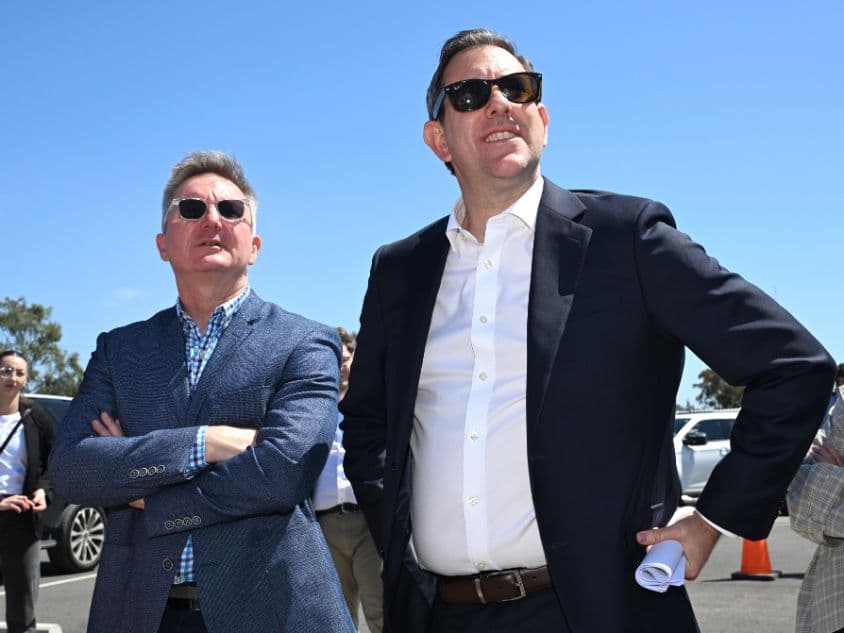
AAP Image/ Darren England

Listen on appleListen on spotify

A 25% gas export tax would drive down gas prices for Australians and collect billions of dollars that can be used to provide better, cheaper health and education services. 

On this episode of Follow the Money, Rod Campbell and Ebony Bennett discuss the case for a 25% gas export tax and the New South Wales government’s ban on new coal mines.

This episode was recorded on Tuesday 24 March.

You can sign the Australia Institute’s petition calling on the federal government to make gas exporters pay their fair share.

Guest: Rod Campbell, Research Director, the Australia Institute // @rodcampbell

Host: Ebony Bennett, Deputy Director, the Australia Institute // @ebonybennett

Show notes:

The case for a gas export tax, explained by Richard Denniss, The Point (March 2026)

Tax gas exports, invest in health/aged care – new polls, the Australia Institute (March 2026)

What the Middle East war means for Australians and gas companies, the Australia Institute (March 2026)

‘No new coal or gas is a slogan, not a policy’: Bowen, ABC Radio National (March 2023)

SUMMER SPECIAL | President Anote Tong, Follow the Money, the Australia Institute (January 2017)

What we owe the water: It’s time for a fossil fuel treaty by Kumi Naidoo, Australia Institute Press (February 2026)

Theme music: Pulse and Thrum; additional music by Blue Dot Sessions

We’d love to hear your feedback on this series, so send in your questions, comments or suggestions for future episodes to podcasts@australiainstitute.org.au. Subscribe to Follow the Money on Apple Podcasts, Spotify, Pocket Casts or wherever you get your favourite podcasts.

Related Articles

OPINION

Who gets to decide what a 'realistic' energy transition is?

By Ray Wills & Peter Newman

There is a difference between what Australia should do and what our most influential businesses would prefer we don’t do. Our energy debate too often blurs the two by insisting on being ‘realistic’.

ClimateEconomy
Who gets to decide what a 'realistic' energy transition is?

OPINION

There's other ways to fight inflation than making mortgage holders pay

By David Shoebridge

You don’t get out of an economic crisis like the one we’re in through austerity. Cutting government services will only result in the people who can least afford it, falling further and further behind.

Economy
There's other ways to fight inflation than making mortgage holders pay

OPINION

When essential workers can't afford to live in our communities, everyone pays the price

By Kasy Chambers

There was a time when having a decent job meant you could afford a decent home. You might not have been rich, but if you worked hard, you could pay the rent, cover the bills, and have something left over. For millions of Australians, that has fallen apart.

EconomySociety & Inequality
When essential workers can't afford to live in our communities, everyone pays the price

WHAT'S NEW

Australia risks repeating New Zealand's mistakes as ACTU warns against further rate hikes

By Tegan George

The Australian Council of Trade Unions (ACTU) has warned against further interest rate rises, with new research estimating that almost 900,000 fewer Australians would be in full-time work if the country had followed New Zealand’s economic path.

Economy
Australia risks repeating New Zealand's mistakes as ACTU warns against further rate hikes