Advanced search
The Point - home
DonateSubscribe
HomeWhat's NewOpinionOff the ChartsExplainersFactcheckAbout Us
The Point — home
DonateSubscribe
The Point — home
Advanced search
  • Home
  • What's New
  • Opinion
  • Off the Charts
  • Explainers
  • Factcheck
  • About Us
DonateSubscribe
Subscribe
  • Home
  • What's New
  • Opinion
  • Off the Charts
  • Explainers
  • Factcheck
  • About Us
The Point - home
Privacy PolicySitemapComplaints & CorrectionsNewsletter

The Point recognises the ancestral connections and custodianship of Traditional Owners throughout Australia. We pay respect to Aboriginal and Torres Strait Islander cultures and to Elders past and present.

©2025–2026 The Point, an initiative of The Australia Institute

PODCAST

New world, same Reserve Bank

Thu 1 Oct 2026 16.09 AEST

Economy
New world, same Reserve Bank

AAP Image/Sarah Wilson

Listen on appleListen on spotify

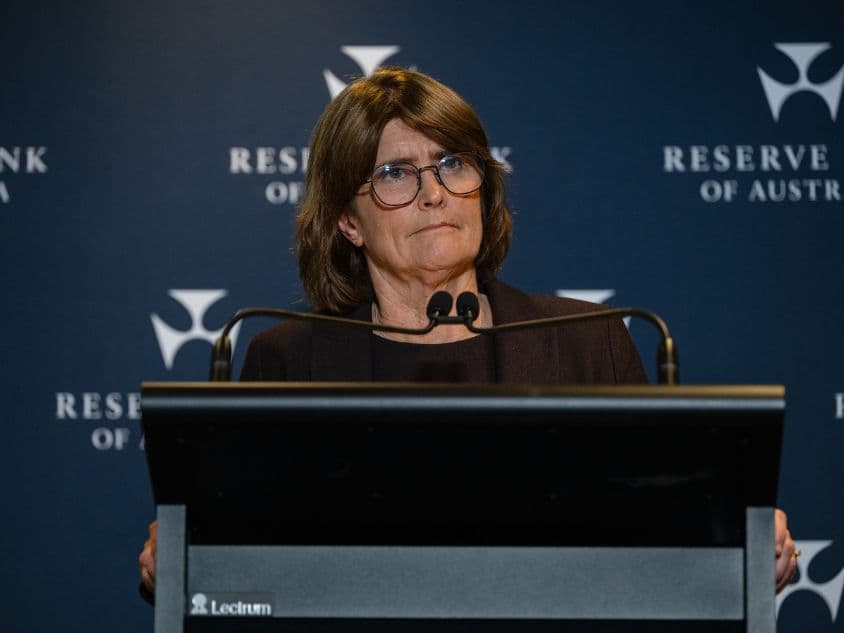
There’s a war on Iran choking global oil supplies, an artificial intelligence boom, and a US president torpedoing the global trading system, but inflation simply MUST be normal, according to the RBA.

On this episode of Dollars & Sense, Greg tells Skye that households will struggle “for not much good” because of the Reserve Bank’s latest interest rate hike.

This discussion was recorded on Wednesday 30 September 2026.

Join an outstanding line-up of policymakers, academics and independent experts at the Australia Institute’s Revenue Summit 2026. Tickets are on sale now for the event at Parliament House in Canberra on Wednesday 14 October.

Host: Greg Jericho, Chief Economist, the Australia Institute // @grogsgamut

Host: Skye Predavec, Researcher, the Australia Institute // @skyelark

Get our newsletter

Quality research, analysis, explainers and factchecks from experts you can trust.

Show notes:

If turbocharged petrol prices are driving up inflation, then why are Australia’s unemployed on the line? by Greg Jericho, Guardian Australia (October 2026)

“No data to support this rate rise” – RBA inflicts more unnecessary pain to fix something it can’t control, the Australia Institute (September 2026)

Australia built an illness system, not a health system, Follow the Money, the Australia Institute (September 2026)

Theme music: Blue Dot Sessions

We’d love to hear your feedback on this series, so send in your questions, comments or suggestions for future episodes to podcasts@australiainstitute.org.au. Subscribe to Dollars & Sense on Apple Podcasts, Spotify, Pocket Casts or wherever you get your favourite podcasts.

Related Articles

OPINION

From pilot to powerhouse: expanding WA’s sustainable bond market

By Brad Hiller & Brad Pettit

Now a staple of global finance, GSS bonds offer a powerful mechanism to fund pressing environmental and social initiatives that lie outside traditional government budgets.

Environment & BiodiversityEconomy
From pilot to powerhouse: expanding WA’s sustainable bond market

OFF THE CHARTS

If the RBA forecasts continue, real wages won’t recover to 2021 levels until 2044

By Greg Jericho

Last week, when the Reserve Bank announced it had raised the cash rate to 4.85%, it also released its latest forecasts for the economy in its Statement on Monetary Policy. For those hoping for a recovery in lost living standards, the news was very grim.

Economy
If the RBA forecasts continue, real wages won’t recover to 2021 levels until 2044

OPINION

Six ways to save the Commonwealth billions, fairly and efficiently

By Matt Grudnoff & Greg Jericho

If the government wants to pursue significant spending cuts, this piece proposes six options that help achieve short term equity and long run efficiency goals. Together, they could save between $14 billion and $62 billion.

Economy
Six ways to save the Commonwealth billions, fairly and efficiently

OPINION

Who gets to decide what a 'realistic' energy transition is?

By Ray Wills & Peter Newman

There is a difference between what Australia should do and what our most influential businesses would prefer we don’t do. Our energy debate too often blurs the two by insisting on being ‘realistic’.

ClimateEconomy
Who gets to decide what a 'realistic' energy transition is?