Decommissioning oil and gas: The fossil fuel industry’s gift that keeps on taking
Taxpayers wear a significant share of the cost of cleaning up old mines
Mon 5 Jan 2026 06.00
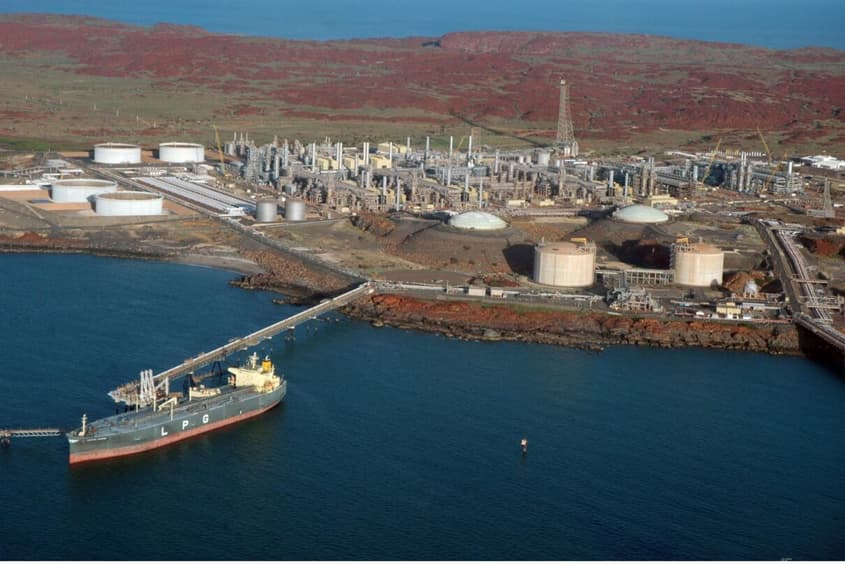
Image: AAP/Rebecca Le May


While the fossil industry likes to claim that it gives a bountiful array of gifts to Australians – including jobs, tax dollars, and contributions to GDP, these claims are easily debunked. The industry is far less likely to brag about the huge cost of decommissioning ageing oil and gas facilities over the next 15 to 30 years, a large part of which will be borne by the Australian taxpayer.
The design of the Petroleum Resource Rent Tax (PRRT) and the company tax means a significant share of the cost of decommissioning offshore oil and gas projects are effectively paid for by the taxpayer through lower taxation revenue.
Oil and gas companies can claim the cost of decommissioning as a deduction against what they would otherwise owe in PRRT and company tax. The higher these deductions are, the lower the rate of overall profit, and therefore the lower the taxes that have to be paid. In other words, the cost of decommissioning old projects can be used to lower the apparent profits of newer projects, and therefore the tax paid on them.
In addition, decommissioning costs can be strategically set at times when oil prices, and therefore PRRT and tax payments, are higher. This helps further lower tax bills.
It is no secret that taxpayer’s foot a significant amount of the bill for decommissioning offshore oil and gas projects. In 2020, respected oil and gas industry figure Saul Kavonic said: “Most of the bill for decommissioning is actually borne by the government because it’s a PRRT tax credit and it’s a corporate tax credit. 60-70% actually ends up getting funded by taxpayers.”
More recently, both the Australian Taxation Office (ATO) and Treasury have noted that decommissioning costs are a factor in falling PRRT revenues, and downward revisions to projected future revenues. In the most recent Mid-Year Economic and Fiscal Outlook (MYEFO), Treasury noted that the $6.3 billion downward revision to PRRT revenues was in part due to the “increase in credits for decommissioning expenditure.”
To add insult to this injury, estimates of the total cost of decommissioning have increased significantly.
In November 2025, the Department of Industry, Science, and Resources (DISR) released a commissioned report from Xodus Group which estimated the cost of decommissioning offshore oil and gas facilities in Australian waters to be $66.8 billion through to 2070, with the majority of the expenditure projected to occur over the next 15 years.
A 2021 study by the government and industry-funded Centre of Decommissioning Australia (CODA) estimated the cost at $55 billion; an $11.8 billion, or 21% upward revision in just four years.
Based on Saul Kavonic’s assessment that taxpayers pay 60-70% of the cost, Australian taxpayers could be on the hook for up to $47 billion in decommissioning costs. But the costs of complex engineering projects are difficult to estimate, which means all kinds of projects – road, rail, electricity, or offshore oil and gas – often end up being much higher than originally estimated. And decommissioning is likely noexception. The Xodus Group report has an upper-bound cost estimate of $133 billion.
The costs to Australian taxpayers could extend beyond the lost taxation revenue. As seen with the Northern Endeavour example, fossil fuel companies can give the strong impression they are less than keen to pay for the engineering and construction costs of decommissioning projects.
Northern Endeavour was a crude oil project northwest of Darwin. Originally owned by Woodside, it was on-sold towards the end of its productive life. The much smaller company that bought it subsequentlywent bankrupt when the National Offshore Petroleum Safety and Environmental Management Authority made directives to address corrosion and safety issues. Following bankruptcy, ownership passed into the hands of the Australian government, and taxpayers were left with the large decommissioning bill.
While Northern Endeavour is only one example, DISR thinks that it could become more common for large companies to saddle smaller and riskier companies with decommissioning costs.
Decommissioning offshore oil and gas projects is always going to be expensive, and it’s important to account for these costs long before the wells are sucked dry. If implemented before decommissioning ramps up, a 25% tax on all natural gas exports, as proposed by the ACTU, could generate up to $17 billion a year. This could contribute significantly to the cost of decommissioning, with plenty left over for much-needed public, community and welfare services.
Related Articles
Government urged to reconsider changes to EV incentives amidst global fuel volatility
The Albanese Government is being urged to rule out changes to the Electric Car Discount in the May budget, as global fuel volatility intensifies pressure to ease the cost of living.

Why we garden
An edited extract of 'Why We Garden' by Hannah Moloney, available in stores nationally from April 14.