As a fourth global bleaching crisis unfolds, an international study has found more than half of the world’s reefs experienced significant damage during the last marine heatwave.
Wed 18 Feb 2026 13.00
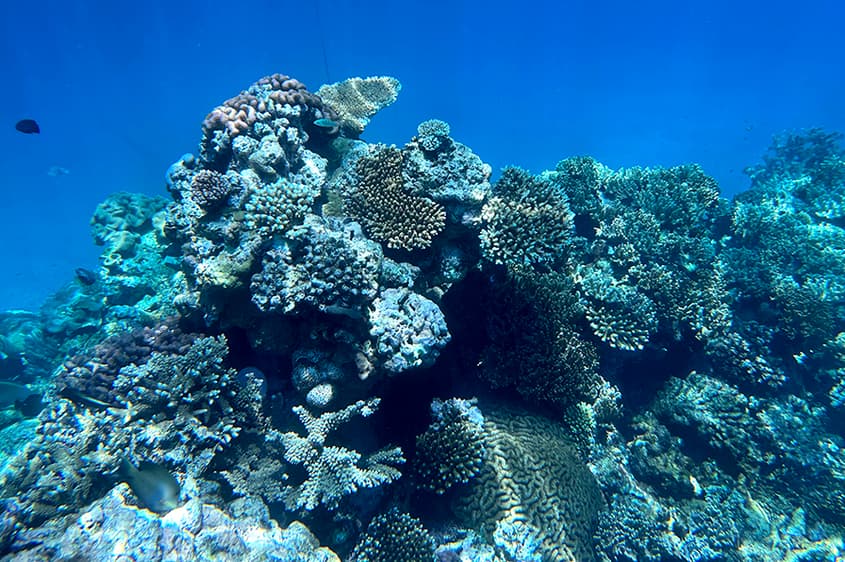
Photo: Coral is seen at Moore Reef at the Reef Magic pontoon, 50km off the coast of Cairns, on the Great Barrier Reef. (AAP Image/Darren England)


As a fourth global bleaching crisis unfolds, an international study has found more than half of the world’s reefs experienced significant damage during the last marine heatwave.
Researchers from Queensland’s James Cook University (JCU) are among the lead authors of a study that compiled the largest worldwide dataset on the severe 2014–17 Third Global Coral Bleaching Event.
Using records from more than 15,000 coral surveys and global satellite temperature data, they found heat stress, bleaching and mortality were more severe than previously recorded.
“This is the most geographically extensive analysis of coral bleaching surveys ever done,” said Sean Connolly, a senior scientist at the Smithsonian.
“Our results show that the Third Global Coral Bleaching Event was by far the most severe and widespread coral bleaching event on record.
“And yet, reefs are currently experiencing an even more severe Fourth Event, which started in early 2023.”
Researchers found moderate or greater bleaching in 80% of reefs they surveyed, while 35% was dying or already dead.
The central Pacific saw the most severe damage and death with corals exposed to heat stress for over a year.
In Fiji and the Great Barrier Reef, some corals rapidly died without bleaching first.
The levels of heat stress recorded were so severe and unprecedented, Coral Reef Watch created new, higher bleaching alert levels.
“These new alerts make it easier to track and understand the impacts of longer, more intense marine heatwaves, both during the Third Global Bleaching Event and the current Fourth event,” said co-lead author and James Cook University (JCU) Professor Scott Heron.
Coral bleaching is primarily driven by rising ocean temperatures and marine heatwaves – both linked to increased greenhouse gas emissions.
“If countries choose to not reduce greenhouse gas emissions in line with previous Paris climate agreement commitments, we can expect to lose many of the ecosystem services coral reefs provide,” said Professor Heron.
The Albanese Government has committed to reducing Australia’s emissions by 62-70% (on 2005 levels) by 2035 and net zero by 2050.
However, critics argue it’s near impossible while the Commonwealth continues to greenlight fossil fuel projects.
Environment Minister Murray Watt recently approved a seven-year extension to Middlemount Coal mine in Queensland’s Bowen Basin
Greens Leader Senator Larissa Waters said it was the 35th fossil fuel project Federal Labor had approved.
“These projects lock in hundreds of millions of tonnes of pollution and push Australia further away from meeting even the weak 2035 emissions target.
“Labor can’t call itself a climate leader and keep signing off on mines that supercharge the climate crisis,” she said.
According to the Smithsonian coral reefs are worth an estimated USD$9.8 trillion per year to the global economy – contributing to everything from food, jobs and pharmaceutical discovery to coastal protection from erosion and storms.
“Over one billion people depend upon healthy coral reefs for their lives and livelihoods,” said research co-lead Dr Sean Connolly, a Senior Scientist at the Smithsonian Tropical Research Institute and Adjunct Professor at James Cook University.
“The world’s coral reefs are also among the ecosystems most vulnerable to warming.
Scientists say corals can recover however their bounce back time is compromised by more frequent events.
“We know corals are evolving in response to warming ocean temperatures and increasingly severe marine heatwaves, but the fact that bleaching is getting more severe across successive events indicates that evolution is not keeping up with the pace of environmental change,” said Dr Connolly.
“After the back-to-back bleaching events on the Great Barrier Reef in 2016 and 2017, coral cover began to rebound, only to be hit again by mass bleaching in 2020, 2024 and 2025,” said Professor Heron.
And researchers warn it’s only an early sign of what’s to come.
The Albanese Government is being urged to rule out changes to the Electric Car Discount in the May budget, as global fuel volatility intensifies pressure to ease the cost of living.

An edited extract of 'Why We Garden' by Hannah Moloney, available in stores nationally from April 14.

Advertisement

A "25% tax on gas exports would make “17 billion dollars a year”, and, as ARIA-award-winning musician Montaigne claims, “if even a fraction of [that money] was directed to music and the arts, it could change the game”. They're right — if less than one fiftieth of the potential annual revenue from the 25% gas exports tax went to arts funding, that alone could be transformative.
Pressure is mounting on the Albanese Government to introduce a 25 per cent gas export tax, with new figures revealing Australia misses out on almost $350 million in revenue every week.