Australia’s climate policy is back in the spotlight after the 'shameless' New South Wales Government was given the greenlight to use carbon credits to help fund its long-promised Great Koala National Park – a move critics argue relies on dodgy offsets.
Tue 21 Jul 2026 10.10 AEST
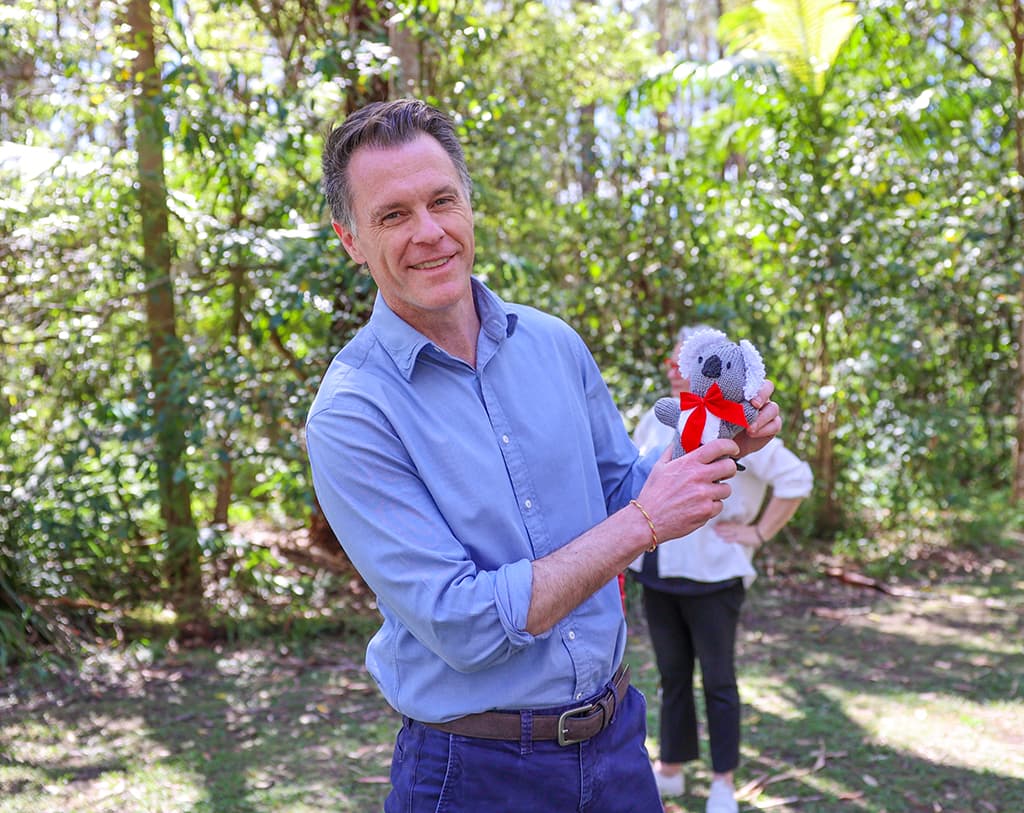
Photo: AAP Image/David Wigley
Australia’s climate policy is back in the spotlight after the ‘shameless’ New South Wales Government was given the green light to use carbon credits to help fund its long-promised Great Koala National Park – a move critics argue relies on dodgy offsets.
On his podcast, What’s the Point?, the Australia Institute’s co-CEO, Dr Richard Denniss, explains the difference between carbon credits and carbon offsets, and why the two are often conflated.
No! Dr Denniss said governments and the fossil fuel industry like to talk about them as if they’re the same, but they’re actually “radically different”.
“Carbon offsets are far more dangerous,” said Dr Denniss. “They’re not just morally repugnant.
“But here we are again talking about the kind of dodgy offsets that fired up under the previous Coalition government. They’re still at the heart of this Labor government’s policy.”
Carbon credits are when we pay someone to store a particular amount of carbon in a tree or in some soil.
“The idea of a carbon credit is that basically we can pay people to do a good thing,” Dr Denniss said.
“If we want to save trees, maybe we pay someone to plant a tree. If we want people not to chop trees down, maybe we pay someone not to chop a tree down.”
He said the principle was straightforward, although carbon credits were not without flaws.
“When we pay people to save carbon, maybe some of it’s wasted, but we’re not doing much harm.”
Dr Denniss said carbon offsets were fundamentally different.
“A carbon offset is the idea that it’s okay for me to pollute. It’s okay for me to do harm to the environment because you did something good. So, your good thing offsets my bad thing.”
He said the key distinction was that a carbon credit paid someone to do a good thing, while an offset allowed a polluter to pay someone else to do a good thing so the polluter could continue doing “a bad thing”.
“The science says we need to pollute less and store as much carbon as we can in trees and soils. The and does all the work.
“Offsets rip out and, and substitute or. Offsets say, ‘It’s okay if I pollute more because someone else didn’t chop down a tree. It’s okay if I pollute more because someone planted a tree.’ That’s not science.”
Dr Denniss said allowing fossil fuel companies to pay someone not to chop down a tree so they could continue emitting carbon dioxide was “not just morally repugnant” but contradicted climate science.
“If – and it’s a big if – we’re serious about tackling climate change, we have to do both.”
Unfortunately, carbon offsets are now the main climate policy in Australia, said Dr Denniss.
“We might have changed government in 2022, but our climate change policy barely changed at all,” he argued.
“We know what we need to do, and if we’re not doing it, things aren’t going to get better.
“More fossil fuel production, more native forest logging equals more climate change.
“If this government or any government is serious about avoiding climate change, we know what to do.
“And if you don’t understand a word they’re saying, they’re trying to trick you.”
The New South Wales Government is under fire for using the Commonwealth’s new Australian Carbon Credit Unit (ACCU) method to bankroll its long-touted Great Koala National Park.
“They’ve been promising to do this for over a decade,” explained Dr Denniss.
“But then in the last year or so, the New South Wales government started to say, ‘Ah, what I meant to say was I might set up a national park but only if I get some sweet, juicy carbon credit cash from the federal government’.”
“So, this is, I think, deeply fraudulent and exposes all that’s wrong with carbon credits.”
Dr Denniss said the Minns government has been “shameless” about its plan, which involves receiving carbon credits from the Commonwealth to “protect” native forest.
Fossil fuel companies can then buy the credits as offsets to count towards their own emissions reduction targets.
“There’s no way that the New South Wales government should be getting paid to set up a park that it already promised to set up,” said Dr Denniss.
“But worse than that, it’s the fossil fuel industry that’s ending up buying these carbon credits off the New South Wales government and using them to offset their increase in carbon pollution.
“So, the New South Wales government is going to get cash from Woodside, Santos, other big fossil fuel producers, in exchange for protecting some trees that they committed to protecting over a decade ago. “
He described it as “one of the bigger environmental frauds in Australian history”.
Dr Denniss said the main reason was greenwashing.
“It’s all just to hide the simple fact that we’re not doing the simple things,” he said.
“If we wanted to take the science of climate change seriously, we wouldn’t be opening new gas and coal projects. We would absolutely be saying no to any more native forest logging.
“We know how to do all those things, but all of this moving feast of koala parks, credit methods, offsets, the safeguard mechanism – it’s all a wall of sound. It’s all cover to hide the fact that we’re not doing the simple stuff.”
“Unfortunately, the point of all these offsets is to hide something simple,” he concluded.
“We’re not transitioning away from fossil fuels. We’re expanding them.
“We’re not listening to climate science. We’re still doing science denial, even though we changed government back in 2022.”
What’s the Point? with Richard Denniss explains the political and economic decisions shaping the lives of everyday Australians lives, answering key questions along the way. By getting straight to the point, Richard helps listeners understand how democracy works and why it matters.
Advertisement
Greens Senator Sarah Hanson-Young said on ABC’s 730 last night that a 25% tax on gas exports would be “bigger and simpler” than Labor’s proposed gas reservation policy. She's right.