The Australian Property Investor Magazine claims that solving the housing crisis “could rest upon property investors”.
Fri 16 Jan 2026 06.00
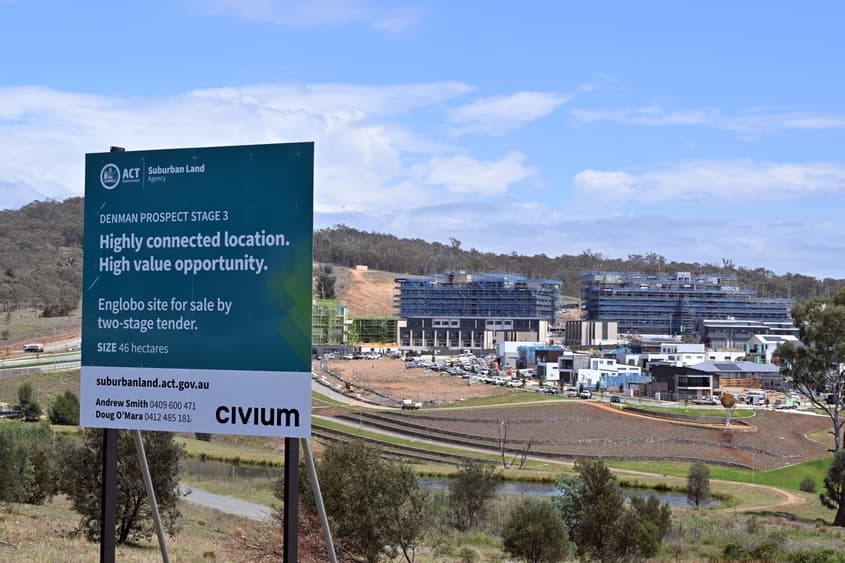
Photo: AAP Image/Mick Tsikas


Those in the property market argue that investors are key to keeping supply high and rent low. By their logic, any restriction on investors will only make the market worse.
The Australian Property Investor Magazine claims that solving the housing crisis “could rest upon property investors”. They argue:
“Abolishing negative gearing or increasing CGT could cause one of the biggest house price booms in history.”
However, the evidence is piling up that property investors are one of the primary causes of higher house prices. Here are two important examples.
In May 2023 the Victorian Government’s budget announced higher taxes on property investors. Property investors reacted by selling up. Since then, Victorian property prices are up just 2% while in the rest of the country they have increased 17%.
10 years ago, the financial regulator was worried about financial stability and cracked down on risky property investors. As a result, interest rates on investor mortgages were one percent higher than owner occupier mortgages. This saw growth in investor credit evaporate and house prices fall about 10%.
Both these examples make sense. Wealthy investors are buying up properties, leaving fewer houses for first home buyers.
But what about renters? If there are fewer investors buying houses, won’t the reduction in the number of rental properties push up rents?
The evidence says this is not the case.
To understand why we need to consider what will happen to all the houses that investors are selling.
Traditionally, aspiring first home buyers rent before they buy. While they’re renting, they save up a deposit and when they have enough, they go to a bank, get a mortgage and buy a house. This means that a significant number of successful first home buyers go from being renters to being owner occupiers.
Imagine a scenario where a family has just saved up enough for a deposit and they’re now ready to buy a house. At the same time their landlord decides to sell the house they’re renting.
The family quite like the house and decide to buy it. After winning the auction the rental market loses one rental property. That property stops being a rental and becomes a property owned by an owner-occupier. But at exactly the same time the number of people wanting a rental property also decreases by one. Our newly minted first home buyers stop being renters and are now owners.
In this example the number of rental properties went down by one but the number of families renting also went down by one.
Let’s look at the bigger picture. Imagine the Government makes changes that discourage property investors. Perhaps the financial regulator puts in place restrictions on investor loans, or a state government increases taxes on investment properties, or the Federal Government scrapped the capital gains tax discount and restricts negative gearing.
Because of this many property investors decide to sell up. The result will be fewer rental properties. But who buys all these properties? They won’t be bought by investors; the policy changes mean they’re leaving the market.
So, who is buying?
If it is not investors, then it must be owner-occupiers. If there is an increase in owner-occupiers, that means more first home buyers. The result is there are lots of households who were renting and are now owners.
Yes, there are fewer rental properties, but there are also fewer people wanting to rent.
If we look at the period from 2015 to 2018, when the financial regulator was restricting credit to investors, growth in investor mortgages dropped dramatically. Investors were forced out.
So, over this period what happened to rents?
The average growth rate of rents was just 0.9% per year. This compares with an average growth in rents for the 15 years before this of 3.8% per year. That means that at the time when investors were locked out of the market, rents grew by a quarter of what they previously had.
An even better example is the tax changes that just happened in Victoria. This is because we can compare the change in rents in Melbourne, where taxes changed, with the change in rents in other capital cities, where taxes didn’t change.
The ABS only measures rent prices in capital cities but of the six state capitals, Melbourne saw the fourth largest increase, putting it roughly in the middle of the pack.
But don’t investors buy newly built housing? If we discourage investors will less houses be built, leading to higher prices in the long run?
There is no reason to believe this would happen. There is plenty of demand for housing. Any decrease in investors is likely to be swallowed by demand from owner-occupiers.
But if this does create a problem then it’s easily fixed. A small tweak to the policy changes could easily exclude investors buying newly constructed houses.
The financial regulator could increase restrictions only on investor mortgages that buy existing houses. A state government could increase taxes only on investment properties that were bought as existing houses. The Federal Government could restrict the benefits of negative gearing, so they only go to those buying newly constructed properties.
These changes would still encourage the construction of new housing supply while reducing the benefits of investing in existing homes.
There is now clear evidence that property investors are driving the crisis in housing affordability. By discouraging property investors, more first home buyers win the auction and more people get into a home of their own.
Advertisement
Independent Senator for the ACT David Pocock has called for an inquiry into why gas companies pay less for gas exports than Australians pay in the beer excise.

The debate over the capital gains tax discount comes down to a very simple question: who do you think should pay more income tax? Should a high-income executive who makes a $400,000 capital gain (that is, a profit) from selling an investment property pay a higher tax rate than a full-time retail worker on minimum wage who decides to pick up a few extra shifts?

British economist Gary Stevenson, known as 'the People's Economist' has delivered blunt advice to Australian politicians during his tour of Australia, warning that living standards will continue to deteriorate unless they start taxing the “super-rich elite.”