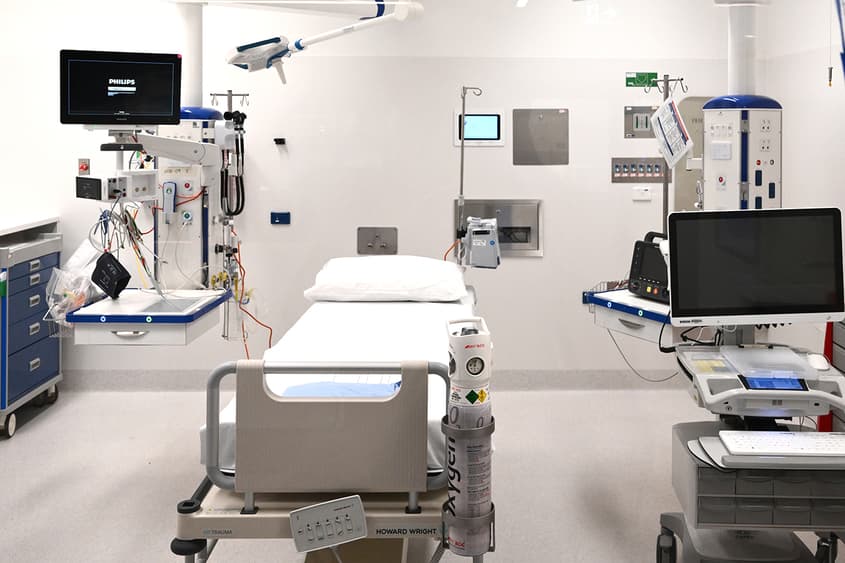
The NSW Government is yet to address whether it will extend its temporary ban on public gatherings in designated areas, with police working on contingencies for mass rallies against Australia Day.
Fri 16 Jan 2026 10.00
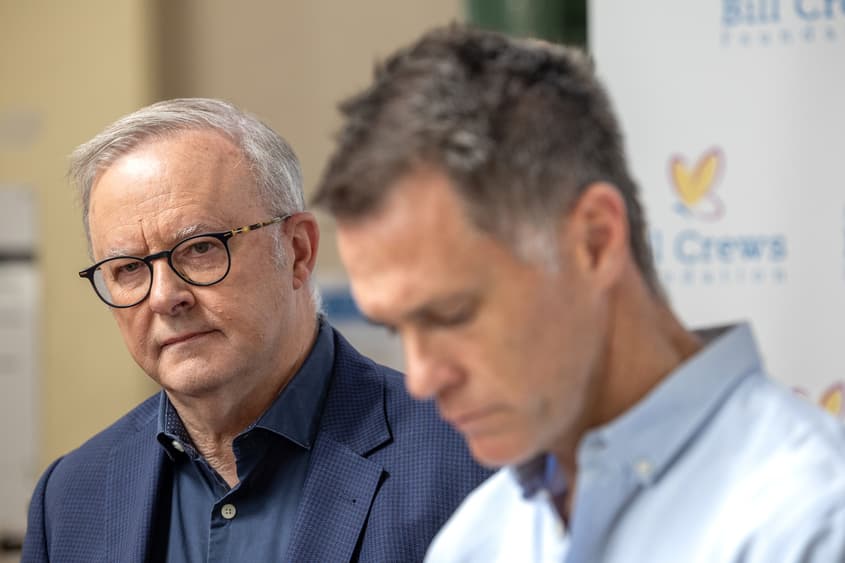
Image: AAP/Sitthixay Ditthavong


State governments are being warned against “overreaching” and rushing to legislate “easy solutions” in the wake of the Bondi terror attack.
The NSW Government is yet to address whether it will extend its temporary ban on public gatherings in designated areas, with police working on contingencies for mass rallies against Australia Day.
The measure was introduced five days after the Antisemitic attack in December that killed 15 people.
“I think it’s very dangerous,” said the Australia Institute’s Co-CEO Dr Richard Denniss of government restrictions. “We can overreach when trying to stop protests.”
“One thing we know is that silencing powerless voices doesn’t make ill feelings go away. It actually hides it. It ferments it.”
Five of Australia’s six states have passed anti-protest amendments in the past six years.
Dr Denniss singled out South Australia which now has the most punitive anti-protest laws in the country.
“They made those laws less than 24 hours after some climate activists interrupted a gas conference,” he said on the Australia Institute’s Follow The Money podcast.
“I think that as a free country, as a democracy, people should have the right to come together and express their views and see that they’re not alone.”
Dr Denniss said governments need to “tread very carefully” when considering their long-term responses to the terror attack.
“The challenge here is that we don’t just rush to legislating what seem like easy solutions, especially easy solutions that wedge a particular group or appease a particular group,” he noted.
“I think we have to be very careful not to put safety ahead of freedom in all instances. Of course, we all want to be safe, but we want to be safe and we want to be free.”
The Prime Minister has recalled the Australian parliament for two days next week to pass stronger hate speech and gun laws.
Opposition Leader Sussan Ley has labelled the draft legislation “unsalvageable” and has criticised it for not clearly capturing certain phrases.
“It’s important to remember that back when Tony Abbott was prime minister, the Coalition were opposed to restrictions on hate speech,” pointed out Dr Denniss.
In 2014, then Attorney-General George Brandis defended the Government’s plan to remove sections of the Racial Discrimination Act, declaring, “people have the right to be bigots”.
“That’s easy to mock,” said Dr Denniss, “but in a free country, drawing the line between what’s bigotry, what’s hatred, when are people culturally safe and when is our culture of freedom of speech safe.
“There is no simple answer to these things.”
The Greens have said they will not pass the Bill in its current form and want more protections added for all minorities.
“These laws should protect everyone from hatred and discrimination, including the LGBTQ+ and disability communities,” said Greens Leader Larissa Waters.
“We need to ensure these laws cannot be weaponised to shut down legitimate political protest.
“Labor must make it crystal clear that criticism of Israel’s actions, just like those of Russia, China or Australia, will not be criminalised.”
One of the most combative elements of the reform is a new offence that would make it illegal to promote or incite racial hatred unless the speech or writings are direct quotes from religious texts.
The proposed legislation also includes strengthened gun laws and will establish a national buy-back scheme.
“Getting rid of guns isn’t going to take hate out of the community,” said Dr Denniss, “but the fewer the guns in the community, the harder it is to turn hate into the kind of horror we saw at Bondi.”
Prime Minister Anthony Albanese has been criticised over his reluctance to call a royal commission into the Bondi massacre, Antisemitism and social cohesion.
“There’s no one thing the prime minister can do to fix this but there’s a lot of things that we can do to make it worse,” said Dr Denniss.
Parliament will be recalled next Monday and Tuesday with a condolence motion to be the first order of business.
“Hopefully they will use the condolence motions to show each other and Australia that our parliament can agree on important things and can stop the politicking that we’re so used to and remind everybody what we do have in common,” said Dr Denniss.
Advertisement
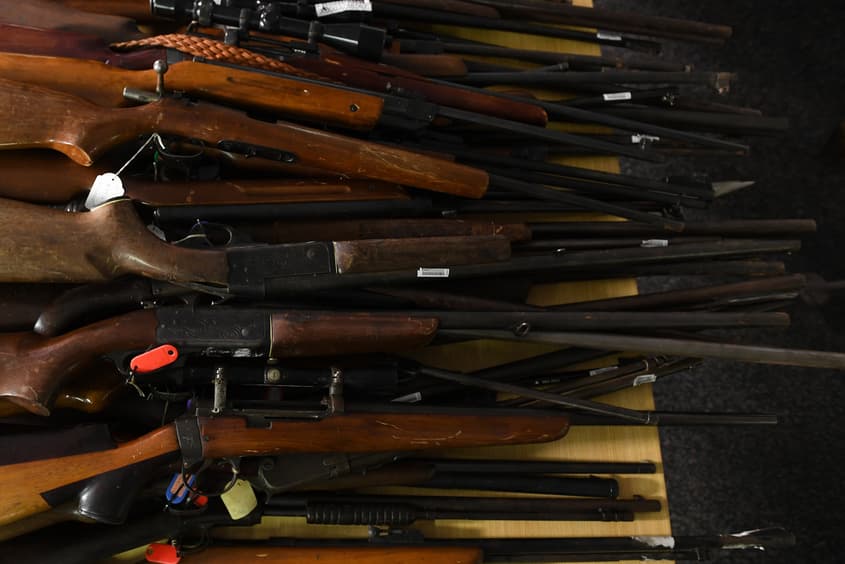
If you live in Sydney, do you know how many guns are being stockpiled just down the road?
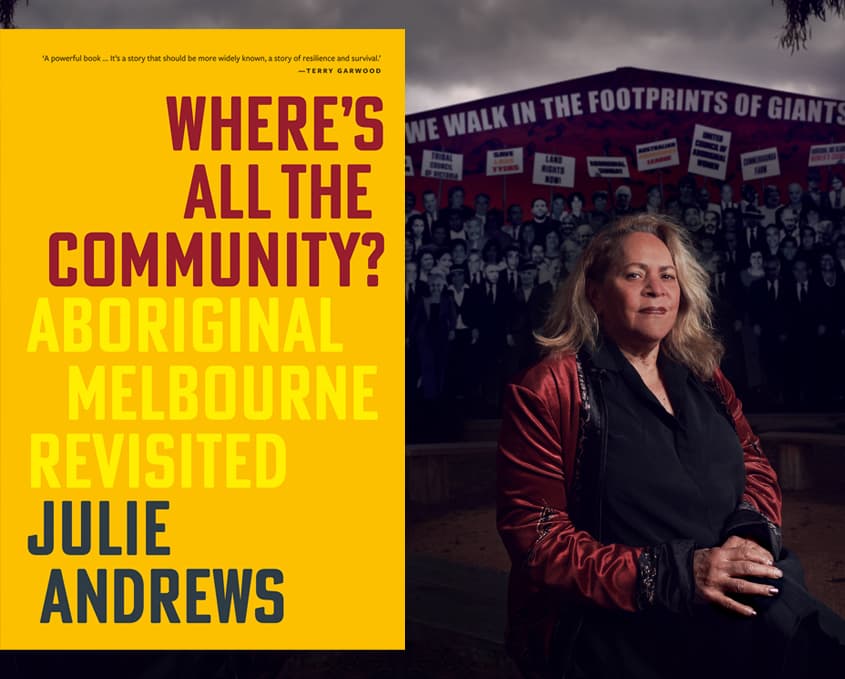
An edited extract of Where's All the Community?: Aboriginal Melbourne Revisited by Julie Andrews, published 3 March and available at all good bookstores and online.
The Four Corners program aired on Monday night detailed how Melbourne gynaecologist Simon Gordon performed surgeries to remove the ovaries and uteruses of dozens of young women who did not need these highly invasive and life-changing procedures. But beyond these shocking examples, Australia has a widespread problem with unnecessary and inappropriate medical interventions.