Today we will find out the ruling from the NSW Supreme Court on whether the planned protest in Sydney’s CBD against Israeli President Isaac Herzog can go ahead legally.
Mon 9 Feb 2026 11.00
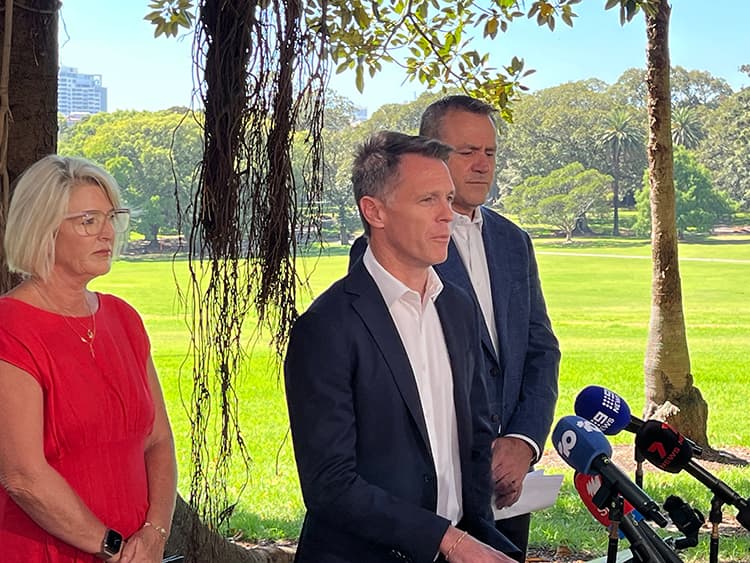
Press conference announcing the declaration of a “major event” to align with the visit of Israeli president Isaac Herzog. The declaration increases police powers to control and disperse protesters. Multiculturalism Minister Steve Kamper, Premier Chris Minns and Police Commissioner Mal Lanyon. Saturday, February 7, 2026.(AAP Image/Tom Wark)


Today we will find out the ruling from the NSW Supreme Court on whether the planned protest in Sydney’s CBD against Israeli President Isaac Herzog can go ahead legally.
But if Tony Abbott had his way, the courts wouldn’t be in a position to decide the issue.
Last week, Chief Justice Andrew Bell took aim at former Prime Minister Tony Abbott’s public criticism of judges ruling on the legality of political protests. Specifically, his critique was of this August 2025 X (if I must call it that) post by Tony Abbott:
It should not be for judges to decide when a political protest is justified. The decision to close the Sydney Harbour Bridge to facilitate this protest is a political decision and should be made by elected and accountable ministers – who as it happens, think the march should not go ahead. We are on a slippery slope when unelected judges start making political judgments.
Let’s play out this argument.
If political protests should only be allowed or prohibited by politicians, then whether or not the public is allowed to criticise politicians is in the hands of the very people they are seeking to criticise. This is not just circular, it’s authoritarian, anti-free speech and goes against the Australian Constitution.
Let’s think about this in another context. Donald Trump is elected too — but are we comfortable with the idea that he, not judges, would decide whether Americans have a right to protest ICE immigration raids?
Justice Bell had four criticisms of Abbott’s post.
First: the judge’s decision was not about whether or not the protest was justified, but whether it was [lawful, or constitutional, or whatever the matter in question was].
Second: the judge did not decide to close the Sydney Harbour Bridge – the authorities had already decided to do that.
Third: the judge had been given the power to decide whether the protest went ahead by the democratically-elected NSW Parliament; this was not a fiat from an “unelected judge”.
Fourth: the decision was not a “‘political’ judgment but involved the careful weighing of the common law and constitutionally protected right to free speech and public assembly”.
What is concerning is the willingness of Mr Abbott to criticise a judge for doing his [her?] job according to NSW law. This is not the first time that Justice Bell has discussed the relationship between free speech and government. In 2024, Justice Bell spoke about how truth in political advertising laws might play out in the courts, saying they “may raise difficult questions about the institutional competence of courts when adjudicating disputes about truth and dishonesty in the political arena”.
But despite raising difficult questions, his conclusion was that courts of law are already “arbiters of truth” (for example, in consumer law where there are already penalties for misleading advertising) so there is precedent for making judgements on truth claims.
Protests are a key part of democracy, ensuring that Australian governments are kept accountable to the people they represent.
There are plenty of options for the connected and powerful to attract the attention of politicians – whether by paying for highly visible and prevalent advertising, subscribing to exclusive fundraising dinners, hiring a lobbying firm or having a direct line to the PM
For everyone else, protest is the most accessible way to communicate loudly and clearly with elected representatives.
There is a long history of disruptive protest in Australia. Take, for example, Jimmy Clements and John Noble, who in 1927 walked for days to the opening of Parliament House in Canberra in protest at the complete exclusion of Aboriginal people from the event. Remember too, the anti-apartheid protesters who interrupted the tour of the Springbok Rugby Union team in 1971.
In recent years, the consequences for protesters in Australia have been extreme. In 2023, South Australia rushed in new anti-protest laws with punishments of up to $50,000 and three months in jail. In fact, it would cheaper, in many instances, to get a ticket to political party fundraiser with a politician than it would pay a fine for protesting.
To be clear: if protests didn’t work, governments wouldn’t try to ban them.
Tony Abbott’s comment is the latest in a long line of attempts to undermine not just the right to protest in Australia, one that Justice Bell rightly criticised, but the independence of the judiciary and public trust in the court system.
So much of what passes for Australian political discourse relies on existential threats. It’s easy to make grandiose statements and take positions when the threat is some amorphous vague maybe that could possibly happen.
Advertisement
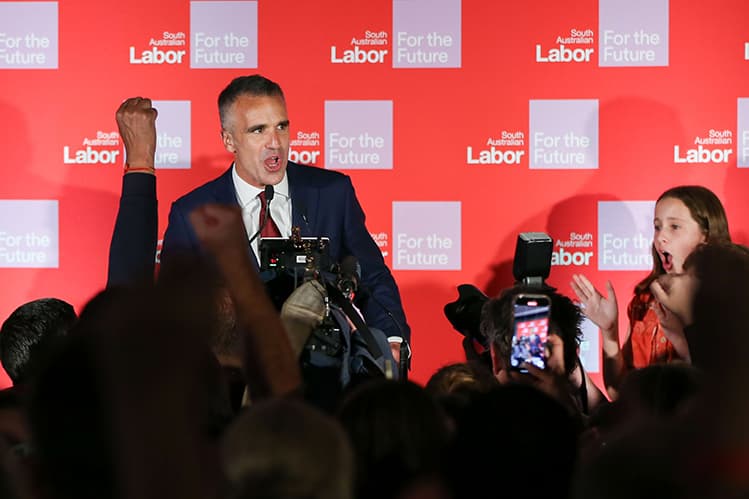
On Saturday, South Australians voted decisively to re-elect the first-term Malinauskas Labor Government. While we don’t know exactly how the 47 lower house seats will fall, Labor will have a super-majority having won about 35 seats.
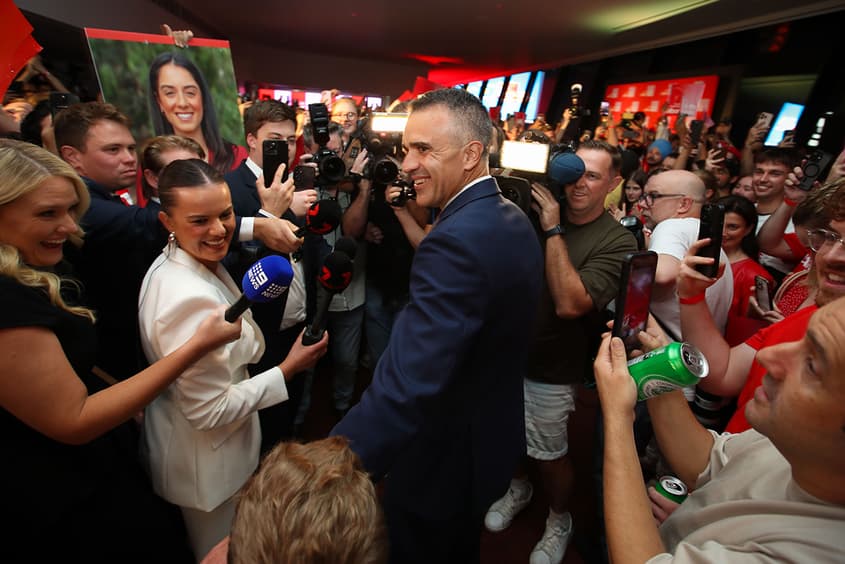
With South Australia in its final week of campaigning ahead of the state election, you may have noticed while there’s been a few scandals around mistaken identity of hospital patients and controversial candidates’ opinions, accusations of politicians lying are muted.