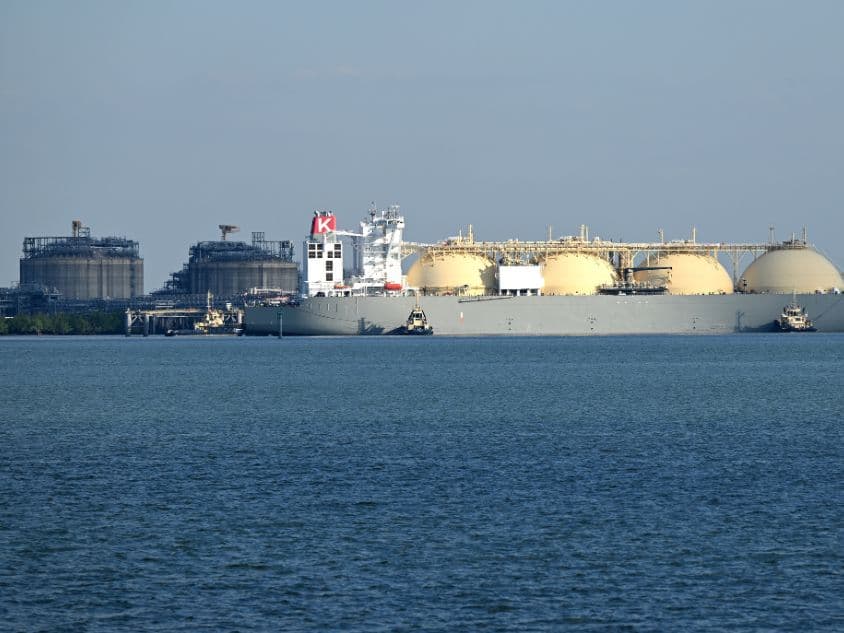
The Albanese Government could pass a 25 per cent tax on gas exports within a fortnight, with the Greens declaring they stand ready to help push the reform through Parliament.
Mon 23 Mar 2026 15.00
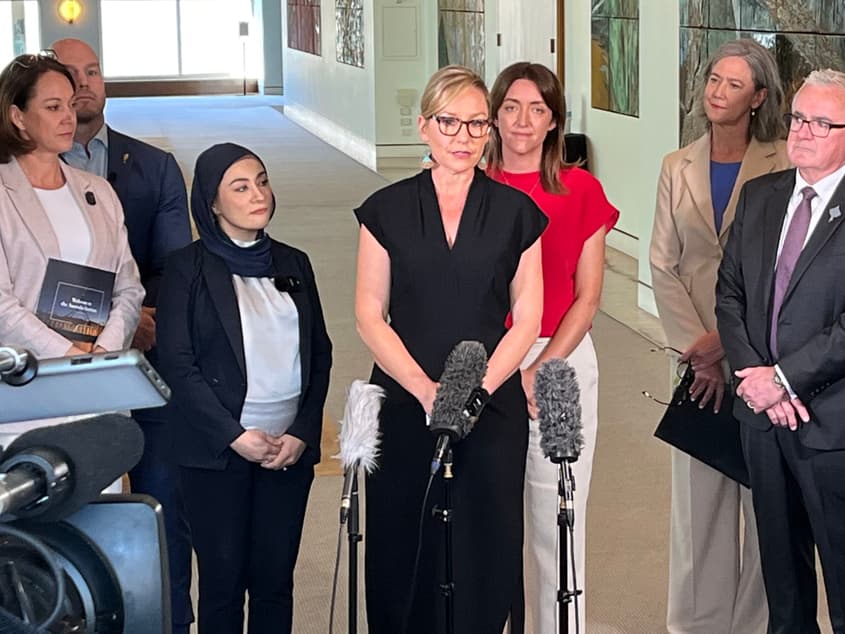
Photo: supplied


The Albanese Government could pass a 25 per cent tax on gas exports within a fortnight, with the Greens declaring they stand ready to help push the reform through Parliament.
Greens Leader Senator Larissa Waters told reporters in Canberra that she has written to the Prime Minister, putting her party’s support on the table.
“The Government has the numbers, with the Greens in the Senate, to pass good reforms, and they need to act and start taxing those greedy gas corporations,” she said.
The push comes as new polling by the Australia Institute shows most Australians are in favour of a flat 25 per cent tax on gas exports.
“It’s clear Australians think that making foreign owned gas companies pay for our gas isn’t an issue of left or right, but a simple issue of fairness,” said Dr Richard Denniss, co-CEO of The Australia Institute
“Parties that ignore the will of the majority of voters on something as important and obvious as this are parties that risk seeing their primary votes continue to fall.”
A national poll conducted by YouGov found more than three in five voters support the tax, which could raise around $17 billion a year.
Separate polls in the seats of Kooyong, Mackellar, Wentworth and Farrer, found that more than two out of three voters support a flat 25 per cent tax on gas exports.
“This is urgent,” said Independent ACT Senator David Pocock.
“You can see a broad spectrum of politicians now pushing for gas companies to actually pay their fair share.”
The Middle East conflict has triggered significant price spikes in fuel, while high gas prices are also threatening electricity bills.
“We’re seeing shareholders overseas in multinational gas companies laughing all the way to the bank,” said Independent WA Senator Fatima Payman.
“New taxes have a role, not just in raising revenue, but also in sending price signals for behaviours that we want,” Independent MP for Bradfield, Nicolette Boele said.
“We want more of our gas to stay onshore, serving domestic markets, because we know that the price of gas is inextricably linked to the price of electricity.”
According to ABC reporting, the Prime Minister’s department has sought modelling on options for a new levy on gas companies to “shield Australians from the economic shock of the Middle East war”.
Independent MP for Wentworth, Zali Steggall believes Australia is nearing a COVID-era moment, when the Coalition was forced to roll out multiple support packages.
“I believe we are at that point now in the economy that that is needed for Australian households and small businesses.”
“But what we can’t do is the same mistake that was done post-COVID, where we allowed the industries that profited from the crisis to walk away with that profit, while the Australian economy paid for the increasing debt.”
Greens Senator Steph Hodgins-May described the situation as “indefensible”.
“Australians are crystal clear – they want to tax gas exports and they want to tax it now,” she said. “Let’s be clear – this could happen in the next fortnight.”
According to an Australia Institute poll, respondents who were told the tax could raise $17 billion a year overwhelmingly supported the revenue being spent on improving health and aged care services.
Critics argue the current Petroleum Resource Rent Tax (PRRT) delivers only a fraction of the revenue Australians deserve.
“When you see the mind-boggling amount of gas we export at the moment, but yet over one year, only $1.5 billion went back to the community … that is absolutely unconscionable,” said Independent MP Andrew Wilkie.
He said the tax would not increase the cost of gas for Australian consumers, backing a proposal that would see all uncontracted export gas flow into the Australian market.
However, according to The Sydney Morning Herald, the Prime Minister is using Australia’s gas exports as a bargaining chip with Japan, China and South Korea, to ensure critical fuel supplies remain open.
Dr Richard Denniss said it was a “ridiculous position for Australia to be in”.
“The idea that unless we export even more [gas] that they might do harm to up to us, is an insult and an outrage, and it shows how little Australia has got out of this.
“If we, at this point in world history, are vulnerable, rather than strong, it highlights everything that’s wrong with the way we’ve been treating the gas industry.”
Ms Steggall said it was “the very definition of an abusive relationship”.
“We are paying for that relationship. Our households, our small businesses pay for that broken relationship because our domestic gas prices are simply ridiculous compared to the export prices.”
Dr Sophie Scamps, the Independent MP for Mackellar, agreed.
“Australians have every right to feel furious at the moment at the raw deal they’re getting.”
However, Mr Wilkie said Labor is wary of taking on the resources sector, given its history of political influence.
“It brought down a Prime Minister. It contributed to the defeat of a Labor government. That helps to explain why they are fearful of the weight that the resources sector can bring to bear.”
The claim is true. Japanese companies are on-selling a lot of Australian LNG and making a lot of profit while doing it.
Advertisement

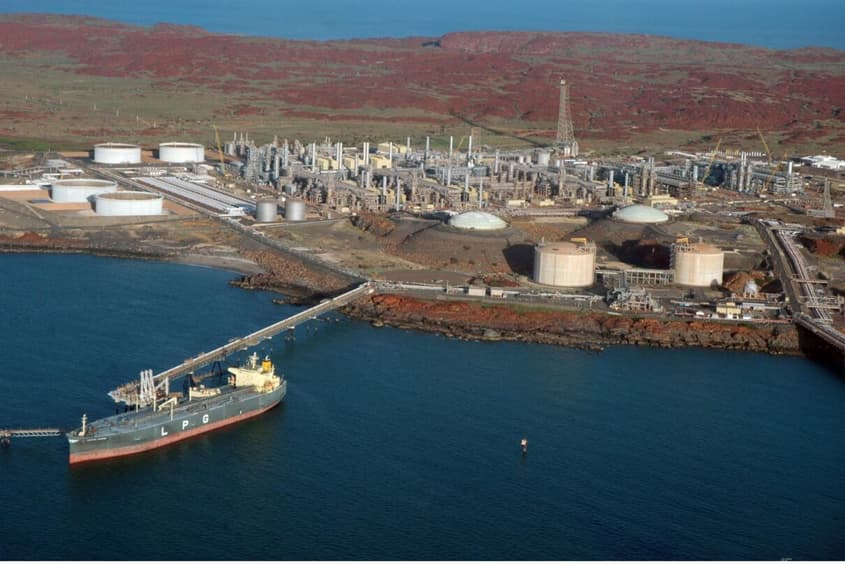
The Albanese Government is quietly exploring options for a new tax on gas and coal giants reaping windfall profits from the war in the Middle East.
The gas industry is clearly worried that a vast majority of Australians believe there should be a 25% tax on gas exports. After decades of playing Australian governments for fools, the industry deserves to be worried that Australians and politicians across multiple parties have realised that Big Gas is taking the piss.