The Albanese Government is quietly exploring options for a new tax on gas and coal giants reaping windfall profits from the war in the Middle East.
Sat 21 Mar 2026 00.00
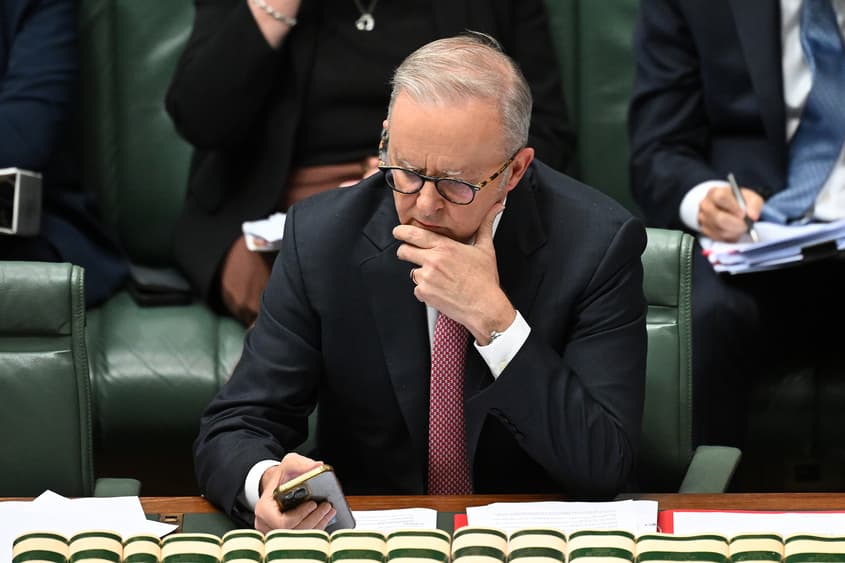
Photo: AAP Image/Lukas Coch


The Albanese Government is quietly exploring options for a new tax on gas and coal giants reaping windfall profits from the war in the Middle East.
The Prime Minister’s department has also sought advice on further changes to the Petroleum Resource Rent Tax (PRRT) to collect more revenue, according to ABC reporting.
It comes as new analysis by the Australia Institute revealed the nation would be $63 billion richer, if the Federal Government had implemented a 25 per cent gas export tax after Russia’s invasion of Ukraine.
Australia Institute co-CEO Dr Richard Denniss said it was an “enormous” sum to give away while Australians struggle with a cost-of-living crisis, rising interest rates and skyrocketing petrol prices.
“While Australia obviously can’t go back in time and implement an efficient gas export tax, these figures show how incredibly expensive delaying the introduction of a gas export tax is,” said Dr Denniss.
The analysis shows Liquefied Natural Gas (LNG) export prices more than doubled after the Russian invasion in February 2022.
If the then-newly elected Labor Government had immediately imposed a gas export tax starting on 1 July 2022, it would have raised $63.8 billion by now.
Dr Denniss said, “Australia only gets one chance to get a fair price for each ship full of our gas exports and we have missed too many of those chances in the last decade.”
According to ABC journalist Isobel Roe, the Department of the Prime Minister and Cabinet has tasked Treasury with modelling a potential windfall tax, which could be announced by Treasurer Jim Chalmers ahead of the May budget.
The move coincides with the new Australia Institute analysis that reveals the scale of revenue at stake.
“If gas prices stay at current levels, a 25 per cent gas export tax would be enough to fully offset the cost of providing free university and TAFE for Australian students or free childcare for Australian families,” said Dr Denniss.
“Surging fuel prices are already delivering windfall profits for the multi-national companies which extract and sell Australia’s natural resources.
“These largely foreign owned companies are making a fortune from the war in the Middle East while the Australians who actually own the gas are paying through the nose at the petrol bowser.”
Independent MP Allegra Spender earlier called on the Albanese Government to urgently impose the tax on oil and gas companies raking in “extraordinary profits”.
“The supernormal profits made by a few companies during this time is not a reward for effort or ingenuity, or a driver of investment, it is the windfall from war,” she said.
“These are Australian resources, and the Australian public deserves to share in these gains from war-driven price spikes.”
ACTU President Michele O’Neil said it would be “a national shame” if Australia didn’t impose a tax and let “the same thing happen again just four years later.”
There is increasing momentum for a fairer tax on gas exports, with the ACTU’s proposed 25 per cent levy now supported by industry groups, a wide range of MPs, industry experts and, according to polling, the vast majority of ordinary Australians.
Australia Institute research shows it could raise $17 billion a year and incentivise producers to prioritise the supply of gas to domestic customers.
“Unlike the citizens of other resource-rich nations, Australians don’t benefit when prices rise. In fact, we feel poor, because Australian households pay international prices for Australian gas,” Dr Denniss said.
“This is not bad luck. It’s bad policy. But luckily it’s easy to fix.
“Free childcare or free uni should not be a pipe dream for a rich country like Australia. If the Australian government made gas export companies pay their fair share for Australia’s resources, Australians would – and should – be better off.”
The Albanese Government could pass a 25 per cent tax on gas exports within a fortnight, with the Greens declaring they stand ready to help push the reform through Parliament.
Advertisement

The gas export industry has been free riding off Australians for decades.
Right now, right across the country, communities are being forced to come to terms with the rapidly escalating frequency, intensity and cost of climate disasters.