Santos case could set precedent on offshore oil and gas clean-up responsibility
A Federal Court judge is considering a legal challenge by the The Wilderness Society over whether Australia’s offshore regulator failed to ensure Santos had funds to clean up its Reindeer gas field, before approving its environmental plan.
Mon 13 Apr 2026 16.45
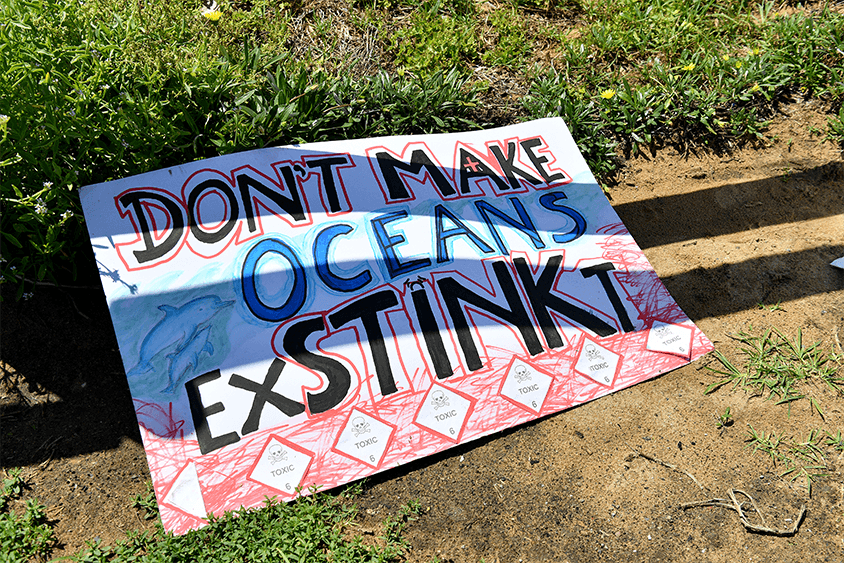
Photo: AAP Image/Bianca De Marchi


A Federal Court judge is considering whether Australia’s offshore oil and gas regulator – the National Offshore Petroleum Safety and Environmental Management Authority (NOPSEMA) – failed to ensure Santos had enough money to clean up its Reindeer gas field before approving its environmental plan.
The Wilderness Society’s legal challenge against NOPSEMA and Santos was heard in the Federal Court last week.
At the centre of the case was NOPSEMA’s decision to let Santos keep infrastructure in place off the coast of Karratha, WA, for “future phases” – even though production ended last year.
In a statement, Fern Cadman, fossil fuel industry campaigner at the Wilderness Society, said, “This case is fundamentally about protecting Australia’s unique marine environment from a spiralling inventory of contaminated oil and gas industrial waste.”
“The fossil fuel industry has made billions from Australia’s oceans. They must also be held accountable for cleaning up their mess,” she said.
The prominent community-based organisation argued the regulator failed to assure itself that Santos had the financial means, and a dedicated plan, to decommission the infrastructure and remediate damage to the surrounding environment.
Lawyer David Hertzberg, who acted for the Wilderness Society, said the case would be of “broad significance”.
“The key issue is whether oil and gas companies are required to demonstrate, throughout the life of a project, that they can pay to decommission the infrastructure they have installed,” he said in a statement.
“Our client is concerned that, without stronger safeguards, companies may delay clean-up, underestimate costs, or collapse, leaving taxpayers exposed.”
According to the Australian Government, oil and gas titleholders will spend an estimated $60 billion to decommission offshore infrastructure over the next 30–50 years.
The Wilderness Society said it’s concerned the system “relies heavily on the promises of an industry with a track record globally and in Australia of cutting and running from clean-up responsibilities”.
“Australia is entering a decommissioning decade as offshore oil and gas fields age and production declines,” said Ms Cadman.
She said previous failures have already demonstrated the risk.
“When offshore operator Northern Oil and Gas Australia (NOGA) collapsed, the federal government was forced to step in to manage decommissioning, highlighting the real prospect of public liability.”
Following numerous compliance and maintenance issues, NOPSEMA halted production on the company’s Northern Endeavour operation in July 2019, citing serious environmental and safety concerns.
NOGA then went into liquidation, abandoning the 274-metre-long oil production storage vessel, 550 kilometres northwest of Darwin in the Timor Sea.
Previous owner Woodside had closed operations in mid-2016 and planned to decommission the fields; however, it changed track and sold it to the much smaller, less experienced NOGA.
In its wake, the Australia Institute advocated for the introduction of an offshore oil and gas decommissioning levy.
In its 2021 submission to a Senate committee, it argued, “There is no reason to believe similar incidents will not happen again”.
“Indeed, the 60,000 unfunded, abandoned mine sites on the Australian mainland suggest that further abandonments are almost certain.”
“Wherever possible, oil and gas companies will try to pass decommissioning costs onto other, smaller companies and eventually to governments.”
Mr Hertzberg, Principal Lawyer at Equity Generation Lawyers, said the current case against Santos could set an important precedent.
“If our client is successful in this case, it will set a precedent that would help to ensure decommissioning costs stay with the oil and gas companies who have profited from these projects.”
Related Articles
Japanese climate coalition joins growing push for 25% gas export tax
Calls for Australia to impose a 25 per cent gas export tax have gained international backing, with a coalition of Japanese climate and advocacy groups urging the Albanese government to act.