"Genuinely historic": Australia on the cusp of ratifying High Seas Biodiversity Treaty
Australia is on the cusp of ratifying a landmark international oceans treaty that will pave the way for large-scale marine sanctuaries as threats from overfishing, pollution and climate change intensify. David Ritter, CEO of Greenpeace Australia Pacific, said it was a “genuinely historic” milestone for global ocean protection.
Tue 7 Apr 2026 01.00

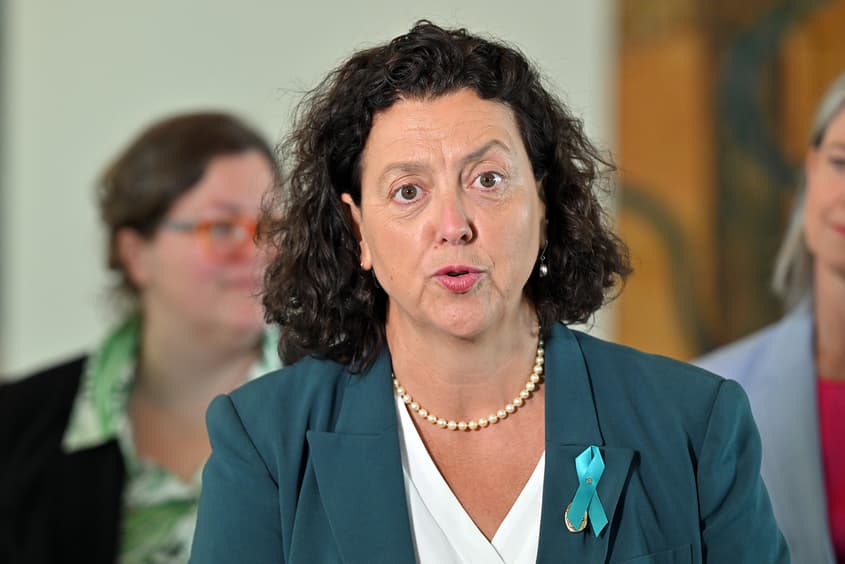
Photo: AAP Image/Dan Himbrechts


Australia is on the cusp of ratifying a landmark international oceans treaty that will pave the way for large-scale marine sanctuaries as threats from overfishing, pollution and climate change intensify.
Federal Parliament has passed legislation marking the final step before the country can formally commit to the High Seas Biodiversity Treaty.
David Ritter, CEO of Greenpeace Australia Pacific, said it was a “genuinely historic” milestone for global ocean protection.
“At a time of unprecedented pressure from destructive industrial fishing, severe climate impacts, plastic pollution and mining, Australia has chosen to join the global effort to protect our magnificent oceans,” he said.
The high seas sit outside national jurisdictions and cover more than two-thirds of the ocean’s surface, representing over 90 per cent of Earth’s habitable volume.
Yet only around one per cent is protected.
“We rely on this vast expanse for oxygen, climate regulation and food, but until now it has been heavily exploited with almost no protection,” said WWF Australia CEO, Dermot O’Gorman.
“This treaty gives us the tools to protect biodiversity on the high seas – and Australia stepping up really matters.”
Australia joins more than 80 countries that have committed to the treaty, which grants them the legal authority to create highly protected ocean sanctuaries.
Mr Ritter said it was “the most significant global nature agreement for many years and has the power to protect the world’s high seas and safeguard precious and endangered wildlife.”
However, delivering on that promise will be the real test.
“The text of the Agreement is clear, but the work to turn it from a piece of paper to something that can deliver change in the water is far from over,” said High Seas Alliance Director, Rebecca Hubbard.
“The task now is to build the institutions and processes needed to turn ambition into action.”
Success will ultimately hinge on sustained political backing.
In New York, Steven Hill, UN Assistant Secretary-General for Legal Affairs, described the treaty as “one of the most hopeful recent achievements of multilateralism”, but warned that “maintaining that momentum will require renewed political will”.
The treaty outlines countries’ obligations to share valuable scientific discoveries fairly and prevent activities that could damage marine life.
“Successful implementation of the Agreement, from establishing marine protected areas to sharing benefits from marine genetic resources, depends on strong institutions and inclusive participation,” said Daniel Kachelriess, Cross-Cutting Coordinator of the High Seas Alliance.
“The sooner these systems are in place, the sooner the Treaty can deliver on ocean equity and conservation, urgently needed to address the planetary crisis.”
Environment Minister, Murray Watt, said it was “pivotal to safeguard the health of the ocean that we share with other nations and will support a thriving ocean economy for future generations.”
“Protections implemented under the Treaty will also contribute towards the global target to protect 30 per cent of the world’s ocean by 2030,” he added.
Australia was one of the first countries to sign the treaty in 2023 and has been leading preparations for its implementation alongside Belize.
“We are stepping up to protect our region because what happens in the high seas affects our economy, our environment and our way of life,” said Minister for Foreign Affairs, Penny Wong.
“Healthy oceans help keep our food supply chains more secure, reliable and sustainable.”
With the formalities complete, Greenpeace is calling for immediate action.
“We’re calling on Minister Watt to create five high seas sanctuaries in our region, starting with a large ocean sanctuary in the Tasman Sea between Australia and Aotearoa-New Zealand,” said Mr Ritter.
He said governments would be required to protect ocean areas “larger than entire continents” and will need to do so “faster than any conservation effort in history”.
The first Oceans COP (Conference of the Parties) will be held in January 2027.
Related Articles
Pacific nations step up push for fossil fuel phase-out ahead of global talks
Pacific leaders are preparing to meet in Vanuatu to agree on a unified position ahead of the first global conference on transitioning away from oil, coal, and gas later in the year.