Part one: The false promise of carbon capture and storage
Despite the best efforts of climate and accountability campaigners, Australia’s major political parties have not stopped pushing the false promise of carbon capture and storage.
Despite the best efforts of climate and accountability campaigners, Australia’s major political parties have not stopped pushing the false promise of carbon capture and storage (CCS). As Ebony Bennett wrote recently, the government keeps launching new reports on the ‘potential’ for a massive new network of carbon capture, transport and storage in Australia. You can get how it’s so tempting: the ability to continue with business-as-usual while magically captured emissions erase any responsibility or consequences for fossil fuel companies.
CCS remains firmly on the agenda for Australia, with big companies proposing big projects. For example, Japan’s Inpex is leading a project named ‘Bonaparte’ in the gulf between NT and WA, Santos is pushing for CCS in the Timor Sea and the Middle Arm petrochemical hub aims to become a CCS facility that various companies can use to dump their emissions.
This series will be an update of the global and Australian numbers on CCS: why it’s more deficient than ever before, and why that failure hasn’t sapped a single joule of energy from its failure-immune advocates.
Part one: CCS isn’t being built as much as it was expected to be built
It is mind-boggling to learn just how long the promise of carbon capture and storage has been around. Climate historian Marc Hudson runs the site ‘All our Yesterdays’, and you can find many examples of hollow CCS promises going far back in time.
According to Hudson’s articles, CCS was being studied as an option as early as the 1980s. It was examined by the IEA as a potential climate solution back in the 1990s and, in 2005, the IPCC published a special report on CCS projecting between 2,600 to 4,900 megatonnes of annual carbon capture operational by the year 2020. That would be between 9 to 12% of total global greenhouse gas emissions re-captured.
In 2009, the Queensland Resources Council head told the media that “we will have our first commercial-scale carbon capture and storage electricity generator by about 2014 or 2015”. Apparently, there were 12 “clean coal” projects underway in Australia, including “ZeroGen – a Central Queensland carbon capture and storage demonstration project with a “planned deployment date” of late 2015”.
Great! Let’s take a huge sip of coffee and check out how Australia’s actual carbon capture capacity ended up, relative to the capacity of all the promised projects in the development pipeline over the years.
In the chart below, I present the estimates of Australian CCS capacity published over the last six years by the Australia-based (and Rudd-created) ‘Global CCS Institute’:
As you can see, the Queensland coal lobby’s 2015 project never happened. In fact, none of them did. There is no CCS for electricity generation anywhere in Australia (and barely the world). The chart shows that Australia got its first operational CCS capacity in 2019, Chevron’s Gorgon project (which will be the subject of the next post in this series).
Total global carbon capture in 2020 was about 25 megatonnes of carbon dioxide: just a little bit under the 2,600-4,900 megatonnes projected in the IPCC’s old report. The chart below shows the Global CCS Institute’s planned pipeline compared to actuals:
It is clear that carbon capture does only one thing consistently: failing to exist.
The rare few that do end up existing tend to either be capturing carbon for use in extracting more oil from underground, or very slightly reducing emissions from massive fossil fuel extraction projects, or both (we’ll explore this more in the next post).
This was laid out extremely plainly in this 2024 study, which quantifies the ‘failure rate’ of CCS projects that were proposed between 1972 and 2017:
What this chart shows is that close to every single fossil-fuelled power station proposed with CCS between 1972 and 2017 ended up failing to ever become built and operational, alongside a range of other heavy industrial applications.
The less-bad failure rate (still remarkably high for any technology) for fossil gas processing is thanks largely to how easily it is to capture carbon dioxide from the gas extracted from underground – but as we’ll see in the next post, one of the biggest projects of this kind has failed in new ways.
CCS is a technology I’ve previously described as a ‘failure bomb’ – something that won’t ever end up meeting expectations, but can still do immense damage. The presence of a huge pipeline of projects creates an illusion of impending progress, but for decades, in a pattern that began before I was born, it mostly never actually materialises.
Yet, there are projects in Australia that did materialise. One of the world’s ‘best’ CCS projects in Western Australia has been operational for several years now. How is it going? We’ll explore that in part two.
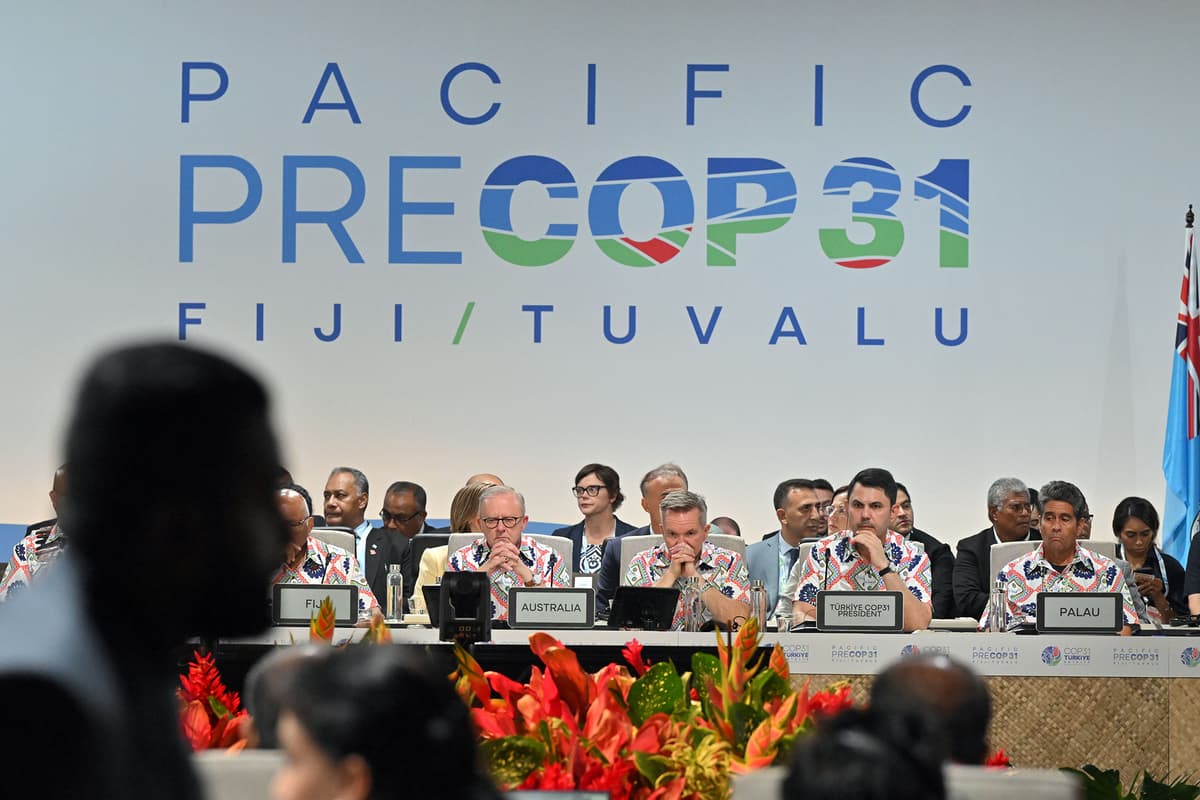
On Wednesday in Fiji, Pacific ministers said what Australian ministers have so far avoided saying. The region needs a plan to end its dependence on coal, oil and gas. At a high-level pre-COP31 side event in Nadi, Navigating the Pacific Energy Transition, ministers discussed their intention to develop a regional roadmap to transition away from fossil fuels.
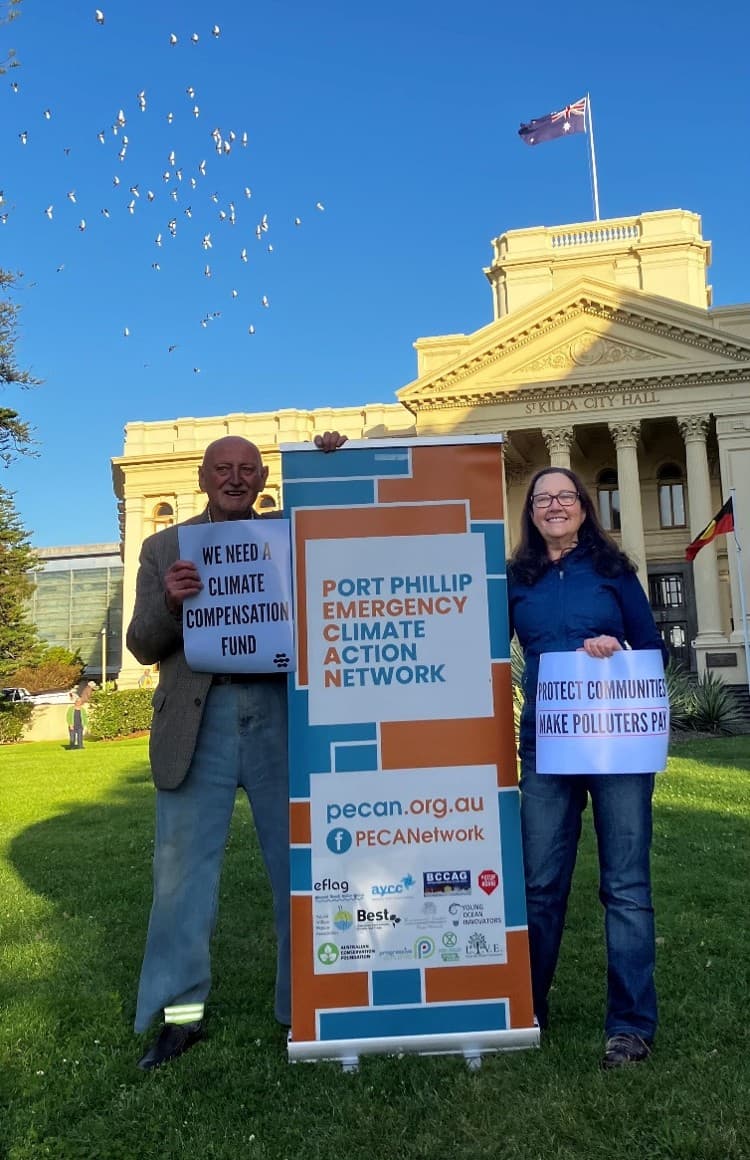
Port Phillip Council has unanimously passed a motion calling for the Federal Government to fund a National Climate Compensation Fund with a levy on gas and coal production. The inner-Melbourne local government area, which covers suburbs such as St Kilda, Elwood, South Melbourne and Port Melbourne, faces increased risk of flooding and coastal damage in the face of climate change.