Otway Basin gas proposal rejected, as calls grow to end ‘death-by-consultation’
Marine conservationists say it’s time for governments to put an end to 'death-by-consultation' traps, arguing they only serve to stall decisions on controversial proposals.
Sat 21 Feb 2026 01.00
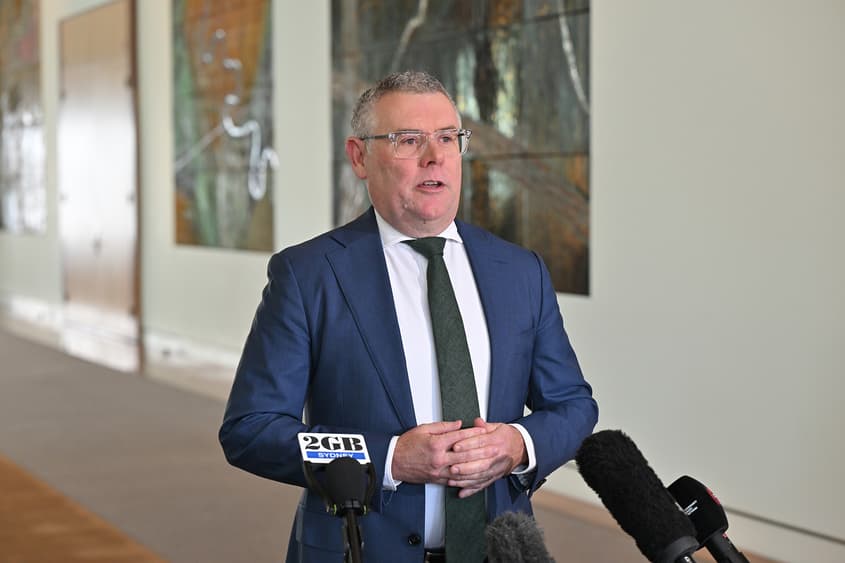
Photo: AAP Image/Tracey Nearmy


Marine conservationists say it’s time for governments to put an end to ‘death-by-consultation’ traps, arguing they only serve to stall decisions on controversial proposals.
It comes as coastal communities in Victoria’s south-west celebrate a “major victory” after a large-scale gas exploration proposal was rejected by the offshore regulator.
Residents have spent years fighting to stop high-intensity seismic surveys in the Otway Basin , concerned it was near critical calving grounds for the endangered southern right whale and foraging ground for pygmy blue whales.
“At a time when Australia must rapidly transition away from fossil fuels, it is reckless to expose marine life to extreme industrial noise in the pursuit of new oil and gas,” said the Australian Marine Conservation Society (AMCS) Fossil Fuels Campaign Manager Hannah Tait.
“This proposal threatened some of the most vulnerable marine species in Australian waters, in an area renowned for its ecological and cultural significance.”
Community groups and Indigenous custodians said they feared the worst, having been told for years the project “wasn’t a question of if – only how and when.”
To their shock and relief, the National Offshore Petroleum Safety and Environmental Management Authority (NOPSEMA) rejected the proposal from geoscience and data-technology.
“Nearly all proposals like this are approved, so this decision matters,” community group Fight for the Bight Port Fairy posted online.
“It shows that persistence, evidence, and participation can shape real outcomes.”
The ABC reports it’s the fifth proposal of its kind to be rejected by the offshore regulator since 2012.
“The proposal was delayed four times amid sustained public opposition – a clear signal that there is no social licence for new oil and gas exploration in sensitive marine environments,” said Ms Tait.
“Community resistance to new fossil fuel development is growing, particularly where it threatens critical wildlife habitat.”
However, Louise Morris, an advocate at the Australia Institute says it highlights a problematic tactic that is draining communities’ resources and time.
“Communities should not have to fight every seismic survey and every gas proposal one by one,” she pointed out.
“It is a death by consultation trap that can become a never-ending cycle of whack-a-mole.
“The only durable solution is for governments to stop approving new fossil fuel projects altogether, as part of a fossil fuel phase out.”
Seismic blasting is used by fossil fuel companies to search for new oil and gas reserves.
It involves blasting the seafloor with high-powered airguns every 10 to 15 seconds, with the soundwaves used to map what’s underneath.
Save Our Marine Life describes it “like dynamite going off in your loungeroom. Over and over and over”.
According to AMCS it has a devastating impact on marine life and can deafen whales, disrupt migration and feeding, and cause stress and behavioural changes in marine mammals and other ocean wildlife.
The organisation has renewed its call for a national moratorium on seismic blasting in Australian waters.
“Our oceans are already under pressure from climate change, marine heatwaves and industrial activity,” Ms Tait said.
“Protecting whale nurseries and feeding grounds must be a non-negotiable priority. [The] decision is a significant win – but the job is not yet done.”
In December 2025, the Victorian Government opened two new tenders for gas exploration licenses in Gippsland and offshore at the Otway Basin.
Ms Morris said governments must show leadership by driving meaningful policy change.
“If Australia is serious about meeting its climate commitments and protecting communities and ecosystems, the government must stop approving any new fossil fuel projects and move boldly to clean energy and climate-safe futures,” she said.
“Continuing to open new areas for exploration, whether in Victoria, Queensland or WA, locks in climate risk and prolongs energy insecurity.
“Instead of issuing new exploration licences, governments should be planning for an orderly phase-out of fossil fuels and accelerating investment in clean energy.”
The Australia Institute has joined 118 scientists and experts, along with 50 environmental and climate organisations in petitioning the Albanese Government to stop any new fossil fuel projects in Australia.
Related Articles
Why we garden
An edited extract of 'Why We Garden' by Hannah Moloney, available in stores nationally from April 14.

Pressure mounts to save Macquarie Harbour as salmon farming backlash grows
Environment Minister Murray Watt is facing renewed pressure to intervene and protect Tasmania’s heritage-listed Macquarie Harbour amid deepening public opposition to the state’s salmon farming industry.