Whistleblower protections are an opportunity, not a cost
Government’s delays on whistleblower protections could be leaving millions of dollars on the table
Tue 18 Nov 2025 22.30
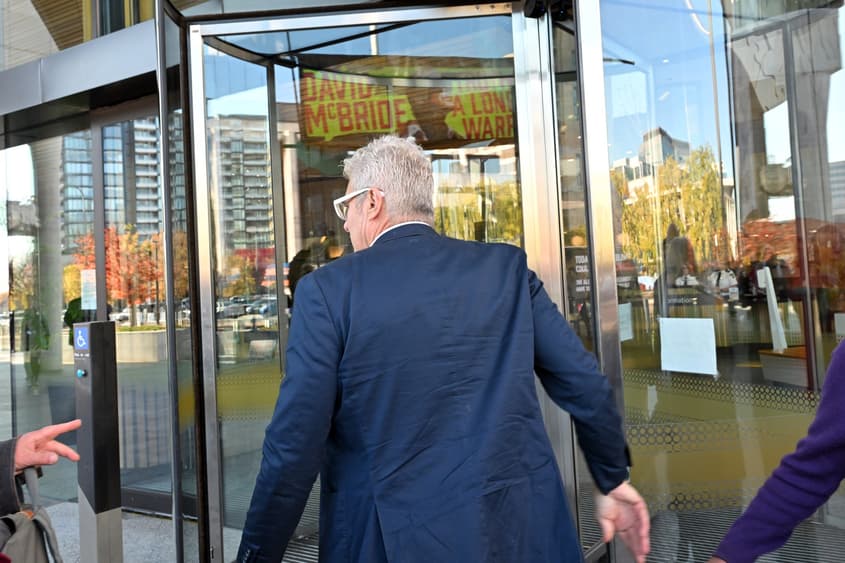
War crimes whistleblower David McBride | Photo: AAP Image/Mick Tsikas


This year, Senators David Pocock and Jacqui Lambie introduced the Whistleblower Protection Authority Bill 2025, which would – as the name suggests – establish a whistleblower protection authority in Australia.
The proposed authority could guide and support whistleblowers, help manage their disclosures, and administer a whistleblower rewards scheme, among other responsibilities.
This isn’t a new idea – similar bodies exist elsewhere, including the delightfully named Huis voor Klokkenluiders (literally, House for Whistleblowers) in the Netherlands.
A Senate Inquiry into the bill recommended that it not be passed, with the resulting report citing the potential financial impact of a whistleblower protection authority as a key factor.
But what effect would it actually have on the budget?
Costings by the Parliamentary Budget Office for independent Helen Haines show a whistleblower protection authority with 80 full-time equivalent staff would cost around $20 million a year.
This is not a large sum. For context, $20 million is less than 0.003% of current Commonwealth spending, and the resulting Whistleblower Authority would be categorised as an ‘Extra Small Agency’.
Furthermore, it’s entirely possible that the authority would more than pay for itself.
As the Australia Institute’s analysis shows, whistleblower rewards schemes have helped the United States recover over US$88 billion (AU$134 billion) from wrongdoers, while paying over US$11 billion in rewards to whistleblowers.
Advertisement
America’s most successful scheme, the False Claims Act, criminalises knowingly submitting false claims to the Federal Government. It has recovered over US$55 billion since 1986, including over US$2 billion in 2024 alone. Whistleblowers received nearly US$10 billion in rewards for exposing wrongdoing.
A whistleblower protection authority could administer a similar rewards scheme for Australia. If such a scheme recovered a similar share of GDP as its American counterpart does (0.007%), it would raise almost $190 million per year, paying for the $20 million a year authority many times over.
That’s actual money recovered, but a whistleblower protection authority would also deter wasteful and illegal activity by businesses and government.
A better environment for whistleblowers could’ve helped stop the Government’s Robodebt scandal earlier and saved the taxpayer from a $1.2 billion settlement payment. It could also have saved the millions in legal fees which the Federal Government spent prosecuting whistleblowers including Bernard Collaery, David McBride and Richard Boyle.
White-collar crimes are often hard to detect: for example, a consumer may never find out that prices are high because they’ve been fixed behind closed doors. But whistleblowing can bring covert conduct into the open where government bodies can identify and prosecute it. When potential whistleblowers feel confident they’ll receive protection, they’re more likely to report wrongdoing.
And put yourself in the shoes of a would-be white collar criminal: if you knew any of your co-conspirators could make money by blowing the whistle, how likely are you to embark on your criminal enterprise in the first place?
Labor promised a whistleblower protection authority and rewards scheme in the 2019 election, but so far they’ve failed to deliver.
The Labor Government has an opportunity to fill a gap in Australia’s whistleblowing laws, and protect whistleblowers, expose corruption and save the taxpayer millions of dollars.
Advertisement
Related Articles
Popular policies would be a better revenue raiser than taking fossil fuel and gambling donations
Australians are naturally suspicious of corporate donations, especially when they come from vested interests with everything to gain from influencing government decision-making. But are these donations large enough to explain why politicians act the way they do? The reality is that political donations from harmful industries are small relative to the payments parties receive from you, the voter.