Advanced search
The Point - home
DonateSubscribe
HomeWhat's NewOpinionOff the ChartsExplainersFactcheckAbout Us
The Point — home
DonateSubscribe
The Point — home
Advanced search
  • Home
  • What's New
  • Opinion
  • Off the Charts
  • Explainers
  • Factcheck
  • About Us
DonateSubscribe
Subscribe
  • Home
  • What's New
  • Opinion
  • Off the Charts
  • Explainers
  • Factcheck
  • About Us
The Point - home
Privacy PolicySitemapComplaints & CorrectionsNewsletter

The Point recognises the ancestral connections and custodianship of Traditional Owners throughout Australia. We pay respect to Aboriginal and Torres Strait Islander cultures and to Elders past and present.

©2025–2026 The Point, an initiative of The Australia Institute

OFF THE CHARTS

Four charts that give you the good and bad news of the newest greenhouse gas update

The June quarter greenhouse gas emissions have been released - earlier than expected.

By Greg Jericho

Fri 28 Nov 2025 09.52 AEDT
Climate
Four charts that give you the good and bad news of the newest greenhouse gas update

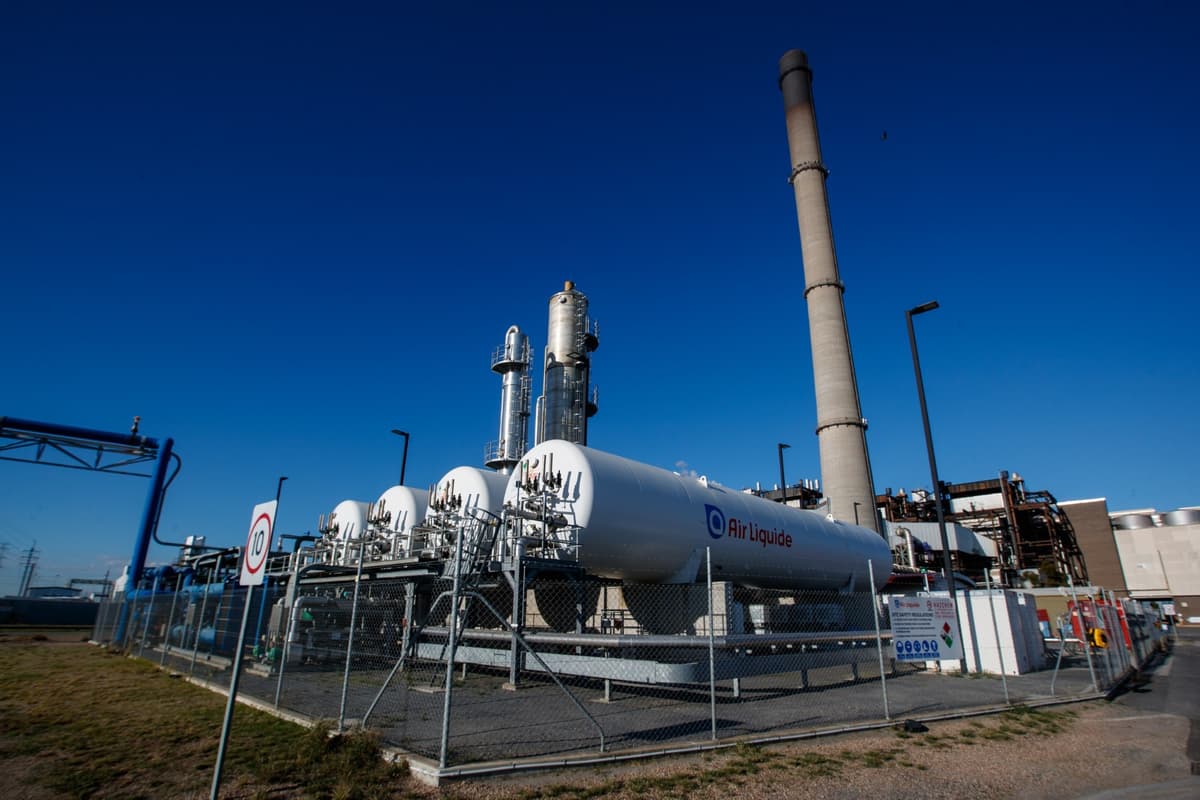
Photo: AAP Image/Matt Turner

Republish this article

This article is licensed under Creative Commons — Attribution-NoDerivatives 4.0 International (CC BY-ND 4.0).

Republishing guidelines

  • You must credit the author(s) and The Point.
  • You must link back to the original article.
  • You may not edit or modify the article content.
  • Images may be subject to separate copyright and are not included in this licence.

The June quarter greenhouse gas emissions have been released, and you know they are good news because they were released on a Thursday morning, and not Friday afternoon.

One of the weird things about the greenhouse gas emission is that the Government can release when they want – so long as they do it within 5 months of the quarter being measured covered. Today’s release covers the June quarter, so they had till the end of November to release it. In the past this has meant releasing the bad news around 4pm Friday afternoon.

But good news cannot wait! And in the June quarter annual emissions fell 2.1% over the past year in the June quarter there was a nice 0.9% drop, driven mostly by falls in electricity and fugitive emissions.

The drop in fugitive emissions is mostly from “reductions in natural gas venting emissions from new carbon capture and storage activities and a decline in production from underground coal mining.”

Less gas and coal is good, who knew?

The drop in electricity emissions came off the back of less coal and gas emissions and more wind and solar:

So good news.

The bad news is that even if we are generous and take the trend of emissions under this Government since June 2023, the pace of decline still needs to be faster if we are going to get to our targets (weak though they are):

Right now, the trend since the middle of 2023 would have emissions only being 32% below 2005 levels by 2030 and just 36% below by 2035 – well short of the Government’s target range of 62% – 70%.

And we also need to remember that the vast majority of the cuts in emissions since 2005 are from including land use. In 2005 there was a high level of land clearing, especially in Queensland. By virtue of not clearing as much land as in that one year, Australia is able claim a large drop in emissions. If we exclude land use (as every other country does) the drop in emissions would be just 4%:

The true story of Australia’s drop in emissions is seen when we breakdown emissions by category:


The good news is that over the past two years, the drop has been more widespread – with all categories except transport and our tax incentivised addiction to big dumb utes, keeping transport emissions high.

So, we do at least have good news. Any reduction in emissions is to be celebrated. But the pace of the fall remains far too slow and the path ahead relies on targets set that remain too weak.

The Government is likely to release their updates projection figures tomorrow, which will provide a sense of when the Government at least believes the pace of emissions cuts will drop in order to reach their targets.

Advertisement
Related Articles

OPINION

Why the government’s Carbon Credit “Integrity and Transparency” Bill will lock in dodgy offset projects

By Megan Evans

Would you expect a forest to grow and remain permanently in the Outback? Me neither. Yet this is exactly where most of Australia’s 400+ “forest regeneration” (or “human induced regeneration, HIR) carbon offset projects are located, covering a total area bigger than Japan (38 million hectares).

Climate
Why the government’s Carbon Credit “Integrity and Transparency” Bill will lock in dodgy offset projects

OPINION

Victoria doesn’t have a gas shortage. It has a gas sales pitch

By Louise Morris

In five days, the Carroll Labor Government approved a $1 billion gas project off Ninety Mile Beach and gave the green light to restart the Patricia-Baleen gas fields off the Gippsland coast. The state election is on 28 November. The timing is hard to miss.

Climate
Victoria doesn’t have a gas shortage. It has a gas sales pitch

WHAT'S NEW

NSW Greens call for transparency around Mt Pleasant coal ‘Jobs Guarantee’

By staff writers

NSW Greens upper house member Sue Higginson has written to the state’s resource minister calling for the publication of a document at the centre of a controversial coal deal.

Climate
NSW Greens call for transparency around Mt Pleasant coal ‘Jobs Guarantee’

WHAT'S NEW

Young Australians’ human rights complaint prompts UN intervention over fossil fuel expansion

By Tegan George

Two United Nations human rights experts have formally challenged the Albanese government over its continued approval of coal and gas projects, raising serious allegations about Australia’s failure to protect young people from worsening climate change. 

Climate
Young Australians’ human rights complaint prompts UN intervention over fossil fuel expansion

