Part two: The false promise of carbon capture and storage
Despite the best efforts of climate and accountability campaigners, Australia’s major political parties have not stopped pushing the false promise of carbon capture and storage.
Tue 13 Jan 2026 06.00
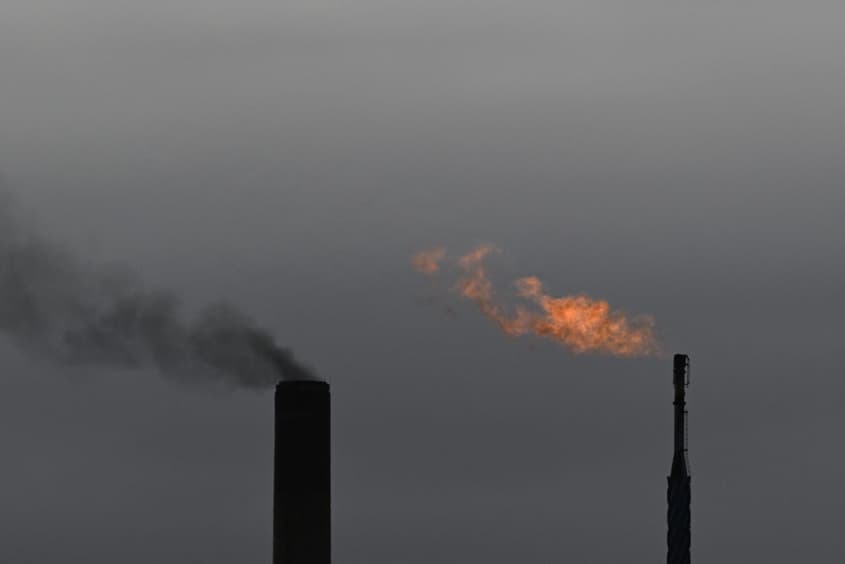
Image: AAP Image/Dean Lewins


This is part two of a two-part series into the false promise of carbon capture and storage. You can read part one here.
Despite the best efforts of climate and accountability campaigners, Australia’s major political parties have not stopped pushing the false promise of carbon capture and storage (CCS). As Ebony Bennett wrote recently, the government keeps launching new reports on the ‘potential’ for a massive new network of carbon capture, transport and storage in Australia. You can get how it’s so tempting: the ability to continue with business-as-usual while magically captured emissions erase any responsibility or consequences for fossil fuel companies.
CCS remains firmly on the agenda for Australia, with big companies proposing big projects. For example, Japan’s Inpex is leading a project named ‘Bonaparte’ in the gulf between NT and WA, Santos is pushing for CCS in the Timor Sea and the Middle Arm petrochemical hub aims to become a CCS facility that various companies can use to dump their emissions.
This series is update of the global and Australian numbers on CCS: why it’s more deficient than ever before, and why that failure hasn’t sapped a single joule of energy from its failure-immune advocates.
Part 2: CCS doesn’t do what it says on the box
Think about the best car in the world. It’s obscenely swift, it’s engineered to perfection and more than anything, it does what it says on the box. Put it on a test track, and it’ll drive very fast, most of the time.
Carbon capture and storage is built different: the biggest, ‘best’ demonstrations of this technology are shocking underperformers. Let’s take a brief look at the ‘best’ CCS project in the world: the Gorgon carbon capture plant owned by Chevron, located at the Gorgon joint venture LNG export facility in Western Australia.
It really is the biggest carbon capture project on the planet. When you dig up methane gas from underground, it comes mixed with carbon dioxide. Previously, gas companies would just separate that carbon dioxide and dump it directly into the atmosphere. This form of CCS aims to capture and re-bury that carbon dioxide instead of dumping it. It is hypothetically much easier than capturing the carbon dioxide released from a coal-fired power station, and easier still than capturing it from normal air where it’s at very low concentration (and you need even more energy to separate it out).
Well, we have the 9th year of operational data for the Gorgon CCS project, and, as first reported by Kevin Morrison at RenewEconomy, it has not only failed once again to hit its targets for pushing carbon dioxide underground, but it has injected the lowest amount since it began operations.
And while the project has injected around 11 megatonnes of carbon dioxide underground since FY19, it has also dumped 21 megatonnes of carbon dioxide directly into the atmosphere, because it could not be injected. Gorgon was meant to have injected nearly 29 megatonnes by now. It has only achieved one third of that.
We have to narrow the view a little bit here to make some other comparisons. Looking only at the three year period between FY22 and FY24, Gorgon processed a cool 3,400 petajoules of gas, which’ll cause around 177 megatonnes of carbon dioxide release when burned. That is about 36 times as much as was injected into the underground storage in that same time period. Chevron’s total global emissions, including the emissions from the fossil fuels it sells, was 2,056 megatonnes. That’s 416 times more than Gorgon stored underground.
Gorgon is the biggest and ‘best’ CCS project in the world, and it had to buy up obviously dodgy carbon offsets as a wrist-slap for missing its targets so badly. To add insult to injury: Gorgon has also been granted a lucrative pot of special carbon credits that can be used by other polluters in Australia’s Safeguard mechanism’, thanks to a loophole around how those credits are calculated and despite the project’s total emissions increasing. The new Moomba CCS project, owned by Santos, seems to have a less-bad capture rate but is also free to earn millions of dollars selling the new ‘CCS offsets’ it is being granted for every tonne it stores, or just use those offsets to ‘neutralise’ its own emissions.
In fact, when you tally up all the carbon capture projects around the world, they generally tend to capture around two thirds of their reported capacity, which makes Gorgon even worse than the global average.
Just to make all of this materially worse: the vast majority of emissions actually stored underground are explicitly used as a tool to dislodge more oil from underground, in a process euphemistically known as ‘enhanced oil recovery’.
This was just revealed in a brand new study released by the Imperial College of London, letting us show that only 18% of all the carbon ever captured was exclusively stored underground without also dislodging even more fossil fuels to be burned above the ground:
Recently, Australia’s Minister for Resources, Madeleine King, said this at the launch of a new report on CCS:
“It is fashionable in some circles to denigrate existing CCS projects. But to do this without observing what has been achieved is to write off how CCUS can contribute to decarbonisation, and to ignore the warning of the IEA that reaching net zero will be virtually impossible without CCUS”
This blog series is looking at what CCS has ‘achieved’ in as much empirical detail as we can possibly muster. And in doing so, we are seeing that it is worse than it has ever been: in never ending up being built, and even when it is built, either under-performing or helping the fossil fuel industry extract even more.
In the next part of this series, we’ll dig into the real purpose it serves: enabling more fossil fuel infrastructure. And in the final post, we’ll explore the plans to turn Australia into a dirty carbon dumping ground.
Related Articles
Evidence of seismic blasting's harms are clear, but policy has not caught up
A growing body of scientific research shows seismic blasting seriously harms marine ecosystems from the smallest plankton to the largest whales. Yet, seismic blasting remains routine because it sits at the beginning of the fossil fuel extraction process.