High fees, student dissatisfaction and repeated governance issues dominating the headlines have fuelled an intense political climate for universities. Well before President Donald Trump was re-elected for a second term, the anti-university backlash had taken root both in the United States and here in Australia.

Tue 4 Nov 2025 22.30
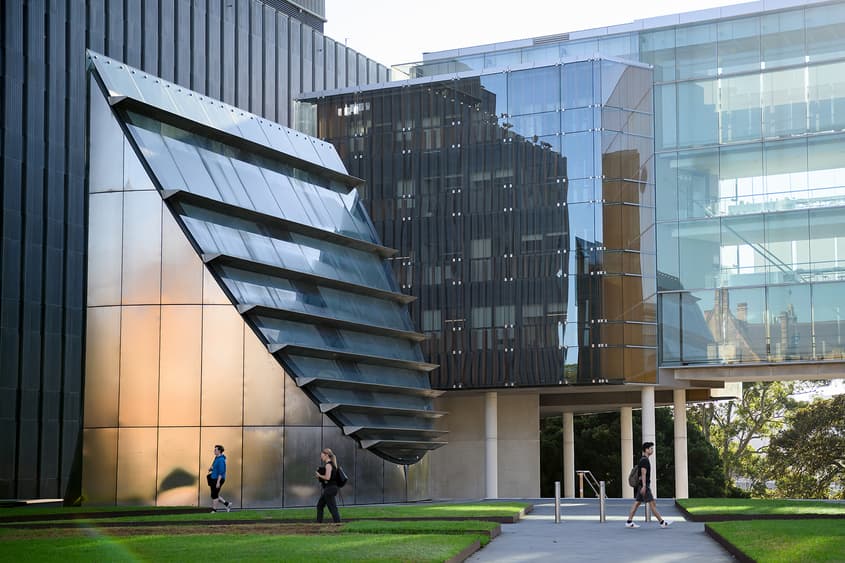
Photo: AAP Image/Bianca De Marchi


While universities must take responsibility for their failures and eroding social licence, they have also been caught up in crises beyond their control. This includes destabilising changes in government regulation that began with encouraging international student recruitment and ended with limiting this very activity. Universities are also not responsible for the supply-side failures on building new housing, infrastructure bottlenecks and the lack of essential services. Nor did they put in place the lax regulatory policies that saw a host of private education providers emerge only to be deregistered for sharp practices.
Yet, in the land of the tall poppy syndrome, universities have been the perfect scapegoats: perceived as elite, out of touch and, at times, tone deaf to community concerns.
Universities, home to some of the nation’s greatest teachers and researchers, have been surprisingly ineffective — and often silent — when it comes to building a coalition of defenders. This leaves the sector vulnerable to government intervention and micromanagement.
In the United States, the higher education environment is highly politicised, not least with regard to the actions being taken against Harvard, America’s oldest and wealthiest university. In 2025 President Trump froze $US2.2 billion in federal funding including grants and contracts after Harvard defied demands to change its hiring, admissions and teaching practices. The president has also attempted to block Harvard’s ability to enrol international students and threatened its tax-exempt status.
The White House characterises its actions as a crackdown on anti-Semitism. Harvard, which has made extensive changes to address anti-Semitism, frames it as an assault on its independence and constitutional rights. It is suing the Trump administration at the time of writing. In the current climate, Harvard and other institutions are finding it harder to defend their independence.
In Australia, universities have also been subjected to fierce criticism for how they have handled anti-Semitism on their campuses. The Prime Minister’s Special Envoy to Combat Antisemitism, Jillian Segal, has even proposed that universities be defunded should they facilitate, enable or fail to act against anti-Semitism.
There has also been a backlash in the media against Indigenous viewpoints in university courses, particularly Macquarie University’s Age and the Law course. Controversy erupted over claims law students were marked on their delivery of an Acknowledgement of Country. The claims and ensuing rhetoric were overblown but demonstrate the “gotcha” public opinion culture that universities face.
Culture wars have long been a hallmark of education systems around the world. Past decades have seen universities at the forefront of heated debates over desegregation, ending the Vietnam War, political correctness and the civil rights movement. What we learn defines who we are. Controlling that flow of information is a source of great power.
Now, more than ever, it is important that we teach critical thinking. Universities and their leaders must champion freedom of speech and the importance of a contest of ideas and instil these values in how we teach our students. If university students are not taken outside their comfort zones, we are missing the mark. Universities should be places of disagreement and challenge at the vanguard of societal battles over freedom of speech, while ensuring zero tolerance for anti-Semitic and Islamophobic hate speech.
Change is constant, but the world in which we live has changed radically in recent years. People view — and value — knowledge differently. The availability of knowledge has also radically altered. Rather than being scarce and often limited to universities, it is ubiquitous and free thanks to the internet and generative AI systems such as ChatGPT. Expert medical, legal, mathematical and other information is now only a prompt away.
Generative AI can produce content that challenges the role of academics. In my field of constitutional law, I asked ChatGPT to draft a question for a 2,000-word essay on bills of rights for second-year public law students. The tool came up with an excellent question that needed no editing. I then asked it to provide a sample answer and mark it according to a predetermined marking guide. ChatGPT completed each step with ease and awarded itself a high distinction! I would have given it the same mark as an essay produced by one of my very best students.
This is only the beginning of generative AI’s capabilities, which will increase exponentially over the coming years. The fact that it is already able to replicate the work of academics and students at a high level illustrates the need for a fundamental rethink.
We must move away from a focus on the transmission of knowledge and instead concentrate on skills such as critical analysis and creativity where humans can add value to generative AI systems. In the case of my essay for public law students, it might mean asking students to produce a first draft with AI (to test their understanding of how to use the system) and then assessing them on their ability to critique the draft for errors and algorithmic bias, and to produce a refined draft based on their insights.
Social media has transformed perceptions of who holds knowledge and who can disseminate their opinions, the result of which is increasing scepticism of expertise and rational thinking. It is no coincidence that the erosion of trust and confidence in our universities is replicated in a loss of faith in other important public institutions.
Universities cannot abdicate the field and allow misinformation and disinformation to proliferate. If opinions are being formed and ideas tested online, universities must be there too.
This is an edited extract from Professor George Williams’ Vantage Point essay, Aiming Higher: Universities and Australia’s Future published by Australia Institute Press.
Available for preorder now, published 6 November.
The Reserve Bank’s decision to raise interest rates this week was a double whammy for Australians struggling with petrol price increases in the past month that have already cost them more than the impact of the rate rise.


Amid global turmoil, the report of the Strategic Examination of R&D (SERD) calls for “bold reform” of Australia’s “broken” research and innovation system. What better time to prepare for an uncertain future.

The Senate Select Committee on the Operation of the Capital Gains Tax Discount tabled its report on Tuesday. In short, it found that Australia’s current tax system favours investors and fuels intergenerational inequality. But the Coalition maintains the CGT discount is “working as intended.”