Speaking to the press after passage of amendments to the Environment Protection and Biodiversity Conservation (EPBC) Act last Thursday, Western Australian Premier, Roger Cook, indicated that he expected federal powers would be devolved to the state within a “matter of months”.

Tue 2 Dec 2025 00.00
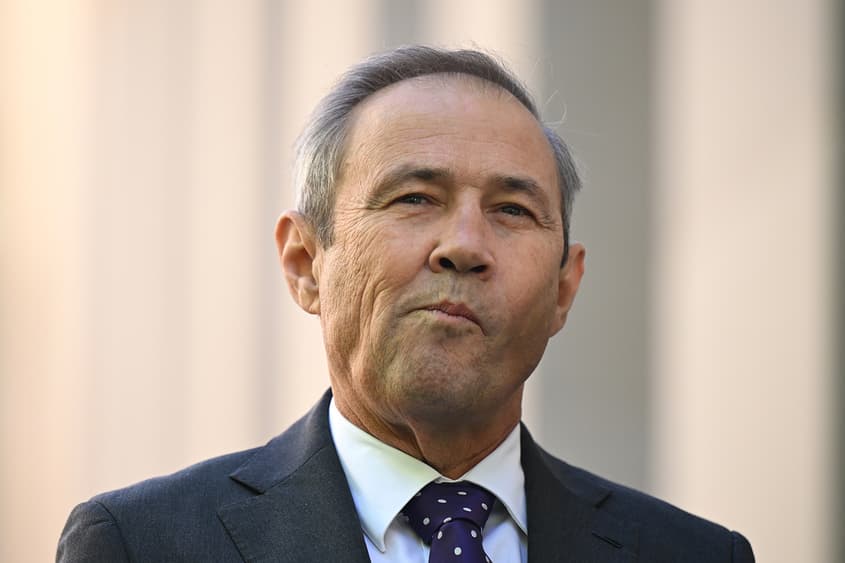
Photo: AAP Image/Lukas Coch


Speaking to the press after passage of amendments to the Environment Protection and Biodiversity Conservation (EPBC) Act last Thursday, Western Australian Premier, Roger Cook, indicated that he expected federal powers would be devolved to the state within a “matter of months”.
“Murray (Watt) has confirmed to me that Western Australia will be the first state that he’ll do a bilateral [agreement] with,” Cook said.
Such a bilateral agreement would allow Western Australia to assess and approve projects under the EPBC Act. Once the precedent is established, other states and territories will presumably seek to follow it.
Largely overlooked by the media, last Thursday’s amendments to the EPBC Act in fact enable quite radical changes to the structure of environmental decision-making in this country.
The EPBC Act, at its heart, is rather prosaic legislation facilitating the assessment and approval of projects – whether housing, renewables, infrastructure, agriculture, mining or coal and gas. One of the central innovations of the EPBC Act was to add an additional layer of federal oversight where certain matters of national environmental significance were triggered – things like world heritage places, threatened species, and RAMSAR wetlands.
For years now, state and territory governments – and industry – have sought to undermine this function by pushing the Federal Government hand back powers to them to make approval decisions. This, supposedly, will reduce red tape and duplication, and speed up approvals for large projects.
Creating a “one stop shop” for approvals, as proposed by the former Coalition Government, however, has significant problems. Some of these are logistical. Many states and territories do not have the same resources and expertise as the Federal Government to assess the environmental impacts of large projects. Smaller governments in particular, such as the ACT and the NT, often struggle to properly enforce their own environmental laws – giving them more powers with the same amount of resources will just mean issues will fall through the cracks. Furthermore, the Commonwealth has obligations under international environmental treaties to protect matters of national environmental significance, and thus should retain responsibility for these matters.
A bigger issue, however, may be that many state and territory governments have vested interests in projects proposed within their boundaries, and in turn cannot be genuinely independent assessors of such projects. State Governments are often the proponents of large projects (the ACT Government, for example, recently submitted a large Environmental Impact Statement for the next stage of its light rail project), or may receive significant income from such projects, through land sales, taxes or royalties. They are also very susceptible to the pressures and allure of big industry. These issues are particularly prominent in the fossil fuel states and territories of Western Australia, the Northern Territory and Queensland, where the closeness between state governments and industry has become legendary.
We’ve already seen state Governments intervene in local environmental approval processes when they seem to go against the interests of industry. Mark McGowan, for example, intervened to stop new guidelines introduced by the Western Australian independent Environmental Protection Agency that were aimed to get large businesses in the state on the path to net zero. The NT Government has enabled the newly-created office of the Territory Coordinator (occupied by a former gas industry executive) to exempt environmental and planning laws altogether in assessing and approving projects.
It is for these reasons that environmental groups have long united to fight a “one stop shop” for environmental approvals when introduced by Tony Abbott, and again when it was resurrected by the Morrison Government. Labor also opposed these reforms, saying in one dissenting Senate Inquiry report:
Having a strong federal role in environmental decision making on Matters of National Environmental Significance has saved many of Australia’s iconic environmental assets from destruction.
It was federal Labor governments that stopped drilling on the Great Barrier Reef, stopped logging in the Daintree, and prevented the damming of the Franklin.
With our natural environment – a driver of tens of thousands of jobs and our way of life – under greater pressure than ever, the Australian people don’t want to see the Commonwealth getting out of the business of protecting the environment…
Yet, when the one-stop shop proposal was resuscitated by the Albanese Government when the laws were introduced in October, many were caught flat-footed and the issue gained little attention.
To be clear, there has always been a power to devolve approvals to states and territories in the EPBC Act. However, this power was quite constrained.
In the legislation passed last week, devolution will be made far easier via a number of mechanisms. For example, some public notice requirements have been removed, requirements that arrangements not have “unsustainable impacts” have been removed, and the Minister will be able to accredit non state and territory entities, as well as unenforceable non-legal instruments (such as guidelines and policies).
Worryingly, the Minister will be able to alter accredited arrangements without any public consultation at all. While some may argue that the requirement for such arrangements to be consistent with national environmental standards is an effective constraint on these expanded powers, there remains a high degree of discretion and uncertainty (noting that no standards have yet been declared).
These changes could result in the rapid and wholesale handing over of decision-making on projects to states and territories. While the Greens/Labor deal salvaged some furniture – most notably, the “water trigger” will still be quarantined from devolution – there is no doubt that devolution of approvals to states and territories would transform environmental law in Australia as we know it.
The devil is therefore in the detail. While there were certainly some wins for nature in the changes to the EPBC Act last week, devolution could undermine these hard-won gains.
Nearly every major successful environmental campaign in the country that has secured wins for nature in the last two decades has relied upon some form of federal accountability under the EPBC Act – think Toondah Harbour, Traveston Dam, and James Price Point.
As we stare down the climate and biodiversity crises, can Labor seriously consider handing this responsibility to State and Territory governments? Environmentalists and communities will have to work hard to fight against this, ensuring as much power stays with the Federal Government as possible.
Simon Copland is the Executive Director at the Conservation Council ACT Region. He has a PhD in Sociology from the Australian National University and a long history in the climate and environment movement.
Kirsty Howey is Executive Director of the Environment Centre NT. She has a PhD on development in northern Australia and was previously a native title and environmental lawyer.
A permanent ban on fracking is back on the agenda in Tasmania with the Tasmanian Greens planning to introduce a bill to ban the harmful practice in the opening days of parliament.

The greenhouse gas data is one of those rare data sets where you want the figures to go down – less is better. And the problem for any efforts to limit the impact of climate change is that Australia’s emissions have not been going down anywhere near as fast as they need to be.
Nothing in this world is certain but death, taxes, and the decommissioning of aging oil and gas infrastructure. An accelerated energy transition will accelerate asset retirements, but field decline is occurring regardless.