Climate change will create jobs, but rebuilding what’s been destroyed is not progress.

Wed 3 Dec 2025 00.00
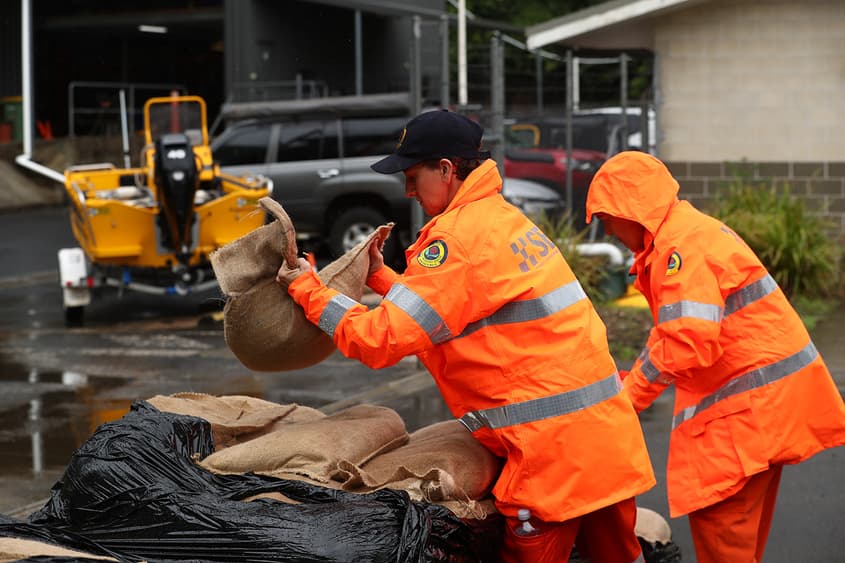
Photo: AAP Image/Jason O'Brien


Climate change will create jobs, but rebuilding what’s been destroyed is not progress.
Repairing roofs destroyed by hail, roads damaged by floods and factories flattened by cyclones will ‘create’ an enormous amount of jobs, but while those jobs may pay good money for the tradies and insurance assessor’s involved, at the end of all that work the country isn’t better off. In fact, we are worse off to the tune of all the new houses that weren’t built while the old ones were being repaired.
Governments usually love to estimate the jobs created by new coal mines, F1 car races or big events like the Olympics. But while there are detailed analyses of the number of insurance claims (240,000) and the cost to insurers ($6 billion) of the floods that hit Northern NSW and South East Queensland in 2022 no one has estimated how many jobs were ‘created’ by the disaster. I think I know why.
That said, we do know that the insurance industry had to put on an extra 2,200 staff to cope with all the extra calls and emails, nearly double the workforce of the enormous Adani coal mine that the Queensland Government is so generous to.
The cost of home repairs alone was $3.4 billion which, if we use the kind of economic modelling preferred by the coal industry, would suggest around 30,000 jobs were ‘created’ by the floods. And there’s the rub. Despite what the fossil fuels industry tells you, not all ‘job creation’ is a good idea.
We always need to ask ‘what’s being built?’ and “do we really want that?’
Climate change isn’t only going to change where and how we live, and what time of the year we play outdoor sport, it’s going to change the language and policies we use to describe and manage our economy. This won’t be easy for some.
Politicians understandably love to associate themselves with making ‘good’ decisions and delivering ‘good’ things which is why for those who remember the pain of recessions, ‘job creation’ is obviously seen as a ‘good thing’ by politicians seeking praise.
But our political class, and our public language, is yet to catch up to the reality that these days not all ‘job creation’ is created equally. And while job creation programs targeted at those without jobs in regions without jobs is unambiguously a good idea, its time we admitted job creation via more cyclones, or via more of the gas and coal mines that create them, is a bad idea.
More resources are spent building mines than building new apartments in Australia. But despite the shortage of skilled workers to build public infrastructure, and despite the enormous harm to the climate that new gas and coal mines cause, governments still like to tell us that we need to approve new polluting projects to ‘create jobs’. We really don’t.
Even leaving aside the harm new fossil fuel projects will cause, every worker building a mine is one less worker building homes or hospitals.
Likewise, every worker employed to scrape up mud, rip up old carpet and re-plaster a whole suburb’s worth of housing is a worker that isn’t working to solve the shortages of housing and infrastructure we already have.
The last thing Australia needs is more fossil fuel projects, and more of the climate disasters they cause, adding to labour shortages.
More and more Australians chase cool weather rather than sweating on hot beaches over summer, and where once hoses in the backyard were enough to cool the kids down on a 40 degree day, many of those living in apartments now fear the cost of air conditioning more than they look forward to the sounds of cicadas.
The same transition will begin to emerge in the way we think and talk about the economy. Our governments already know this, but they are yet to figure out how to protect themselves from the consequences of admitting it.
It’s no accident that neither the Queensland nor Federal Government commissioned economic modelling to talk about all the jobs that the floods have created.
In the decades ahead, as hailstorms, floods and bushfires ‘create more jobs’ the language we use to talk about what is ‘good for the economy’ will change radically. But we don’t need to wait for new language to drive new directions.
The Albanese Government recently committed Australia to ‘an orderly and equitable transition away from fossil fuels’, which like most climate promises sounds good in principle but goes missing in practice.
But if we took our new promise seriously and stop approving new gas and coal mines we could free up tens of thousands of skilled construction workers who could work on other projects that would improve, rather than harm, our future wellbeing.
Likewise, phasing out fossil fuels means we can tax gas exports properly. The gas industry’s only real argument against having to pay for all the gas they take and pay profits here in Australia is that new taxes will stop them investing in new projects. But that’s great news — now that we are committed to phasing out fossil fuels, we don’t want them to build new ones.
Of all the things to fear from climate change ‘where will the jobs come from’ should not be one of them. But the sooner we stop approving new fossil fuel projects and the sooner we start taxing our gas exports fairly, the sooner we can start to build a more resilient economy, hopefully one that doesn’t create even more floods and fires, that in turn will create even more new jobs
The Workplace Gender Equality Agency (WGEA) has released their gender pay gap data today and while we took a tiny step closer to pay equity, men are still almost twice as likely to be in the highest earning quartile – earning more than $220,000.
New analysis shows Japan is emerging as a major player in global gas trading, despite producing no liquefied natural gas of its own – and it’s all thanks to Australia.
The debate over the capital gains tax discount comes down to a very simple question: who do you think should pay more income tax? Should a high-income executive who makes a $400,000 capital gain (that is, a profit) from selling an investment property pay a higher tax rate than a full-time retail worker on minimum wage who decides to pick up a few extra shifts?