For ten years gas exporters have been telling anyone who will listen that the fix for the east coast gas market they broke is the one that serves their own interest - opening new gas fields.

Fri 5 Dec 2025 00.00
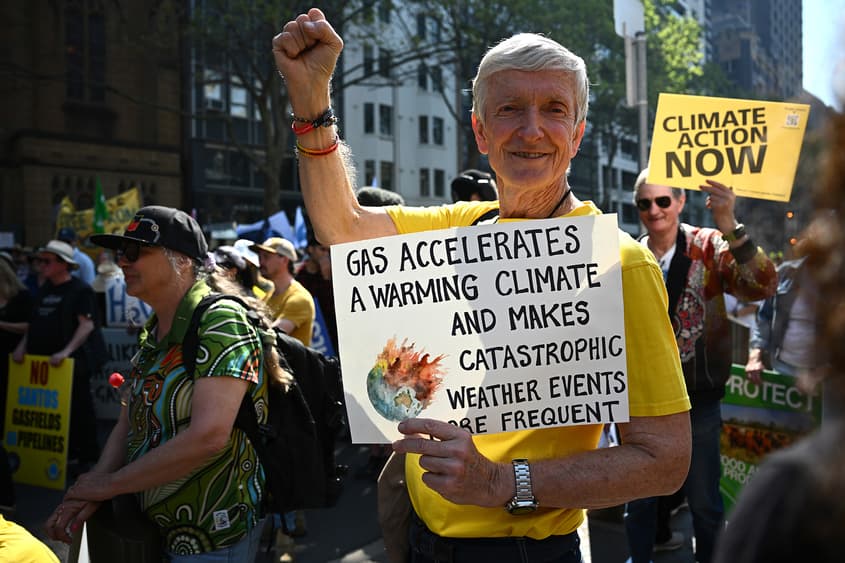
Photo: People rally during a protest against the planned Santos Narrabri Gas Project, in Sydney, Thursday, September 14, 2023. (AAP Image/Dan Himbrechts)


For ten years gas exporters have been telling anyone who will listen that the fix for the east coast gas market they broke is the one that serves their own interest – opening new gas fields.
But Australians are canny. The gas industry’s tired spin has failed to hit the mark, with new national polling revealing that Australians are far more likely to back policies that redirect gas exports for domestic use in order to lower gas prices, rather than the construction of new gas fields.
The polling, conducted by independent research firm 89 Degrees East, found:
The Australian public has figured out that we’re producing more gas than ever before, but prices are being kept high and supply tight, thanks to unlimited exports from the Gladstone LNG terminals.
These poll results have significant ramifications for the Albanese Government’s Gas Market Review. This review was launched late June 2025 to identify a policy mechanism that can secure an affordable domestic gas supply for Australian consumers after a decade of perpetual crisis that has lined gas company pockets and sent manufacturers to the wall.
Policy options will be finalised soon and there is a real risk it will deliver a mechanism that incentivises new gas fields over constraining exporter conduct.
Media reports suggest that one option being considered by the Government is a targeted export licensing mechanism that solely applies to the gas exporters. This makes sense, since it is the Gladstone LNG exporters, particularly Santos GLNG, that have plundered the market and kept prices high.
If designed well, export licensing could deliver ‘uncontracted gas’ to domestic users rather than letting the gas companies export it all. This would relieve pressure on the rural communities in the path of fracking and new unconventional gasfields because it would mean more of the gas already being produced in eastern Australia would be available for use in Australia.
Another policy option being explored is a more complex market-wide mechanism covering all gas producers and projects. This would let gas exporters off the hook and introduce complicated regulation. This polling sends a clear message to the Albanese Government that voters would only back an option that ensures uncontracted gas stays in Australia.
Australians want their gas market fixed where it was broken and for exports to be constrained.
The Narrabri Gas Project is a case in point for the disconnect between political and industry spin and the better instincts of Australians. Farmers affected by coal seam gas expansion see straight through gas industry claims.
Farmers in NSW are doggedly resisting increasingly desperate efforts from Santos to drum up support for its highly controversial and damaging Narrabri Gas Project. Gomeroi people are likewise fighting the plan and they are supported by a Unions NSW campaign.
A significant development in the Gas Market Review has been a split in spin and strategy amongst the gas exporters themselves. Having seen its social licence rapidly decay due to the untenable state of the domestic gas market, Australia Pacific LNG (APLNG) has elected to depart from the standard industry lines and is backing an export licensing mechanism that carries domestic gas supply obligations.
To support its case, APLNG has commissioned polling which found that 73% of Australians would support a gas reserve policy that begins immediately and applies to all exporters with no exceptions or carve outs. Such an outcome would place most pressure on Santos GLNG, which has been the player taking most gas from the domestic market for export.
As Nicolette Boele eloquently highlighted in parliament last week, “We do not have a gas supply problem. We have a gas export problem” and Australians are ready for the Albanese government to stare down the multinational gas exporters by imposing strict export controls.
Harriet Kater is the Clean Industry Coordinator at the Lock the Gate Alliance.
The Australian Government lets foreign owned gas companies export vast amounts of gas above and beyond what they need to fulfil their export contracts, while leaving Australians short.
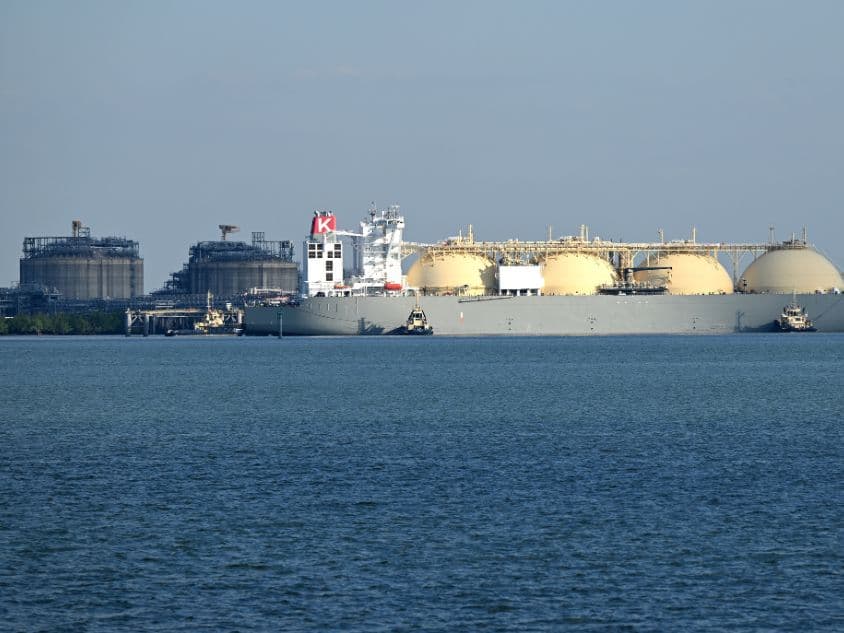

New analysis shows Japan is emerging as a major player in global gas trading, despite producing no liquefied natural gas of its own – and it’s all thanks to Australia.
The greenhouse gas data is one of those rare data sets where you want the figures to go down – less is better. And the problem for any efforts to limit the impact of climate change is that Australia’s emissions have not been going down anywhere near as fast as they need to be.