Barnaby Joyce's defection highlights how much the Coalition costs the Liberal Party
It raises an uncomfortable question: are the Liberals being taken for a ride?

Wed 31 Dec 2025 09.00
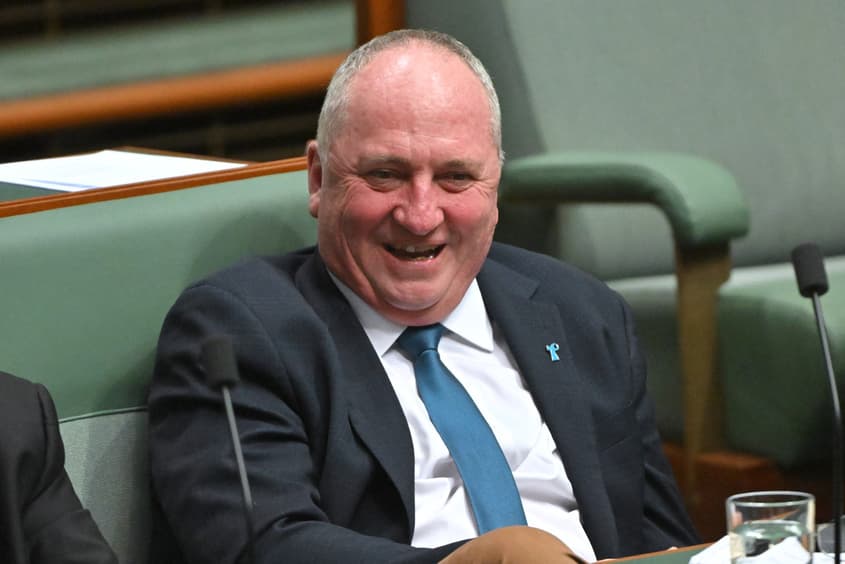
Photo: AAP Image/Mick Tsikas


The last parliamentary sitting week was a study in contrasts for the Liberal–National Coalition. Malcolm Turnbull, the unrealised promise of an urbane, small-L Liberal Party, unveiled his prime ministerial portrait alongside current party leader Sussan Ley. Meanwhile, Barnaby Joyce quit the Nationals to join, and possibly hoping to one day rule, One Nation.
Competing visions of the Australian right, neither comfortable in the Liberal–National Coalition.
But whereas Turnbull has been distanced from the party he once led, the Nationals have every concession they could want under the Coalition – and even that was not enough for Joyce.
The Coalition Agreement between the two parties is a secret, but it is known to guarantee positions for Nationals politicians. In other words, the Liberal Party will not bring in gender quotas to address its own dismal vote among women, but does guarantee a quota of Cabinet positions to Nationals regardless of merit.
And when the Coalition is in government, a National becomes Deputy Prime Minister even though only about 6% of Australians vote National. Thanks to this arrangement, Joyce was Deputy Prime Minister for three years.
The Nationals have outsized policy influence too. The Liberals abandoned net-zero at the prompting of the Nationals and rejected the Voice referendum after the Nationals publicly pre-empted Liberal deliberations.
All in the name of Coalition unity, the idea that the Liberals are stronger in concert with the National Party. When the Nationals quit the Coalition this year, the Liberals begged them to return.
Barnaby Joyce’s defection raises an uncomfortable question: are the Liberals being taken for a ride?
Consider the “joint Senate tickets” in NSW and Victoria. In those states, Liberal and National candidates appear on the same list. A vote for “the Coalition” elects both Liberals and Nationals. How the lists are arranged depends on the election, but going into 2028 it is expected Liberals will take the first and third spots and a National will get the second.
When the Coalition wins three seats each in NSW and Victoria, it works out to two Liberals and one National per state. Not a bad deal for the Nationals; the Liberals get about three to six times more lower house votes, but only twice as many Senate seats.
But when the Coalition only wins two seats in a state, it’s fifty-fifty Liberals and Nationals. That would be a terrible deal for the Liberals by itself, even without the risk that the Nationals quit the Coalition en masse or another National defects like Joyce did. The Liberals give up eminently winnable second Senate seats to Nationals who attracts relatively few votes and might not stay in the Coalition once elected.
Liberal strategy is even stranger when it comes to the House of Representatives, where the party prioritises regional voters but contests fewer regional seats.
The Liberals are undergoing a painful realignment to become a regional-focused party. Since 2019, they have given up about a dozen “blue-ribbon” city seats, like Turnbull’s Wentworth, Tony Abbott’s Warringah and Robert Menzies’ Kooyong by rejecting small-L liberal policies. The change is seen in senior leadership as well: Sussan Ley is the first party leader from a regional seat since Alexander Downer over 30 years ago.
Whether this is a sound strategy, given Australia is one of the most urban countries in the world and becoming more urban, is debatable. But having chosen the strategy, the Liberals should at least follow its logic through.
Advertisement

Instead, at the most recent election the Liberals did not contest any seats already held by National MPs. By contrast, the Nationals contested five Liberal-held seats (Grey, Barker, O’Connor, Forrest and Durack).
It is a marked contrast from the 1980s and early 1990s, when Liberal and National candidates were much more likely to run against each other. The Liberals have realigned to appeal to voters who live in seats that Liberals do not consistently contest.
This is remarkable generosity from a major coalition partner. It is normally the junior partner who suffers electorally, at least when in government. But the concessions the Liberals give the Nationals go far beyond merely compensating for the junior partner penalty.
In 2028, should the Victorian Liberals share their Senate seats fifty-fifty with a party they out-poll six to one? A party that quit the Coalition, albeit briefly, only this year?
And having abandoned metropolitan voters to better appeal to the regions, why does the Liberal Party then ignore regional seats that it fought for in the 90s?
Barnaby Joyce has been involved in many of the compensations won by the National Party from the Liberals. His departure from the Nationals – and by extension the Coalition – might have Liberals considering how much more they are prepared to sacrifice in the name of an increasingly tenuous Coalition.
Advertisement
Related Articles
Popular policies would be a better revenue raiser than taking fossil fuel and gambling donations
Australians are naturally suspicious of corporate donations, especially when they come from vested interests with everything to gain from influencing government decision-making. But are these donations large enough to explain why politicians act the way they do? The reality is that political donations from harmful industries are small relative to the payments parties receive from you, the voter.