
Tue 20 Jan 2026 15.00
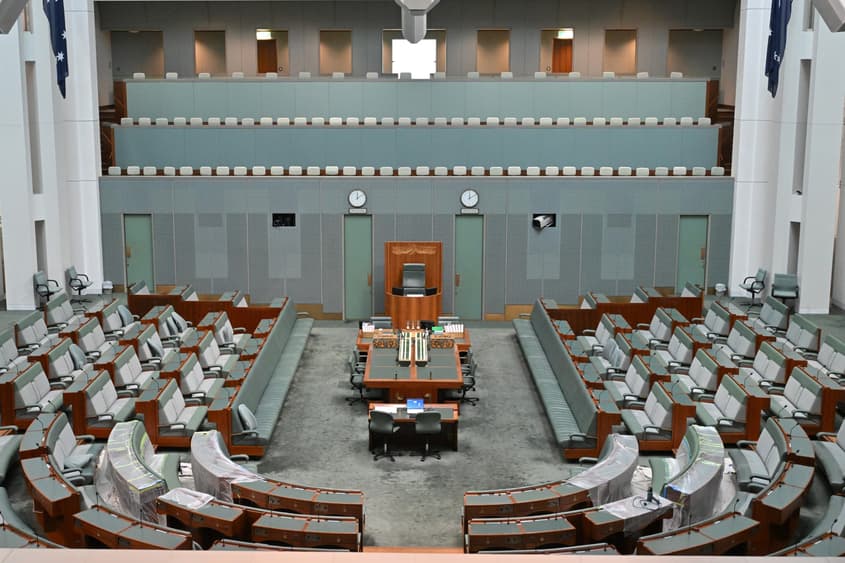
Photo: AAP Image/Mick Tsikas


This morning, the Parliamentary Joint Committee on Intelligence and Security (PJCIS) handed down its report into the gun control/hate speech bill.
With just a week to inquire into the 144-page bill (with an accompanying 300-page explanatory memorandum), the report is necessarily limited and pragmatic. It recognises that the Labor Government has already decided to split the bill and drop the new racial vilification provisions.
It makes four recommendations:
The main report is brief – about 11 pages. It includes this alarming quote from disgraced former Home Affairs head Mike Pezzulo:
“I think parliament simply has to accept that you’re not going to get perfection in the drafting.”
In the committee process, the majority prepares a report. Committee members who disagree can dissent or provide additional comments. On the PJCIS, the Labor Party has majority control – and in this case, what is referred to as the “main” report is just the position of the Labor members.
Committees are one place where party MPs can strike out an original position or challenge the party orthodoxy, but on a fraught topic like this it’s no surprise that committee members were team players and stuck together.
The Liberal and National MPs’ dissenting report criticises the Albanese Government, including for a lack of consultation, and emphasises the Antisemitic motive for the murders at Bondi.
“What we are left with is a Bill that leaves key concepts undefined, embeds foreseeable loopholes, risks chilling lawful speech, and fails to deliver the focused counter-terrorism response Australians were promised”.
The Coalition members flag support for parts of the bill, including aggravated offences for preachers and religious leaders; hate symbol provisions; and additional grounds for excluding non-citizens who support violent extremist organisations.
The Parliamentary Joint Committee on Intelligence and Security (PJCIS) is responsible for reviewing Australia’s intelligence agencies and national security.
A position on this committee is considered particularly prestigious because committee members are entitled to access classified information – and consequently, the major parties fiercely protect those positions.
Because membership in the PJCIS is limited to major party MPs, only Labor and Liberal-National Coalition MPs were able to participate in this inquiry into the hate speech/gun control bill … even though it’s the Greens who have salvaged the Albanese Government’s agenda by agreeing to pass parts of it.
However, that’s not how it works in most of the other Five Eyes countries.
In fact, three years ago, the PJCIS itself recommended allowing crossbench MPs and senators to join the committee, just as independent MP Andrew Wilkie was between 2010 and 2013, during the Gillard Minority Government.
Without action on that front, elected representatives on the crossbench are actively excluded from reviewing the laws that they are now being asked to vote on.
The PJCIS went from first seeing the bill to handing down their report in seven days, including a two-day window for public submissions and two days of hearings.
The hearing days came before the close of submissions, meaning that the committee couldn’t make use of submissions in deciding who would be most valuable to invite for questioning.
By contrast, other recent inquiries have taken months or in excess of a year.
So how does the committee do it?
In part, by working in parallel.
The PJCIS report is keenly aware that much of the legislation has been decided in negotiations outside of the committee. After all, no Greens are allowed on the committee and yet Labor and the Greens have struck a deal on gun control.
In part, it does it by taking shortcuts.
There are only four recommendations in the main report from the committee – though in these 200 pages of rushed legislation there are surely many things that need to be improved. The committee only had the chance to publish 200 of the over 7,000 submissions received by the time the report was due. The final report sketches out broad concerns and makes a few pointed interventions, but cannot give the bill the thorough going over that it deserves.
And in part, it does it by working people hard.
It is a myth that politicians are only working when Parliament is sitting. These committee hearings happened outside of a sitting period, and no doubt included late nights and early mornings.
Advertisement
The stereotypes of democratic decline are rigged elections or daily street chaos. However, Australia’s democratic decline is happening much more quietly, with weakening whistleblower protections and the steady expansion of laws over several years that have made protest riskier than ever.
Today, the Albanese Government pulled its “friendless” Freedom of Information Amendment Bill.

An extract from Amy Remeikis’ new book, Where It All Went Wrong: The Case Against John Howard’