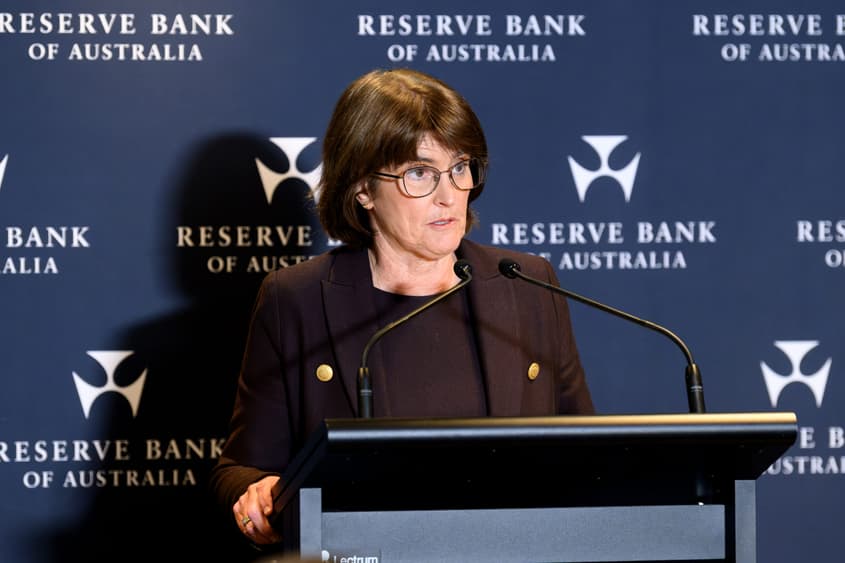
The Reserve Bank has completely misread the economy and risked sending more Australians into poverty on Jobseeker by raising the cash rate to 4.1%.
The RBA’s explanation of it decision demonstrates a central bank utterly lost to reality, which desired to raise rates regardless of economic data and the changes occurring in the world.
The RBA noted that it raised rates because inflation has “picked up materially in the second half of 2025”. That sounds fine, but most recent inflation figures since the last meeting showed inflation remained steady at 3.8%.
Now you might think 3.8% is too high, but the RBA’s further explanation is completely irresponsible and suggests a lack of understanding of basic economics.
It noted that “information since the February meeting suggests that some of the increase in inflation reflects greater capacity pressures.”
Since February’s meeting there has been wage growth data which shows no rise in wage growth, and thus does not suggest in any way an increase in capacity pressures that are driving inflation higher.
Indeed, the December quarter GDP figures released since the February meeting, showed that labour cost fell in real terms both in the December quarter and across all of last year.
The RBA then went on to suggest that “in addition, the conflict in the Middle East has resulted in sharply higher fuel prices, which, if sustained, will add to inflation. Short-term measures of inflation expectations have already risen. As a result, the Board judged that there is a material risk that inflation will remain above target for longer than previously anticipated.”
This is a total failure of basic economics, and suggestive of a panicked RBA board.
The impact on oil prices is due to the attacks on Iran and the blockage of cargo through the Strait of Hormuz. Nothing the RBA does will affect that.
Oil prices will not rise or fall due to the cash rate being raised.
All it will do is make life harder for those households already having to deal with higher petrol prices.
When an economy is hit by supply shocks, standard economics is that you don’t try to reduce demand unless you think a recession is a fun thing to have.
What the RBA has failed to grasp is that because petrol is a highly non-discretionary item, increased petrol prices due to international factors will cause people to have to cut back spending elsewhere. In effect, the higher petrol prices do the work of higher interest rates.
The RBA has decided that not only do we need the pain of higher petrol prices but we also need to be smacked by higher interest rates, you know, just to make sure we really stop spending in the shops.
And what happens when spending falls? Unemployment rises.
Imagine looking at the world, knowing that oil prices are likely to stay high for some time, that cost of living was going to be made worse purely because of international events, and deciding that, you know – people need to hurt more.
Prior to today’s meeting, the market rated a rate rise at a 55% chance, but that figure hid the reality that the Reserve Bank had effectively talked itself and everyone else into thinking a rate rise was inevitable.
Over the past month a series of economy data on unemployment, wage growth, inflation and the GDP provided no real need for a slowing of the economy.
All of these economic data did little to cause investors to think a rate rise was needed
Once Israel and the USA attacked Iran and sent waves throughout the global economy the market suggested there should be a zero chance of a rate rise.
But the RBA wanted everyone to know it wanted to raise rates – both the Governor Michel Bullock and the Assistant Governor Andrew Hauser let it be known via press conferences and interviews that the RBA was very much inclined to rates rate.
And so, they have.
The raise to 4.1% undoes the rate cuts last year and put rates barely below the recent peak of 4.35%:
The Reserve Bank’s decision is one of the worst decisions it has made in its recent history. The only good news is that the RBA notes that “five members voted to increase the cash rate target by 25 basis points to 4.10 per cent; four members voted to leave the cash rate target unchanged at 3.85 per cent”.
At least 4 people on the monetary board are not completely lacking understanding of reality.
Alas, the RBA itself seems run by those who think higher unemployment is no big deal, and I guess when you know your job is not one of those that is in danger, such a belief is rather easier to hold.