Australia is already paying the price of climate change. The evidence appears almost daily on the national emergency map. Just this week alone, major flooding has inundated communities in Queensland, with homes and businesses flooded in Bundaberg. Flooding across the Northern Territory has forced evacuations in remote communities.

Wed 18 Mar 2026 00.00
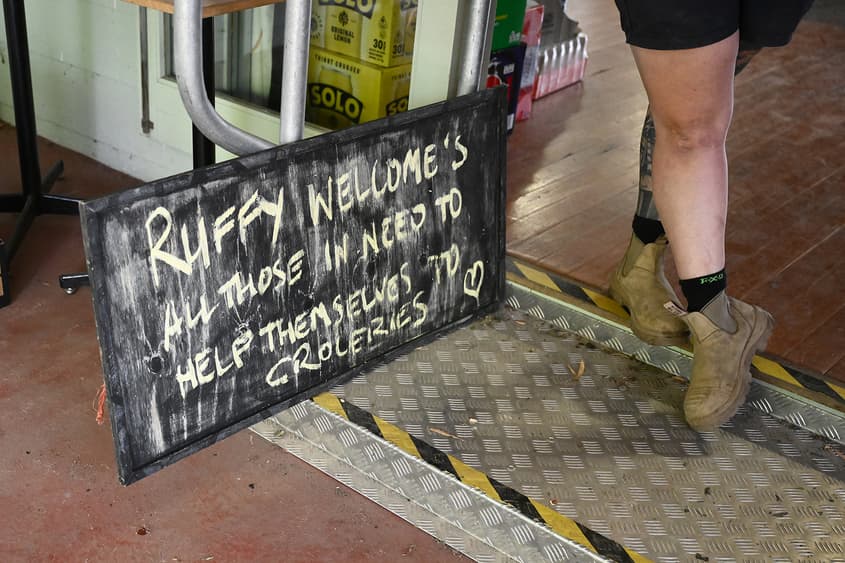
Photo: AAP Image/Joel Carrett


Australia is already paying the price of climate change. The evidence appears almost daily on the national emergency map. Just this week alone, major flooding has inundated communities in Queensland, with homes and businesses flooded in Bundaberg. Flooding across the Northern Territory has forced evacuations in remote communities. Flood watches stretch across parts of South Australia and Victoria, isolating towns as swollen rivers spill across farmland and highways.
These disasters are not rare or isolated events. They are becoming the new rhythm of Australian summers – floods in the north, fires, heatwaves and severe storms elsewhere – leaving communities rebuilding again and again.
Every flood, fire and storm damage homes and infrastructure, roads washed away, and livelihoods disrupted. Communities pull together to rebuild, emergency workers step up, and governments mobilise increasingly stretched recovery funds.
But there is a glaring imbalance in how Australia pays for these disasters.
While Australians carry the cost of climate impacts, the companies exporting the fossil fuels driving those impacts contribute almost nothing to the recovery.
That imbalance is becoming impossible to ignore. If climate disasters are one of the costs of burning fossil fuels, it makes sense that the companies profiting from exporting those fuels should help pay for the damage through a Climate Disaster Levy
Climate disasters are not a future problem; they are a now problem.
Fires, floods and storms now cost the country around $38 billion every year – roughly $3,800 per household.
Some of those costs fall on people whose homes or businesses are directly damaged. But even those who avoid disaster still pay through the taxes that fund recovery efforts and the rising insurance premiums that spread the risk across the community.
Insurance has become one of the clearest signals of the growing climate crisis.
Across Australia, premiums are climbing sharply as insurers factor in increasing disaster risks. For many households, the question is no longer simply how expensive insurance has become, but whether it is available at all.
Research from the Australia Institute found more than two million Australians are already uninsured or underinsured. Around 1.25 million people are experiencing insurance affordability stress, paying more than four weeks of income simply to insure their homes.
For families already facing rising living costs, the growing price of climate risk is becoming impossible to ignore.
Australia is the third-largest exporter of coal and gas globally. The carbon pollution embedded in those exports contributes significantly to the climate crisis driving extreme weather around the world.
Yet the multinational companies exporting those fuels often contribute remarkably little to Australian public revenue.
Some major fossil fuel exporters have recorded years of multi-billion-dollar sales while paying no corporate income tax. In some cases, gas exporters pay no royalties on the gas they extract, effectively accessing Australia’s publicly owned resources for free before selling them at great profit overseas.
Much of that profit flows offshore to foreign shareholders.
Meanwhile, Australian communities are left paying for the fires, floods, droughts and extreme storms that are becoming more severe in a warming climate.
It raises a simple question of fairness: if companies profit from exporting carbon pollution, shouldn’t they help cover the costs of the damage it causes?
The Climate Disaster Levy proposed by the Australia Institute offers a straightforward solution.
The levy would apply a fee to the carbon pollution embedded in exported coal and gas, ensuring fossil fuel exporters contribute to the costs of climate disasters.
If the levy matched the current Australian carbon credit price – around $36 per tonne – it could raise roughly $36 billion each year.
That revenue could help fund disaster recovery, strengthen emergency services and invest in infrastructure and planning that reduces climate risks before disasters strike.
Most importantly, it would create an ongoing funding source for climate disaster recovery rather than relying on emergency budget decisions after each new crisis.
If the levy reflected international carbon prices such as those used in the European Union’s emissions trading system, the revenue could reach as much as $151 billion annually.
That funding could transform Australia’s ability to prepare for and recover from climate disasters.
Australians already understand the principle that industries should help pay for the risks they create.
The Climate Disaster Levy simply applies that same principle to fossil fuel exports.
If Australia continues exporting coal and gas – and the carbon pollution that comes with them – then the companies profiting from those exports should help cover the cost of the harm they contribute to.
Otherwise, ordinary Australians will keep paying the escalating price.
With climate disasters intensifying and costs rising every year, the real question is no longer whether Australia needs a Climate Disaster Levy. It is whether we can afford not to have one.
Advertisement

As we approach the Federal Budget, speculation is swirling about changes to the Capital Gains Tax (CGT) discount and negative gearing. And just yesterday a senate committee handed down its report on the CGT discount after hearing evidence that it worsens inequality and encourages property investors to gamble on housing.

The Reserve Bank has completely misread the economy and risked sending more Australians into poverty on Jobseeker by raising the cash rate to 4.1%.
The Federal Government is facing calls to intervene and stop the expansion of a central Queensland coal mine that environmental groups have labeled a “carbon bomb”.