So much of what passes for Australian political discourse relies on existential threats. It’s easy to make grandiose statements and take positions when the threat is some amorphous vague maybe that could possibly happen.

Tue 24 Mar 2026 10.00
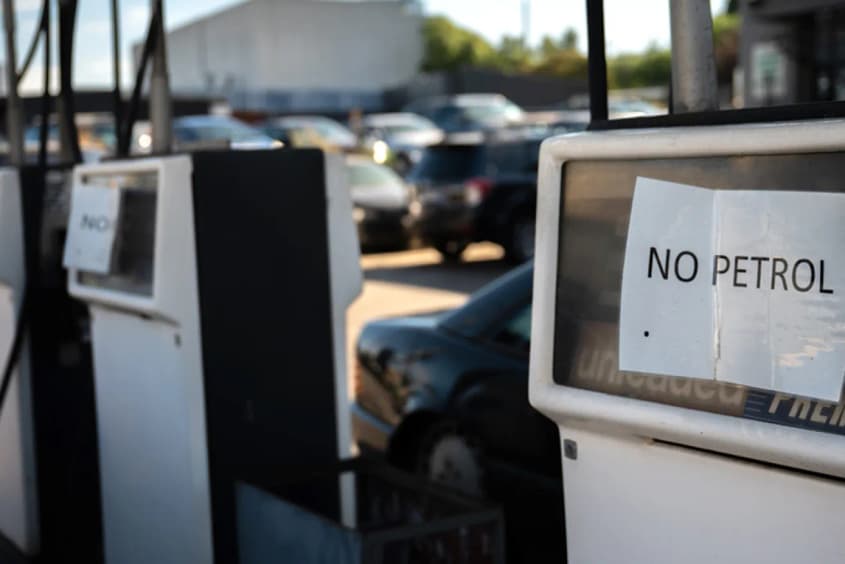
Photo: AAP


So much of what passes for Australian political discourse relies on existential threats.
It’s easy to make grandiose statements and take positions when the threat is some amorphous vague maybe that could possibly happen.
It’s what our defence spending is built on. No one ever questions whether or not it is needed, because part of its job is to be a threat deterrent. And in the absence of a threat, well then, the only obvious answer must be because it’s working. China could be a threat one day, just as Indonesia was once considered a possible maybe threat.
China and Indonesia have not actualised that threat, so obviously, Australia’s defence spending is doing its job.
It doesn’t matter that there are holes in the logic or that, for the most part, it is Australia’s allies who are doing the invading and bombing. Existential threats are everywhere and easy politics – migration, budget crises, international relations, national security – the fear-mongering and demonisation is easy when the threat is a possibility but not something most of the voting public feels day to day.
We even do it with climate change – an actual tangible threat – except in the other way; because imagine, if actually, there was nothreat. That makes sense in this context because most of our discourse is centred around maintaining the dominant power structures that hold up the status quo. Fossil fuel is important to that status quo, so the real threat of global warming is to be diminished so nothing needs to change.
That same power is invested in making people think of potential possible risks to keep manufacturing consent to do things exactly the way they want.
There has been a campaign to manufacture consent, for example, to cut growth funding for the NDIS. So there are warnings about the risk to the nation’s budget, the potential for fraud, the very sensible calls for sensible spending – because otherwise, the existential threat is that the nation will run out of money.
While we hear all about the “ballooning” costs of the $11.6 billion NDIS, we are also told that doing anything to change the Fuel Tax Credit Scheme – essentially a fossil fuel subsidy that cost the budget $10.8 billion in foregone revenue in the past year – would be detrimental to the economy and nation.
The subsidy means mining companies and other major users of diesel and petrol get a break on the 52-cents-a-litre in fuel tax we all pay when we fill up. Most of us pay $1300 in fuel tax each year, based on the 2600 litres we consume. BHP uses nearly 1,300,000,000 litres of fuel a year and then gets the $627 million or so it pays in fuel tax returned to it by the government under the Fuel Tax Credit Scheme.
So NDIS spending is a threat. Fossil fuel subsidies are not. Again – existential threats are easy politics because they are shaped around communities and issues that don’t have a lot of institutional power to fight back.
But now, because of the US and Israel’s decision to wage war on Iran, the existential is about to become tangible for millions of Australians who have never had to consider actual, real threats to their daily lives.
There is a very real possibility Australia faces fuel rationing. We do not have enough fuel, even less when it comes to diesel, and that has ramifications for food security as well as transport. There are options to maintain supply, but that would require a shift in thinking. Do we turn to China? We may end up with no other choice.
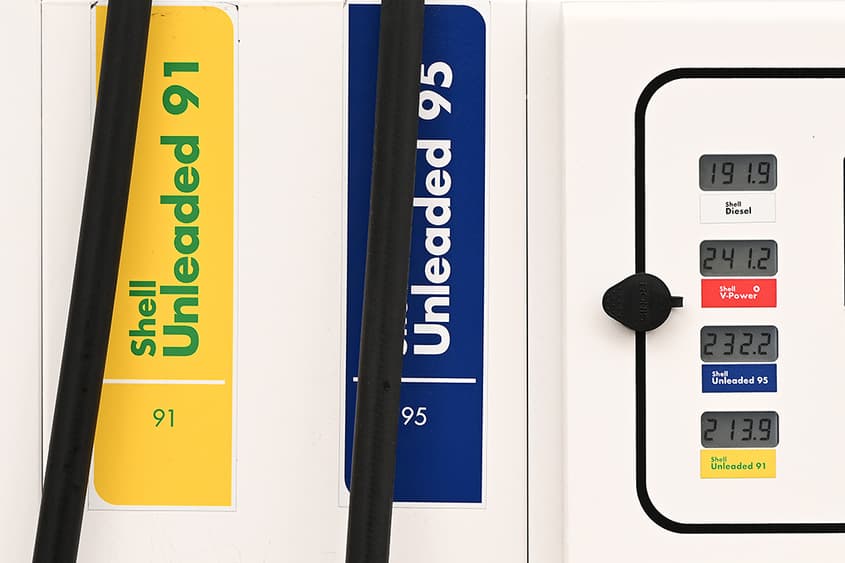
The existential already became real for people when fuel prices increased almost overnight and then interest rates followed.
As consumers, one of the only things we know the price of is fuel. Mostly that’s because it is on signs everywhere we turn, but also because it’s usually a singular purchase. And behavourial economics suggests that we expect inflation to become an issue when the cost of petrol increases, which is one of the reasons the Reserve Bank board voted to raise the cash rate.
So, the existential – a war the US and Israel began with Iran – can now be felt by those who have always considered those threats to be existential, or someone else’s problem.
Therein lies the rotten core of how we treat political discourse. Because, for many Australians, these issues have never been existential. They are always real, because it’s their family, their homelands, their culture, their existence. They feel the bombs because they see the terror in their family group chats, they grieve the loss of family and loved ones, they see the destruction of family homes, the destroyed olive trees and orchards their grandparents planted.
Lebanon, Palestine, Afghanistan, Iran and other south-west Asian nations are not faraway lands to be considered only when the cost of living goes up. The UN reports that, in the past two weeks, a classroom of children in Lebanon have been killed or wounded every day.
Yet, what they are going though becomes real for most Australians only in the political sense when petrol prices increase.
Because of the way we treat politics, and how dedicated so many of our institutions, including the media, are to maintaining the status quo, the death of hundreds of thousands of civilians and the destruction of international law didn’t matter until fuel prices went up and the threat of material impacts became very real.
This sort of disconnect cannot hold. Australia’s head-in-the-sand approach to US foreign policy is not an existential threat, it is a very real and very material one, and the old norms do not apply.
Late last week, Anthony Albanese attempted to backtrack Australia’s instant (and ill-advised) support for the US and Israel bombing of Iran, by claiming that the objective – to rid Iran of nuclear capability – had been realised. Which it had, at least according to US intelligence, in June last year when the US and Israel last carried out strikes. There was nothing to suggest, again, according to the US’s own intelligence agencies, that Iran was rebuilding that capability.
Albanese also claimed Australia was “not a participant” when just days before his defence minister confirmed the intelligence and surveillance from Australia’s Wedgetail aircraft would be available to the US. We cannot claim neutrality here and we cannot pretend our nation’s slavish devotion to US foreign policy comes without consequence.
Our ally is the biggest threat to not just the world order but to global stability and peace. Trying to ignore that and concentrate solely on domestic issues that are intensifying because of the very real and present threat of United States foreign policy is no longer an option. It shouldn’t take economic pain to recognise truth.
That, however, is the privilege of the ignorant. Our political and media classes have exploited that for decades, but not even they can hold back the tide of the changing world order.
Reality will eventually bite, even for the unfeeling.
Amy Remeikis is a contributing editor for The New Daily and chief political analyst for The Australia Institute
This article was first published on The New Daily.
Advertisement
The easiest way to understand the structural shift taking place in Australian politics is to understand that you can now win a landslide majority of seats in parliament even when your primary vote declines.
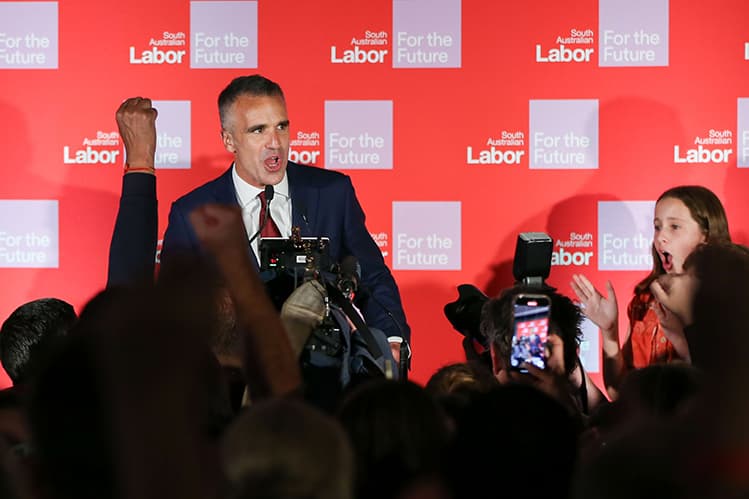
On Saturday, South Australians voted decisively to re-elect the first-term Malinauskas Labor Government. While we don’t know exactly how the 47 lower house seats will fall, Labor will have a super-majority having won about 35 seats.

It isn’t always easy to keep up with what’s happening in the US. “Shorter America” is a series where Dr Emma Shortis loops you in on what’s going on in America and shares news and analysis that you can trust.