Australia faces an unprecedented oil security challenge. Fatih Birol, the executive director of the International Energy Agency (IEA), described the current oil shock as “the largest supply disruption in the history of the global oil market”, and is calling on countries to act rapidly to reduce economic impacts. While Australia navigated recent oil shocks unscathed thanks to a high self-reliance in oil and oil products, the Iran crisis is markedly different.


Tue 24 Mar 2026 00.00
Photo: AAP Image


Australia faces an unprecedented oil security challenge. Fatih Birol, the executive director of the International Energy Agency (IEA), described the current oil shock as “the largest supply disruption in the history of the global oil market”, and is calling on countries to act rapidly to reduce economic impacts. While Australia navigated recent oil shocks unscathed thanks to a high self-reliance in oil and oil products, the Iran crisis is markedly different.
Domestic oil production only amounts to 5.6% of Australia’s demand today, and our two remaining refineries only provide 17% of our refined petroleum products. Australia has the largest trade deficit in refined petroleum products globally, and by quite a margin. The situation is more precarious due to the country’s very low stockpiles of key petroleum products, with 37 days of petrol and 30 days or less of diesel and jet fuel. Australia has the lowest level of oil stocks of all IEA members – on average, major oil importers held 141 days of stocks in December 2025.
While Australia has limited exposure to the Middle East through its imports of crude oil, it is highly exposed through the Asian refineries that process our imports. Some countries, such as China, are restricting exports to prioritise their domestic markets. Several shipments due to arrive in Australia next month have already been cancelled or deferred. At this point, they have all been replaced by supply from other regions.
This exposure presents a large economic risk for Australia because oil is our largest energy source and is critical to many of our key economic sectors. There could be serious impacts on agricultural production, mineral exports, as well as inflation and economic growth. Despite this, successive governments on both sides have repeatedly ignored warnings about the country’s vulnerability.
Australia does not have many options to address the situation. The government has already implemented a temporary relaxation of fuel specifications to make more fuel available, and started diversifying its suppliers of refined products by increasing imports from the United States. It should now take rapid action to curb demand, as recommended by the IEA. This can include voluntary measures such as working from home and reducing air travel, as well as required changes such as lower speed limits and driving restrictions. Such measures can make Australia’s stockpiles last longer without material economic impacts.
Another lever Australia could explore is to negotiate bilateral crisis supply agreements with suppliers of refined oil products that are also large importers of liquified natural gas (LNG) with significant exposure to the Middle East. Australia may be able to offer priority for spot LNG sales (sales beyond contracted volumes, which comprised a quarter of Australia’s LNG exports in 2024) in exchange for refined oil products. For example, South Korea is a large exporter of oil products with high stockpiles, and relies on LNG for over a quarter of its electricity generation.
The Australian government would need to introduce new export control mechanisms to enable it to direct some spot sales to specific countries in times of crisis. Such a mechanism should be based on prevailing market prices to avoid the need to compensate LNG exporters. It could be embedded in an export licensing mechanism as part of the proposed domestic gas reservation policy.
Increasing the taxation of coal and gas exports, which are expected to attract elevated prices for the duration of the crisis, could provide funds for cost-relief and fuel-shift measures.
Longer term, Australia has more solutions available to improve its resilience to future oil market shocks, but few can offer protection at scale. Increasing domestic supply is not feasible due to the lack of commercial oil reserves, and increasing stockpiles should be a priority but will take years.
To enhance energy security, Australia needs to reduce its dependence on oil throughout the economy. Electrification is the most promising solution as it is mature, cost-effective and can deliver reductions in oil imports at scale, offsetting them with domestically supplied clean energy. The oil shock is the first one to happen at a time when renewables and electrification offer a credible alternative.
Despite its high oil vulnerability, Australia lags on electric vehicle (EV) adoption, behind not only European countries but also multiple Asian countries like China, Singapore and Thailand. Beside cars, progress is minimal, with fewer than 300 electric vans and trucks sold in 2024. IEEFA also found that diesel use in mining is likely to continue to increase well into the 2030s with many companies deferring their electrification plans. Policy signals are weak and sometimes even hinder progress.
While costly, developing supply chains for low-carbon fuels is also likely to be required, especially in aviation and other heavy transport.
The government knows what it must do – it has already developed transport and resources sector plans that show the best actions to move away from oil. Now is the time to focus on their swift implementation to accelerate the electrification of Australia’s transport and mining sectors, and to ensure the country is not left so exposed in the next global crisis.
Kevin Morrison is an Energy Finance Analyst, Australian Gas at IEEFA Australia
Amandine Denis-Ryan is CEO of IEEFA Australia
So much of what passes for Australian political discourse relies on existential threats. It’s easy to make grandiose statements and take positions when the threat is some amorphous vague maybe that could possibly happen.
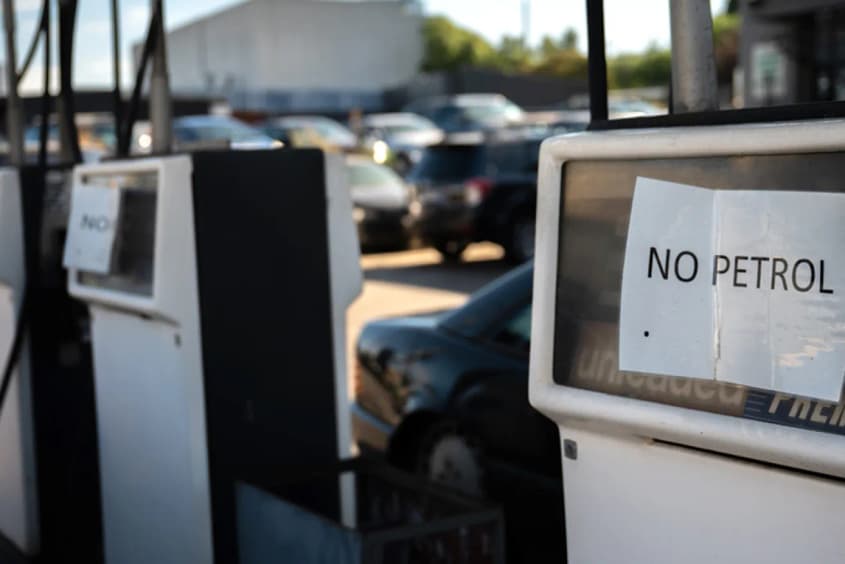
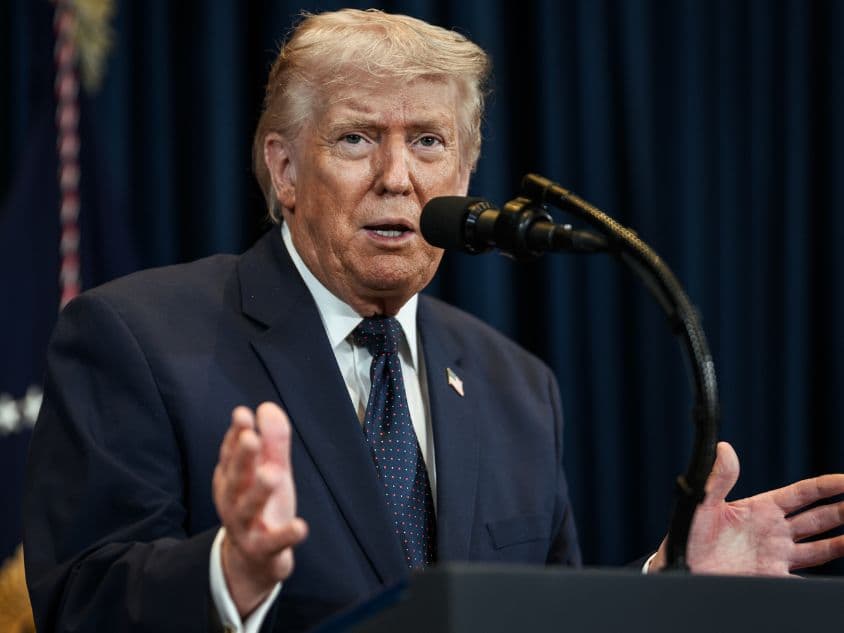
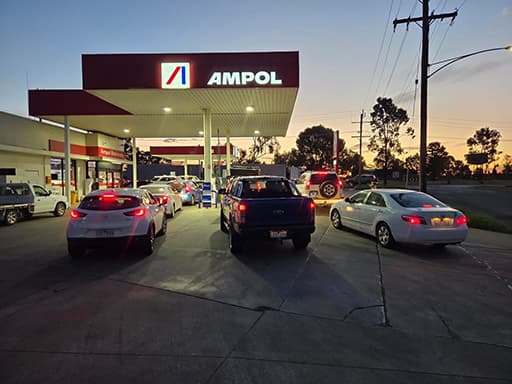
As we line up at the petrol bowser to pay 60 cents per litre more – and rising – than we did before the US and Israel attacked Iran, we should remind ourselves how indebted we are to Don and Bibi. And indebted is the word. Iran’s approach to asymmetric warfare hits the global community’s hip pocket hard, as it is intended to do. Erosion of political support is the result.
The Reserve Bank’s decision to raise interest rates this week was a double whammy for Australians struggling with petrol price increases in the past month that have already cost them more than the impact of the rate rise.