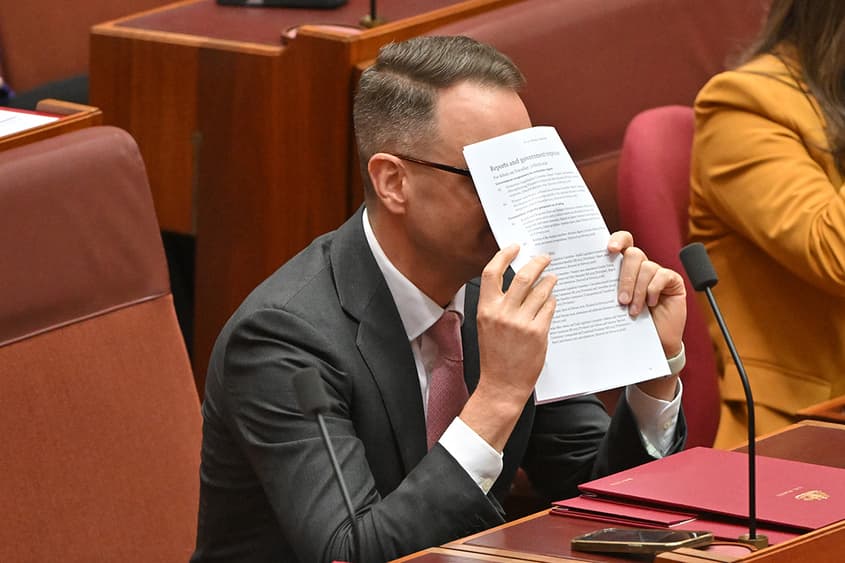
The Reserve Bank’s decision to raise interest rates this week was a double whammy for Australians struggling with petrol price increases in the past month that have already cost them more than the impact of the rate rise.
Fri 20 Mar 2026 00.00
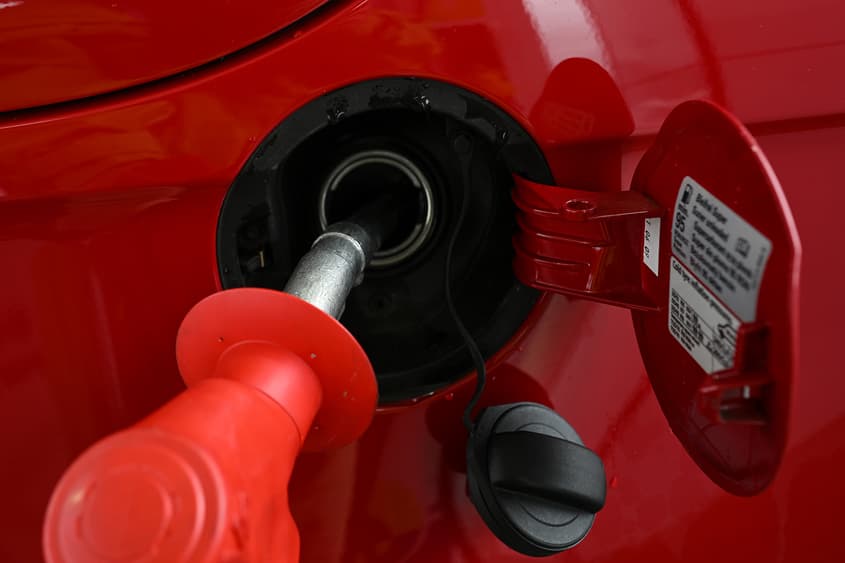
Photo: AAP Image/Lukas Coch


The Reserve Bank’s decision to raise interest rates this week was a double whammy for Australians struggling with petrol price increases in the past month that have already cost them more than the impact of the rate rise.
The reason the Reserve Bank raises interest rates is because borrowers have to pay their mortgage, and so a rate rise means have less money to spend elsewhere.
When people spend less money in the shops and on services, businesses cut back on staff hours, or hold off on hiring more workers. As a result, the RBA hopes, unemployment will rise, wages won’t go up as much and there will be even less money being spent.
The problem for the RBA is the same thing happens when petrol prices rise due to a supply shock as we are seeing from the Iran War.
Petrol is what economists call a “non-discretionary” item – essentially you can’t do without it if you have a car. If the price of petrol suddenly jumps around 40 cents a litre due to a war in Iran, you can’t immediately decide to drive less on your commute to work or to pick up your kids from school.
It means, just like when interest rates go up, you have to cut back on spending elsewhere to make up for the extra amount you have to pay for your fuel.
Since the Iran invasion, prices of unleaded petrol across the nation have risen significantly across the nation.
We can actually calculate just how much these price increases have hit our ability to spend elsewhere.
Each year, Australians consume around 15,817 megalitres of “automotive gasoline”. That means a 40.6 cents per litre price rise over the course of a month amounts to Australians spending around $535m more on petrol than they would have – or to put it another way they have $535m less to spend on other goods and services.
We can also work out the cost of a rate rise.
According to APRA, Australians have around $2,794.8bn in total housing loans, and around 85% of those loans are variable rates. That makes for $2,375.6bn in total variable housing loans. That means a 0.25%pt increase adds roughly $5.9bn in overall costs to loans, for a monthly impact of $494m.
This means the petrol price rises in the past month have cost households more than the impact of a rate rise.
The RBA in its eagerness to look tough on inflation has delivered a rate rise at the very moment petrol price rises had already delivered a blow to households more than another increase in interest rates.
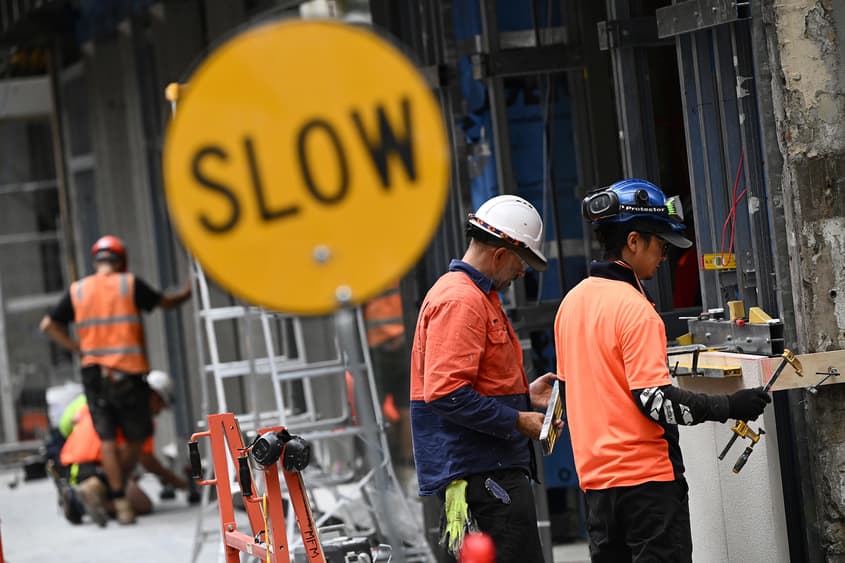
Even worse, the figures out today show that before both the rates rises and the increase in petrol prices rose, unemployment rose from 4.1% to 4.3%.
The worry is the RBA has very much misread the state of the economy and the impact of the Iran War and double hit of interest rates and petrol prices will slow the economy and send unemployment higher.
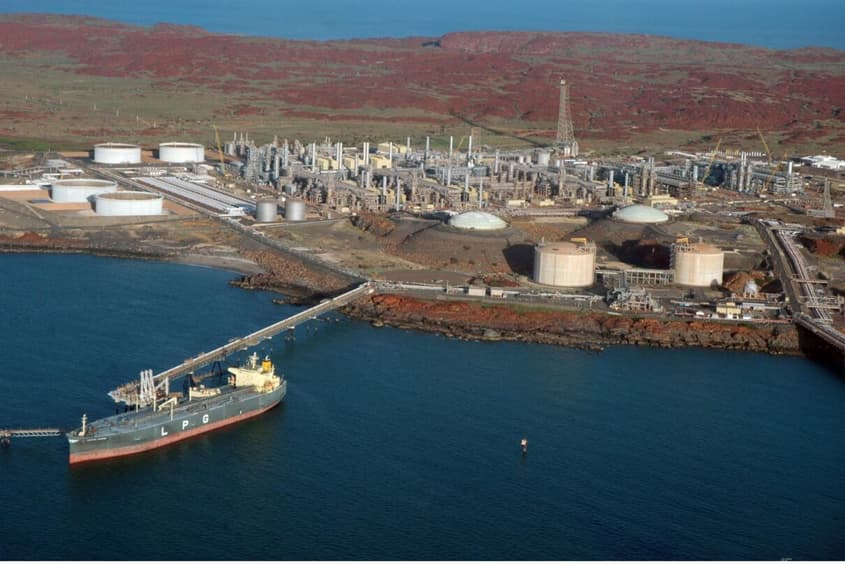
When Russia invaded Ukraine, it triggered something far less discussed in Australia: one of the biggest unplanned gas export profits in modern history. Gas prices spiked. Exporting companies made off like bandits. Australians failed to reap any benefit from our exported gas price spike
Advertisement
In February the unemployment rate rose from 4.1% to 4.3%, providing further evidence the Reserve Bank misread the economy when it raised rates in both February and this week.
The Senate Select Committee on the Operation of the Capital Gains Tax Discount tabled its report on Tuesday. In short, it found that Australia’s current tax system favours investors and fuels intergenerational inequality. But the Coalition maintains the CGT discount is “working as intended.”