Victoria's duck hunting season begins amid declining support and compliance concerns
At 8am, 18th of March, Victoria entered its duck hunting season for 2026. That’s right, until thirty minutes after sunset on 8 June, native waterbirds can be shot for “sport” across 3.5 million hectares of public land in Victoria.

Wed 8 Apr 2026 01.00
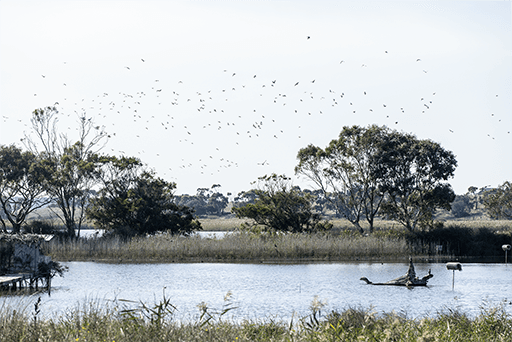
Photo: AAP Image/Diego Fedele


At 8am, 18th of March, Victoria entered its duck hunting season for 2026.
That’s right, until thirty minutes after sunset on 8 June, native waterbirds can be shot for “sport” across 3.5 million hectares of public land in Victoria. Despite presenting itself as Australia’s most progressive state, Victorian hunters can even shoot ducks on protected and internationally significant Ramsar-listed wetlands.
By sundown on the last day of last year’s season in Victoria, almost half a million ducks were “harvested” and thousands more “shot but lost,” presumably for a painful death.
Victoria is one of four Australian states or territories that still allow “recreational” duck hunting; it’s banned in Western Australia, New South Wales, Queensland and the ACT.
Victoria should end duck hunting. That’s not just my opinion; it was the recommendation of the Labor-led Select Committee on Victoria’s Recreational Native Bird Hunting Arrangements. That recommendation was ignored by the Victorian Labor Government.
The good news is that it was a surprisingly quiet start to the season. One resident living near a public waterway where duck shooters had set up camp the night before commented “Gosh, they must all be hungover, it’s so peaceful…hopefully it stays that way”.
Unfortunately, not everyone was so lucky. Other residents across Victoria described their mornings as sounding “like Ukraine” or “New Year’s Eve”. I’ll spare you the gore, but there’s already plenty of graphic material circulating from this year’s season – and we’ve only just begun.
Conservation group, Regional Victorians Opposed to Duck Shooting Inc, revealed that shooters have set up in obscure locations this year to avoid being spotted, and that even though this “sport” is legal, there were the usual illegal night-time shootings that keep authorities busy.
That’s not a new thing. Last season, the GMA issued four bans, 31 infringement notices, 17 in-field licence suspensions and five official warnings. They also had 12 follow-up investigations to complete. Back in 2017, an assessment of the GMA’s compliance and enforcement functions said “The low number of successful enforcement outputs reported by the GMA is at odds with the well documented evidence of large-scale non-compliance with the game laws at peak events such as the opening of the duck season.” In other words, while it may look like hunters are behaving themselves, in reality, the authorities simply aren’t enforcing compliance with hunting laws.
It’s not just the noise and the dead and dying waterbirds though.
“Recreational” shooting has many impacts on people in regional Victoria. They have to deal with trespassers, thousands of non-biodegradable plastic shotgun cartridges and wads left littering their waterways and landscapes, pellets that land on rooves which collect water supplies, and distressed stock and horses that run through fences. Hunting season also impedes eco-tourism, with non-hunters banned from entering wetlands during specified periods.
So, what was behind the relatively quiet start to the season for many areas? It seems that it’s the declining number of shooters. Indeed, the GMA’s own data shows that the number of licensed duck shooters has been steadily declining since 2018.
According to the GMA, half these licenced shooters aren’t even “active” – that is, they don’t go shooting.
This supports recent research by The Australia Institute that found large numbers of people in NSW have acquired gun licences on the grounds that they are sporting shooters, but government statistics show that very few actually participate.
Duck hunting involves getting up early and getting cold and wet. It seems many shooters just want to just have a gun at home, rather than actually having to get muddy.
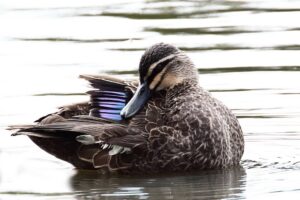
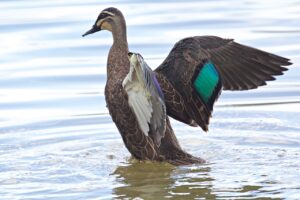
But photographer Eleanor Dilley did brave the outdoors when she photographed these native ducks. Aren’t they beauties?
Kerrie Allen is spokesperson for conservation group Regional Victorians Opposed to Duck Shooting Inc (RVOTDS), an organisation committed to protecting waterbirds and waterways.
Advertisement

Related Articles
Pressure mounts to save Macquarie Harbour as salmon farming backlash grows
Environment Minister Murray Watt is facing renewed pressure to intervene and protect Tasmania’s heritage-listed Macquarie Harbour amid deepening public opposition to the state’s salmon farming industry.
Why Australia’s pesticide regulator took years to act on rat poison
Australia’s poisons regulator shows how hard it is to rebuild an institution after it is damaged. As it rebuilds, Australian native animals are dying.