Australia has significant power in the world, we should be using it more wisely
Australia is not a small nation with no agency.

Thu 9 Apr 2026 14.20
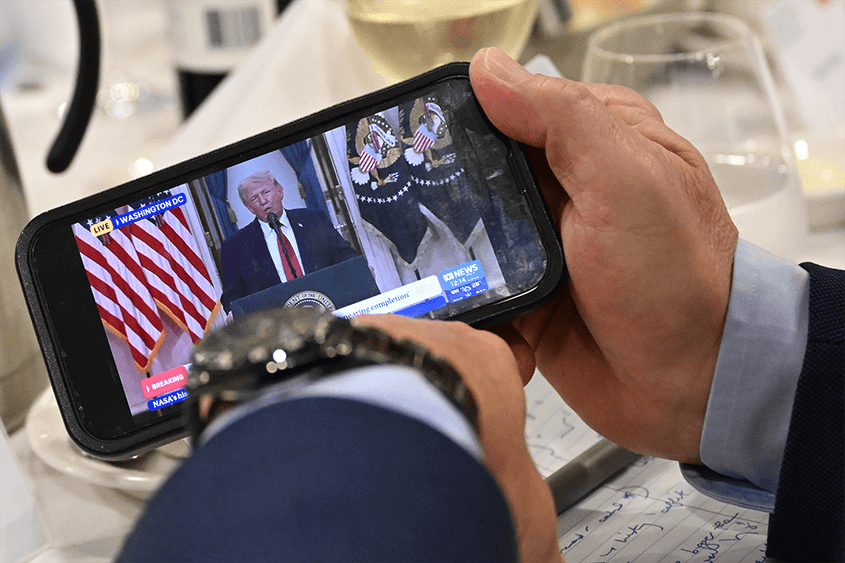
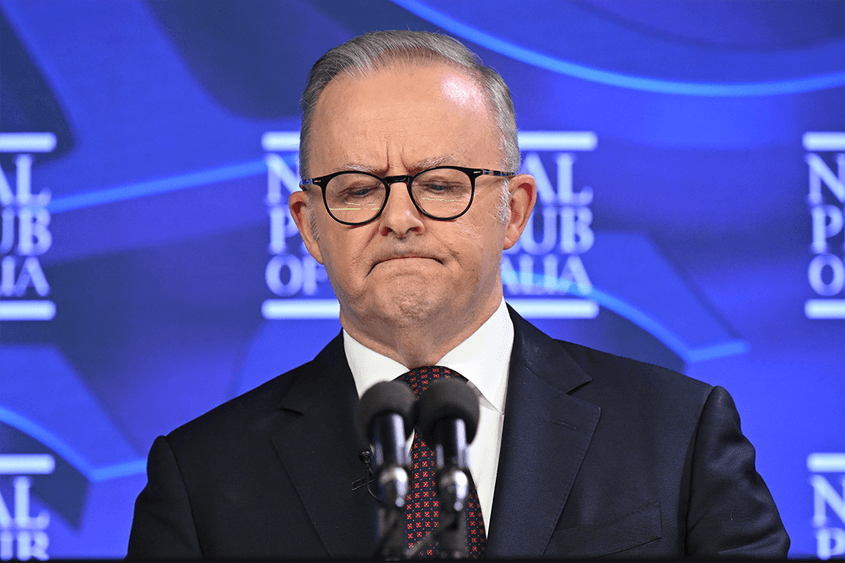
Photo: AAP Image/Lukas Coch


There are just under 200 countries in the world and Australia is in the G20.
From the department of foreign affairs own website the “G20 brings together the world’s major and systemically important economies.
“Its members represent 85 per cent of global GDP, 75 pr cent of international trade and around 80 per cent of the world’s population”.
Australia has the 15th largest economy in the world. We are “the 12th largest contributor to the UN regular and peacekeeping budgets, held the first presidency of the Security Council and sent the first UN peacekeepers to Indonesia in 1947.
All this to say that in the post war period, Australia isn’t – and hasn’t – been powerless.
We are not a small nation with no agency. We’ve proven that time and time again.
So you have to wonder why our government goes to such extraordinary lengths to present Australia as being powerless against the United States, a passive player at the mercy of Donald Trump’s tempests.
Even if you believe, as former DFAT, Defence and ASIO boss Dennis Richardson told the Sydney Morning Herald late last week that – “the Australian government is not paid by the taxpayer to let fly and give them five seconds of warm inner glow by saying things that wreck the relationship with the US … The idea they should be calling Trump out is just rubbish”– the idea that Australia has no power is a very strange development in modern times.
We do, and we shouldn’t be afraid to use it.
Australia is not a middle power, it is a significant power and together with other significant powers – Canada and EU states like Germany included – we have more control over the world than what we let on.
That we don’t seem to believe that, or want to believe that, and instead chose this curious defeatism path – that we can only do what we can do in the parameters set by the United States – is a politically expedient position, but does nothing for Australia’s future. Or the world.
I don’t know what you will be reading from Trump and the US as you read this.
On Wednesday the two week ceasefire with Iran dominated, but you don’t know who he has spoken to in the last 24 hours.
The news that the President of the United States released a statement with the words “a whole civilization will die tonight, never to be brought back again,” (language we are used to seeing from nations like North Korea, where Kim Jong Un has previously vowed to “thoroughly annihilate” South Korea and the US) threatening death on 86 million people presents its own world order issue.
The US President, leader of Australia’s biggest ally, causally foregrounding genocide.
Not defence strategic targeting, but the complete destruction of millions of civilians. This was largely presented as unusual, but part of the diplomacy game.
Anthony Albanese stuck largely to that framing when he told Sky News:
“I don’t think it’s appropriate to use language such as that from the president of the United States. And I think it will cause some concern, which is there,” he said.
“We’ve said very clearly that the conduct of any conflict must be within international law and that provides for making sure that civilians – who aren’t parties to the conflict – are given every protection possible.”
Which is a lot of words to say ‘we are concerned’. But Australia is a player in this war no matter how many people pretend to stick our head in the sand over it.
We are not only sharing intelligence, we have sent at least 90 defence personnel, including the SAS, to the UAE on standby.
We have Australian defence personnel on US submarines and ships.
We were among the first nations in the world to back Trump in on this, without knowing the legalities, objectives or even the plan.
And the US is planning on upgrading its military bases in Australia, that will “allow for additional US bomber rotations”.
We can not even answer the main question – when it comes to AUKUS, a multi-billion dollar handcuff we are paying the United States to lock on us – of whether we maintain our sovereignty
Malcolm Turnbull began asking that question as soon as the deal came to light because he knows what these deals mean.
That there is so little curiosity about that, even at this stage, even as the US tests weapons in our desert, even as the US president openly threatens genocide.
Change is uncomfortable and so is reality. Australia, whether people like it or not, has been a player in the US and Israel war in Iran, and it has been largely paralysed in how to unhook itself from the US in general.
When Canadian Prime Minister Mark Carney spoke about the new world order in January this year, he wasn’t speaking lightly.
He travelled to Australia to directly issue the same message – that countries like Australia have a big role to play in building the new world. One that includes consistency in how international law is applied and holds faith with the global south.
There has not been a massive shift in US policy – we are just seeing the un-tethered, unmasked version.
US policy has always been America First, it’s just that sometimes its partners could console themselves they came second.
The hope that some semblance of returning to that order should not be enough for Australia to justify being its lapdog.
Amy Remeikis is a contributing editor for The New Daily and chief political analyst for The Australia Institute
This article was first published on The New Daily.
Advertisement
Related Articles
Pacific nations step up push for fossil fuel phase-out ahead of global talks
Pacific leaders are preparing to meet in Vanuatu to agree on a unified position ahead of the first global conference on transitioning away from oil, coal, and gas later in the year.