I sat through the Carbon Capture APAC Summit in Melbourne, an international gathering of carbon capture and storage (CCS) hopefuls. What struck me most was how many speakers remarked on seeing the same faces as they did last year.
There are three CCS conferences scheduled in Melbourne this year alone. The fundraising and spruiking for this subsidy-reliant industry is in hyperdrive.
Last year, the industry’s pitch was modest: CCS as ‘part of a suite of solutions’. This year, it had grown teeth, but beneath the surface was something closer to panic. Australia wasn’t sold as a country doing its bit. It was sold as a hub, somewhere with enough empty land and ocean to take everybody else’s carbon dioxide, too. Speakers from Singapore and Malaysia were unusually candid: Australia has vast, sparsely populated land and sea, geology practically begging to be a landfill for a region that’s run out of places to put its pollution.
We’re being positioned as more than the driller, digger and exporter. We’re being lined up as the Asia-Pacific’s dumping ground for CO2; geology for hire to help cook the books. Australia isn’t doing this instead of expanding fossil fuels. It’s doing it as well.
None of this works without the government helping to write the rules. In November 2023, the federal government passed amendments to the Environment Protection (Sea Dumping) Act 1981, specifically to allow companies to export captured CO2 overseas for burial beneath the seabed. The change is what makes “transboundary” CCS legally possible, opening the door for Australia’s ocean floor to become the destination for other countries’ industrial waste.
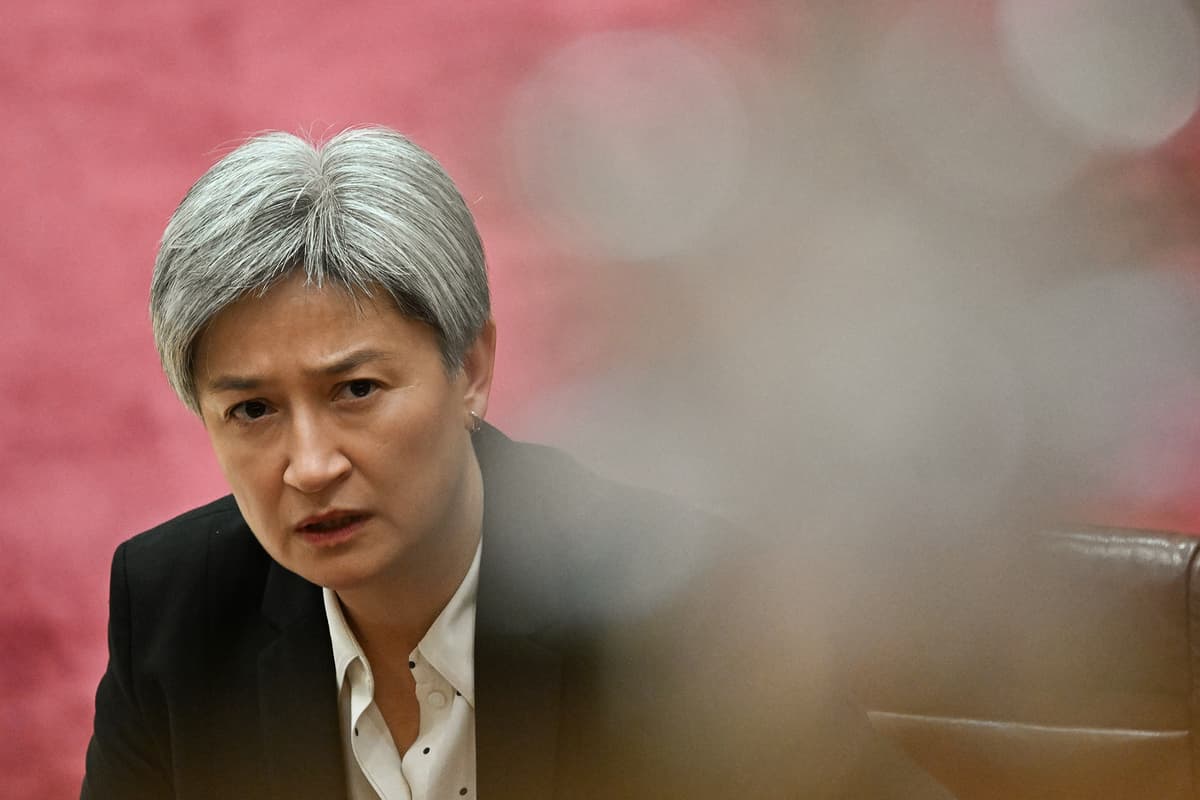
At the time, Foreign Minister Penny Wong told the Senate the bill was needed for Santos, Woodside and INPEX, and that Japan and Korea wanted it passed so they could keep buying Australia’s gas.
Hansard records detail her taunting the Coalition and the Greens for stalling on the vote:
“You said no to Santos. You then said no to Woodside. You’ve said no to INPEX. You’ve said no to Korea. You said no to Japan.”
It was a case of the quiet part being said out loud.
In Melbourne, that ambition filled the opening keynotes. The Northern Territory government pitched Darwin as a CO2-receiving hub. Western Australia spruiked “CCUS Destination WA.” DFAT put forward its chief negotiator on transboundary CCS, laying diplomatic groundwork for other nations’ emissions to legally cross into the Australian seabed under the very laws Wong helped push through. These aren’t fringe voices. They’re government officials smoothing the path for foreign carbon to be shipped, piped and dumped here.
What was most striking wasn’t the ambition. It was the neediness beneath it. The CCS hubs proposed for Darwin, the Pilbara, the mid-west of WA, Gippsland and eastern ports don’t exist, and won’t, unless taxpayers build them. When engineers took the stage, they focused on the barriers: ships that don’t exist, fragile supply chains, how hard it is to bury carbon under the ocean, and how corrosive liquefied CO2 is to pipes, tanks and people.
Every panel circled back to the same request: subsidies upfront, and rules rewritten in the industry’s favour. Woodside, INPEX, Santos and Chevron all said, in different phrasing, that CCS does not work without heavy subsidy and the state carrying the risk.
Not ‘would benefit from’. Does not work without it.
That admission should be the headline: fossil fuel CCS relies on public money to be viable, and oil and gas companies invest very little of their own.
The results are underwhelming. Gorgon has met only a third of its capture target, and Santos’ Moomba project captures just 4% of the company’s total emissions, Australia’s own case study in disappointment. Moomba’s captured CO2 for one recent quarter amounted to roughly 4.6 days of Santos’ total corporate emissions, courtesy of a $15 million grant.
They didn’t stop at money. They want the Safeguard Mechanism, Australia’s flagship industrial emissions policy, reshaped so ACCUs and Safeguard Mechanism Credits work harder for fossil fuel offsets. More than half of Safeguard-covered emissions come from gas or coal, and the scheme allows unlimited offset use. On-site emissions from the biggest polluters fell just 2.3% in 2024-25, while offset use jumped almost 45%.
Fossil fuel companies proposing CCS don’t want the Safeguard Mechanism to hold them accountable. They want it as a permission slip. Government claims climate action, companies claim subsidy and social licence, and nobody burns less gas or coal. Layer a “sequestration nation” import and trading industry on top of a Sea Dumping Act rewritten for the purpose, and Australia isn’t just offering fossil fuel companies a way to keep polluting at home. We’re offering the whole region a way to keep polluting, with our ocean floor as the dumping ground.
There’s a version of Australia’s story we’ve told for a long time: the quarry, the mine, regardless of cost to the country doing the digging. What I heard in Melbourne wasn’t confidence in the next chapter. It was an industry, and the officials backing it, asking to be carried there with subsidies, legislation and infrastructure, because without that, none of it stands up on its own. This flies in the face of Australia’s commitments at Belém to transition away from fossil fuels.
The sequestration nation vision digs us in deeper, and permits fossil fuel companies to keep taking the P!ss and dumping their S#it.