Publishing the names of people and organisations who visit Parliament House to lobby and advocate will do little to illuminate covert political influence.
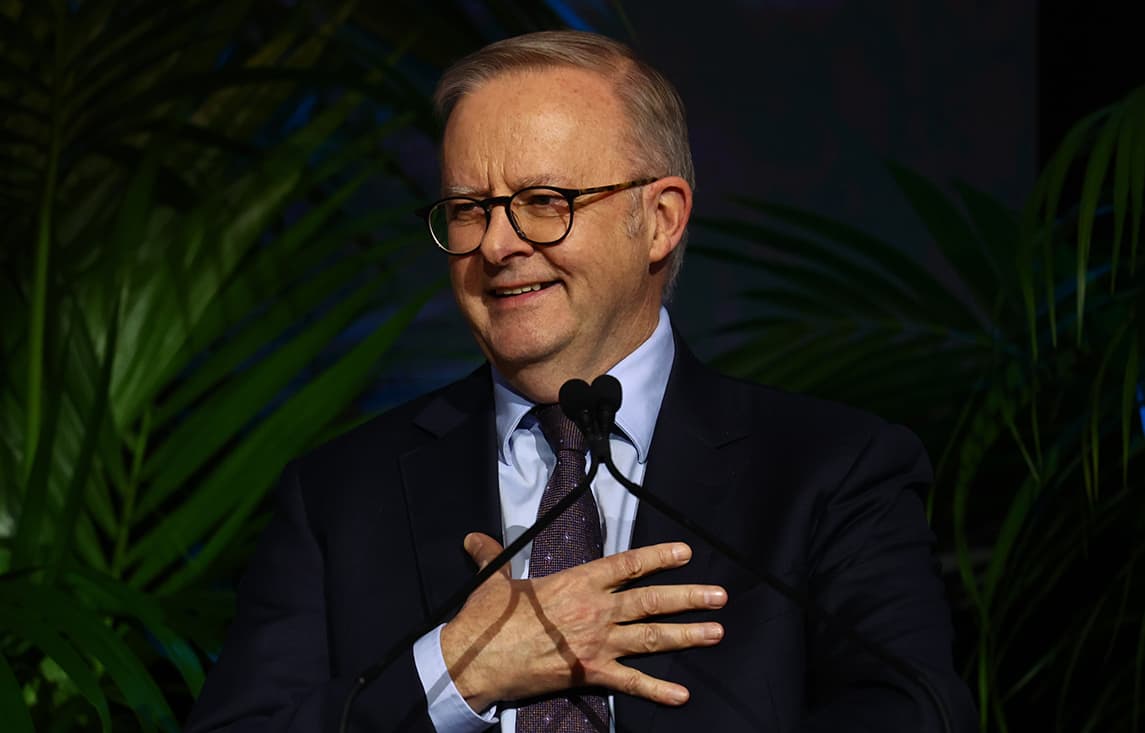
“Transparency for thee, but not for me” is becoming a trademark of the Albanese Government, as when Prime Minister Anthony Albanese leaked the internal review into the Liberal Party. No private documents about the Labor Party’s workings were forthcoming.
After a request from Albanese, the Speaker of the House of Representatives Milton Dick and the President of the Senate Sue Lines have tightened the rules around access to Parliament House. “Third-party” lobbyists (those hired by multiple clients) will have their names and politician sponsors published, and in-house corporate lobbyists and community advocates will have their organisation names and sponsors published.
The changes will make access to Parliament House more difficult, when the Australia Institute has long argued it should be easier, and it will do little to illuminate how power really works in this country.
The really powerful in this country don’t trek to Parliament House. They make the politicians come to them.
They call the Prime Minister directly. They pay ministers to dine with them, in a practice called ‘cash-for-access’, or they arrange to meet with ministers off-site and off the record.
Disclosing sponsored passes is a distraction from this calculated exercise of power, and it is this power that the Albanese Government has consistently refused to illuminate.
If it were serious about revealing power, the Albanese Government would publish the meeting diaries of ministers and their senior staff. Diary disclosures already happen in state and territory governments down the east coast of Australia, but federal Labor resisted this basic transparency measure – despite going to court to force the former Coalition Government to hand over its diaries.
If it were serious about revealing power, the Albanese Government would make it mandatory to disclose cash-for-access payments, as the Australia Institute has recommended, or even rule out the practice altogether, as Queensland Labor briefly did when it was in government. Instead, ministers are so cheap to access that most payments fall below the new threshold for mandatory disclosure of political donations.
If it were serious about revealing power, the Albanese Government would not arrange secret rendezvous with mining companies at sporting matches, as at least one minister’s office apparently attempted to do, or allow the gambling industry to host a minister’s birthday lunch.
Nor would it threaten a successful freedom of information applicant with crippling legal fees.
The pass changes will not shine much more light on individual lobbyists. Third-party lobbyists are named, but they were already listed on the lobbyist register. In-house lobbyists – the salaried ‘government relations officers’ on the payrolls of most large companies – are lumped in with community advocates and charity representatives. They will be given sky-blue passes to replace the orange passes that were once shorthand for ‘political lobbyist.’
Australians will learn a bit more about regular visitors to Parliament House but not about who has the Prime Minister on speed dial.
A healthy, confident democracy would expand access to Parliament, not restrict it. The pass changes make it actively harder for people to access Parliament House. Pass holders now need two sponsors, not one, and cannot access the building on weekends or after hours.
Parliament House is a workplace for thousands of people. Visitors require access to meet Press Gallery journalists, record media interviews, set up for and run events like the Australia Institute’s Climate Integrity Summit and the Integrity Systems Roundtable, attend press conferences and brief politicians and political staffers on new research.
More people should be doing these things, not fewer, and a sponsored pass makes all of them easier. The alternative, the one-off ‘escorted pass’, requires the visitor to be chaperoned – placing a personnel and administrative burden on media and political offices. For busy people, as Press Gallery journalists and political staffers invariably are, that extra friction can be enough to kill a story or a briefing.
Access to Parliament House used to be freer. Unaccompanied day passes allowed visitors to go between meetings without a chaperone. Over-egged security concerns were the excuse for abolishing the unaccompanied day pass in 2014, just as lobbying is now the reason given for restricting the sponsored pass.
Bill Browne is the Director of the Australia Institute’s Democracy & Accountability Program