Here, checking means measuring how much inflation comes from oil, the Australian dollar and margins; asking whether households already absorbing higher fuel and food bills need another increase in mortgage repayments; and testing whether a rate rise will improve the situation, rather than merely predicting that the RBA will choose one. If the Bank expects fuel inflation to fade, that forecast is not itself an argument for making households poorer while they wait.
Measure what we regenerate
The problem is larger than one interest-rate decision. Environmental economists have long argued that GDP is an incomplete measure of success: it counts expenditure – including money spent repairing damage – without asking whether society, ecosystems or productive capacity are better off.
Gross Domestic Regeneration, or GDR, offers a useful supplementary lens. Associated with Pulse founder Tenzin Seldon, it asks whether an economy restores rather than exhausts three interdependent forms of capital: ecological systems, social wellbeing and resilient economic capacity. Strength in one cannot compensate for collapse in another.
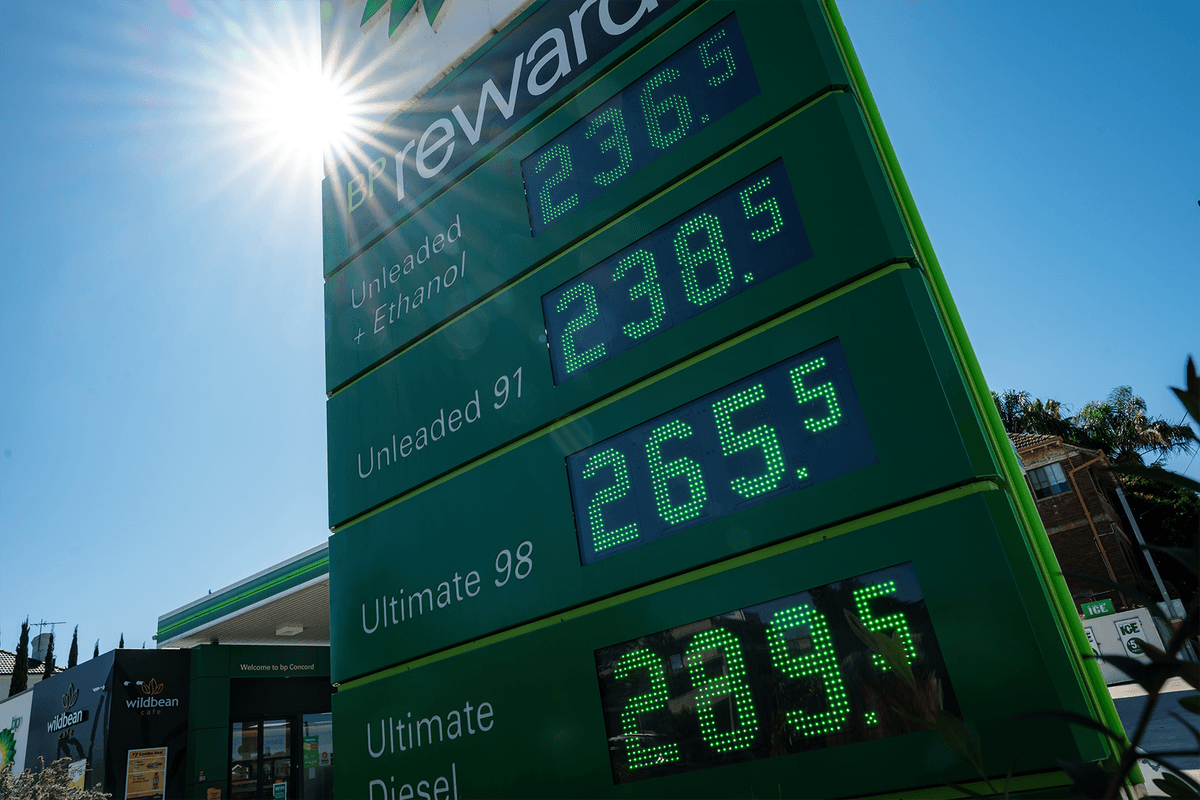
Applied to an oil shock, GDR changes the question. Higher fuel prices may lift CPI, but they also drain household purchasing power, deepen hardship for people without transport alternatives and delay investments that would cut future energy bills. A policy response that adds mortgage stress without reducing oil exposure may improve neither resilience nor long-term price stability.
Build anti-inflation infrastructure
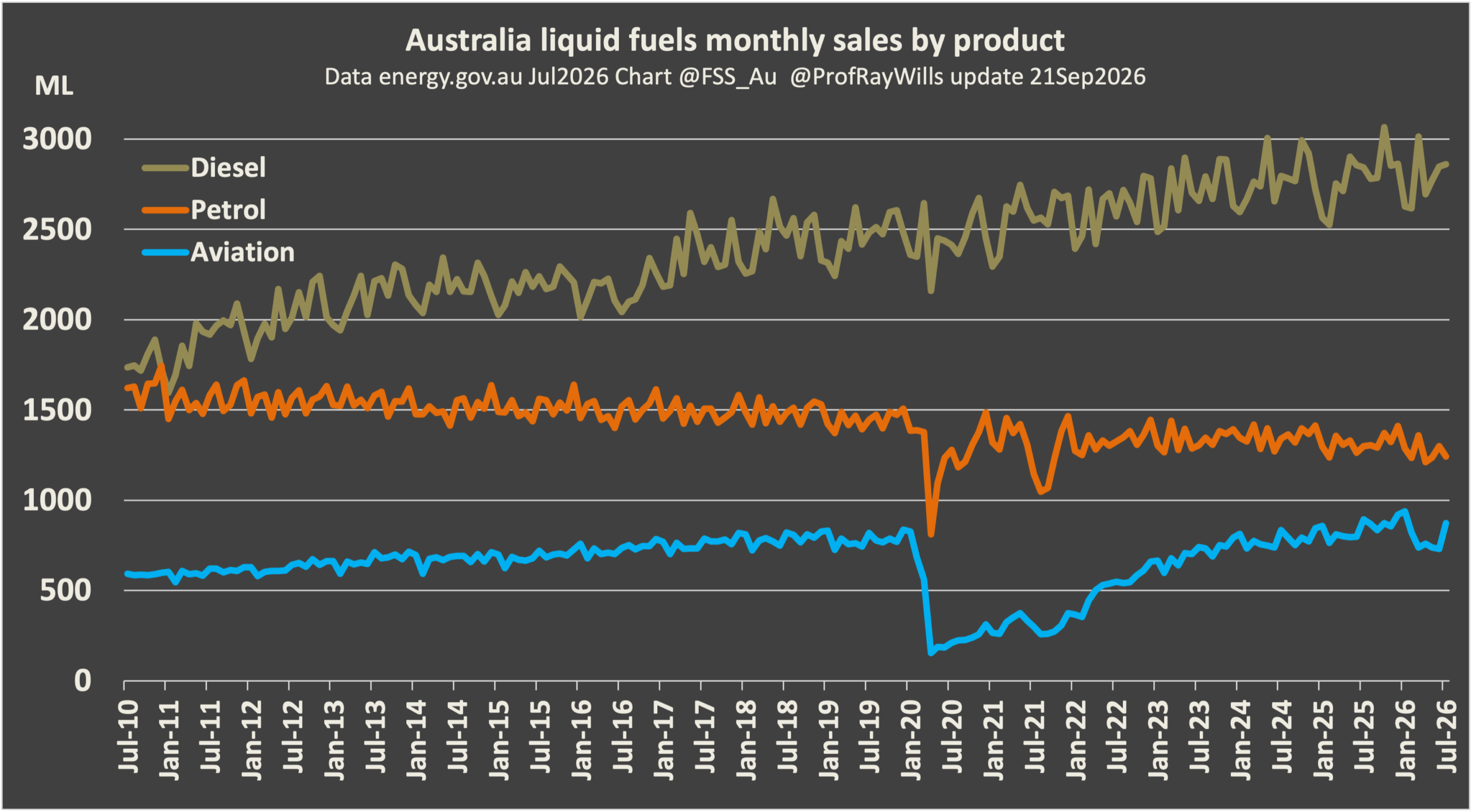
The durable answer to recurring fuel shocks is not repeatedly suppressing spending after each crisis. It is reducing Australia’s exposure before the next one.
That means accelerating electric transport, renewable electricity, household solar and batteries, public transport, efficient freight and better urban and regional design. It also means strategic fuel resilience, transparent wholesale and retail margins, and targeted relief for regional households and workers who have no practical alternative to driving.
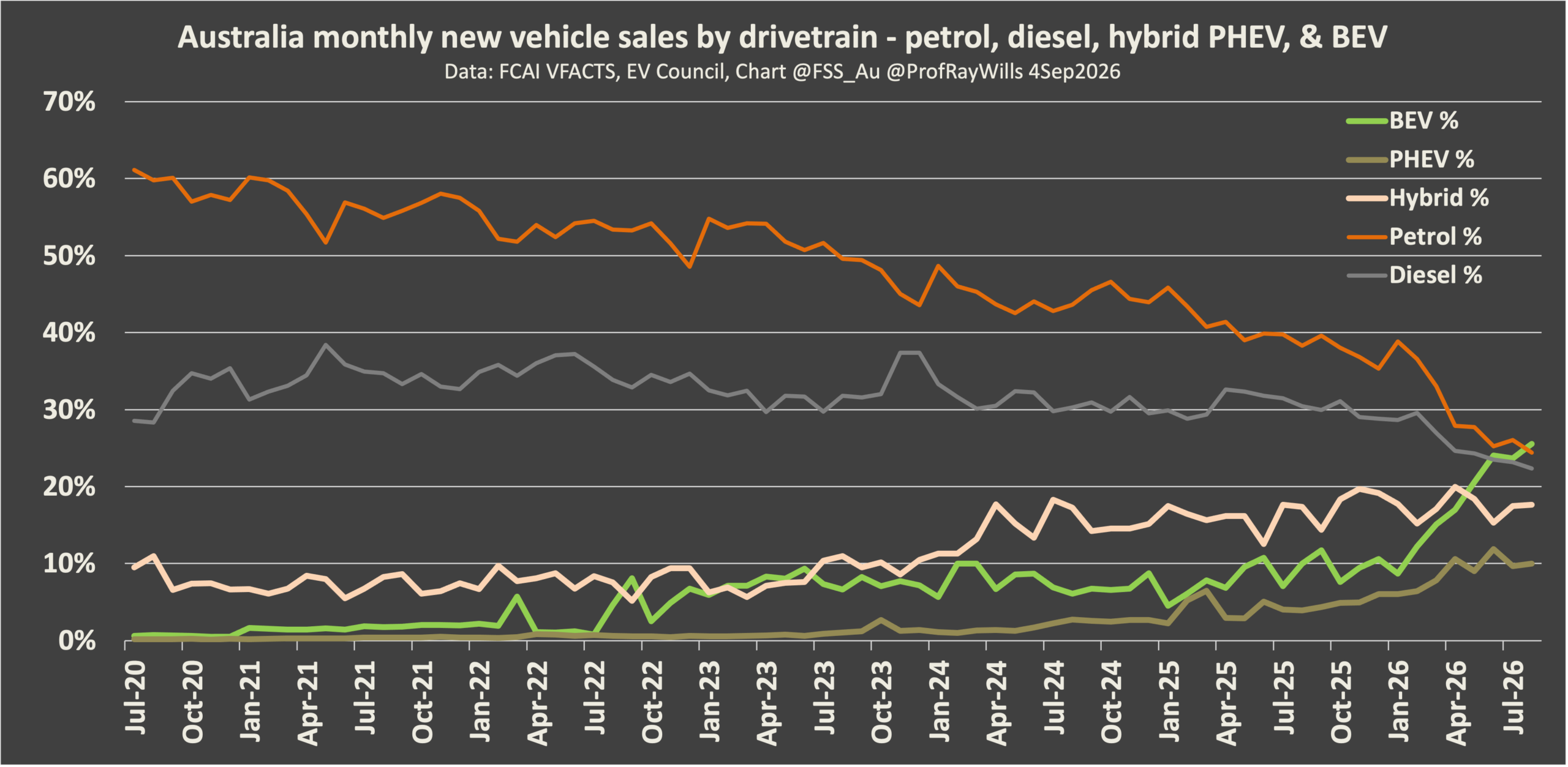
Figure 2. Australian monthly new vehicle sales by drivetrain show a shift away from liquid fuels to electrification.
These are not peripheral climate measures. They are anti-inflation infrastructure. Solar, insulation, heat pumps and electric transport produce recurring household savings while reducing exposure to volatile imported fuels. Productivity would also benefit from directing fuel-excise revenue towards the transition to electric freight vehicles, rural and regional electrification, and renewable-energy hubs.
The economic purpose of a central bank is not to defend a model but to deliver on its mandate: price stability and full employment, serving the economic prosperity and welfare of Australians. An overseas fuel shock is already destroying demand. The RBA should not confuse that imported loss with evidence that Australians must be punished into spending less.
The question is not merely what the RBA will do under its familiar rule set, but what it ought to do. Given the causes of inflation, Australia’s structural vulnerabilities and the costs of another rate rise, what policy mix would perform better?
The real test of economic leadership is knowing the difference between noise, signal and a structural warning. Australia needs a response that regenerates the economy – not one that weighs it down.
Professor Ray Wills is Managing Director of Future Smart Strategies and Adjunct Professor at the University of Western Australia.
Professor Peter Newman AO is Curtin University’s Professor of Sustainability, an IPCC transport lead author and a globally recognised authority on sustainable cities.