Photo: AAP Image/Dean Lewins


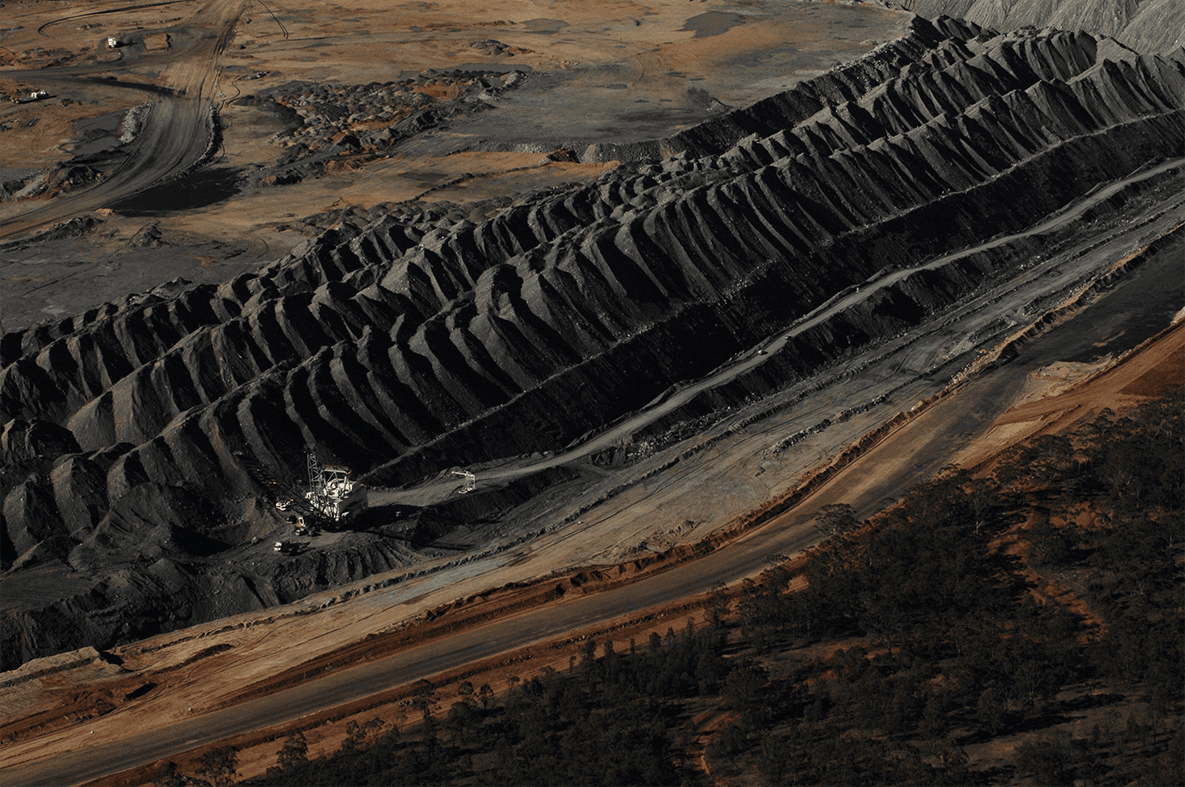
The NSW Government has just approved production from a huge new coal project out to 2045. So much for Australia’s transition away from fossil fuels.
The Hunter Valley Operations (HVO) expansion will dig up an extra 429 million tonnes of coal and result in over 800 million tonnes of extra pollution. For context, Australia’s entire national emissions were 456 million tonnes last year.
Even as a long-time observer of NSW coal policy and politics, this decision was a surprise. Decision makers in NSW have rarely seen a coal mine they didn’t like, with outright rejections almost unheard of.
But NSW planning authorities have shown that they can make careful decisions that stop short of rejection while placing limits on projects to protect the public interest.
And with the NSW Government’s own Net Zero Commission flat-out telling planners at a special hearing that “expansions to coal mining in NSW are not consistent with the state’s emissions reduction targets”, it seemed like some restrictions were likely.
But that did not happen.
Instead of imposing any serious restrictions on the mine, the NSW Independent Planning Commission (IPC) gave total victory to its owners, tax haven-based Glencore and China’s Yancoal.
The conditions placed on the approval would be funny if catastrophic climate change wasn’t so alarming.
This huge new coal project is “required to take reasonable and feasible measures to maximise the use of renewable energy from four years from the commencement of the development.”
That oughtta do it! In four years’ time, go buy some solar panels…as long as that’s “reasonable and feasible”
And if the coal companies don’t think using renewable energy is reasonable, then the answer is, as always, offsets.
Offsets are, of course, a scam. They cannot compensate for fossil fuel emissions.
That’s not just my opinion. According to EnergyAustralia, one of the biggest coal burning companies in Australia, “offsets do not prevent or undo the harms caused by burning fossil fuels”.
Contradicting this, the NSW IPC’s approval of the new coal project says carbon offsets “provide a real environmental benefit that the Commission can and should take into account.”
This is not a typo, or a minor point deep in the paperwork. It’s on page 1 and repeated on pages 19 and 21, where offsets are expressly used by the IPC to reject the Net Zero Commission’s argument that coal expansions are not consistent with legislated climate targets.
The IPC’s decision could not be more pro-offsets, stating “The central issue in assessing the Project’s contribution to the State’s net zero targets is its commitment to the purchase of offsets.” (page 21)
It continues – “Submissions received by the Commission argue that the Project relies too heavily on offsets and that this is not the same as preventing or mitigating the global warming impacts of the GHG emissions. The Commission acknowledges that the intent of Commonwealth and State legislation and policy is that offsets are a core component of the achievement of net zero targets, and that the Project’s reliance on offsets is consistent with that intent.”
Offsets are the IPC’s answer to every climate question, along with some hand waving about feasible renewable energy.
Quality research, analysis, explainers and factchecks from experts you can trust.
This is not an accident. This is “the intent of Commonwealth and State legislation”. This is Australia and NSW’s climate policy working exactly as intended.
And key Australian environment groups have just spent months supporting a proposal for more offsets.
Australia has “some of the most ambitious climate targets in the world” according to the head of the Australian Climate and Biodiversity Foundation, Lyndon Schneiders, in a video supporting the “really fantastic proposal” to make more carbon offsets from native forests in NSW.
Schneiders says he spent two years helping the NSW Government to develop this offset method, something he appears to have done in secret.
Most of the federal Greens voted for the new carbon offset method, and even Greenpeace supported it. The NSW Nature Conservation Council (NCC) celebrated it as “major new protection for forests and the climate”.
Environmental group support for native forest offsets has achieved what earlier government efforts like the Chubb Review could not – a thorough greenwashing of Australia’s offset system.
Those thick coats of greenwash have now been applied to the HVO coal mine, and they are not easy to remove.
Responding to the HVO mine approval, NCC says it comes “despite [NSW’s] laws to reduce emissions”. Similarly, Lock the Gate says the approval is “not consistent” with NSW climate commitments and the Net Zero Commission’s report.
As we’ve seen, however, the IPC argues the mine is consistent with climate commitments because their “intent” has “offsets as a core component”.
Carbon offsets don’t get a mention in NCC’s statement about the HVO approval, or in the statement by Lock the Gate.
These groups may not want to criticise the IPC on offsets because the leaders of these organisations just spent months campaigning for the NSW Government’s proposal to produce more offsets.
With key NSW environment groups and Greens MPs not criticising carbon offsets, the NSW Labor Government responded to the coal approval without even using the word “climate”.
“We don’t have to choose between the jobs and industries that sustain our economy today and the opportunities we’re building for the future. This decision does both,” said Minister for the Hunter Yasmin Catley.
It is offsets that underpin this delusion of indefinite coal use and the IPC’s approval, as well as the federal Safeguard Mechanism.
All is not lost. Coal and gas projects can be stopped in NSW. They have been stopped many times before, sometimes with international significance. More will be stopped in the future.
But this will only happen when local opposition is supported by bigger organisations that attack the policies that facilitate fossil fuel expansion, rather than welcoming them as “really fantastic proposals”.
Rod Campbell is the research director at the Australia Institute.

