Imagine a fire brigade holds a crisis summit about the damage caused by fire, and how to fight fire, and bans the word “fire” from the agenda... That’s where we are with COP31.
Wed 4 Nov 2026 01.00 AEDT
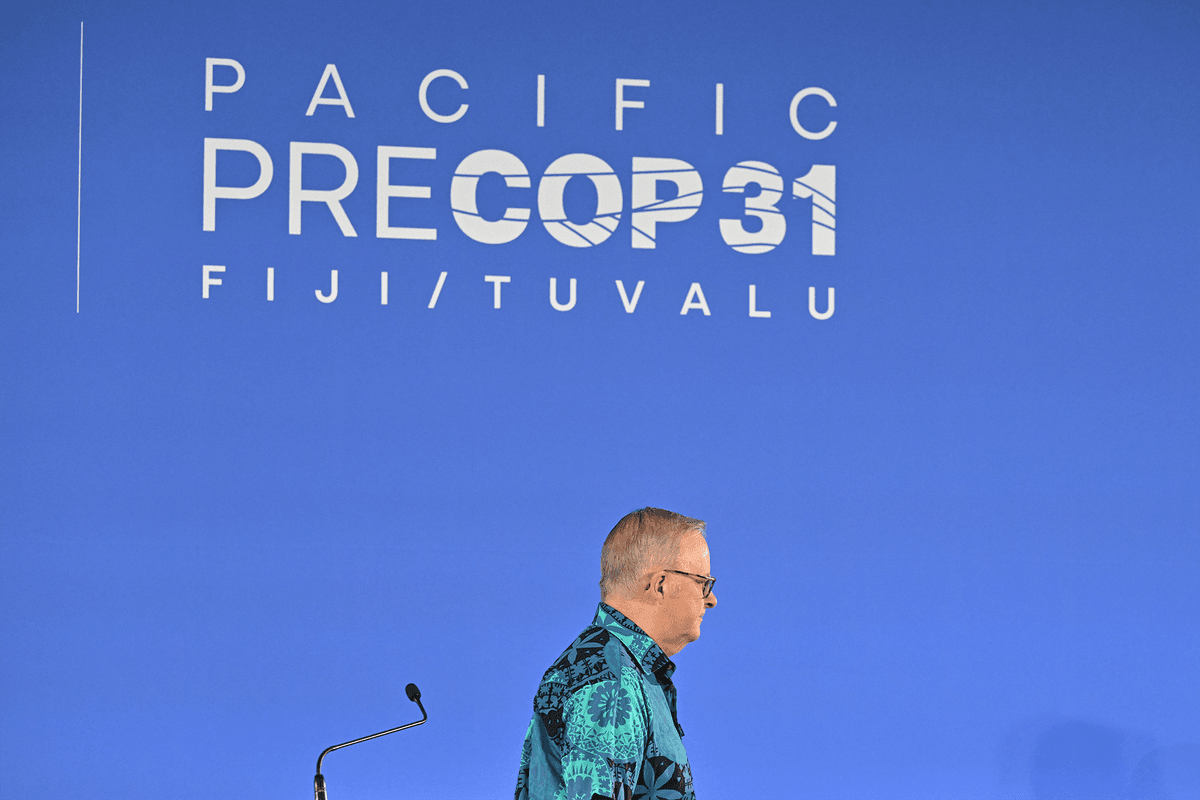
Photo: AAP Image/Mick Tsikas


Imagine a fire brigade holds a crisis summit about the damage caused by fire, and how to fight fire, and bans the word “fire” from the agenda… That’s where we are with COP31.
The program for the Leaders’ Summit in Antalya is out. On 11 and 12 November, heads of government will gather for what the Türkiye presidency calls the high point of the conference. The program highlights of the Leaders’ roundtable are touted to focus on key themes such as resilient cities, climate finance, decarbonization (which includes false solutions like carbon offsets, carbon trading and CCS), circular economy, and Blue Climate Action.
Day one is themed Zero Waste. Day two is Resilient Cities and the Built Environment. Energy (which presumably is where fossil fuels will sit?) and Transport get the day before the leaders arrive.
I went looking for the words “fossil fuels” in the publicly available materials. I could not find them.
Dangerous global warming is caused by burning coal, oil and gas – fossil fuels. That isn’t a contested claim. It is the reason the UN climate process exists. A conference whose job is science-based action cannot keep its credibility if it won’t say what the science says is the root of the problem.
This is not oversight. It’s a deliberate tactic.
At COP30 in Belém, the final agreement left out any mention of a fossil fuel phase-out after oil and gas producing nations blocked consensus. Now the COP31 Action Agenda lists ten themes, from zero waste to electrification, and none of them names coal, oil or gas.
To be fair, COP31 President Murat Kurum has said a transition away from fossil fuels is as important as the other items on his agenda. But important in a speech is not the same as written into the program. If it matters, put it on the page.
The reason is how the COP works. Decisions need consensus, so a handful of petrostates can veto the language. They can’t stop the climate crisis, but they can stop the conference from describing it.
Meanwhile, fossil fuel emissions hit record highs in 2025. Pacific communities are already losing land. For them, this isn’t a question of diplomatic phrasing.
Which brings me to Australia.
We are not a bystander in Antalya, but we are not quite the host we wanted to be. Australia originally pitched to host the whole of COP31 at home, in Adelaide, as a Pacific-themed COP. Türkiye wouldn’t withdraw its own bid. What we got was an awkward compromise: Türkiye hosts the conference, the pre-COP is held in the Pacific, and our Minister serves as President of the Negotiations.
That role comes with a particular responsibility, and a particular problem. Australia has approved 38 new or expanded fossil fuel projects since the ALP came to power in 2022. Our coal trade with Türkiye is the subject of a new 350.org report putting the emissions at 75 million tonnes of CO2. It is hard to lead a conversation about phasing out fossil fuels while expanding them at home.
Australia has previously named the problem and solution. We signed the Belém Declaration on the transition away from fossil fuels. We took part in the first Transition Away from Fossil Fuels (TAFF) conference in Santa Marta, Colombia. The idea there was simple: if the COP can’t name and act on the problem, countries that will can get on with solving it.
Quality research, analysis, explainers and factchecks from experts you can trust.
And they did. Santa Marta brought together 57 countries and the European Union, without the UN in the room. Ireland and Tuvalu will co-host the second conference in 2027.
That brings us to the real test.
Call it the difference between the coalition of the talkers and the coalition of the doers. Talkers say “transition” in speeches, but the words “fossil fuels” and “transition away from fossil fuels” never make it onto their agendas or to-do lists. Doers write those words down, design the rules, and get to work on the solutions.
France, the Netherlands and Germany have already published “roadmaps” with explicit deadlines for quitting coal, oil and gas.
The Fossil Fuel Non-Proliferation Treaty is the path to meaningful action. Eighteen national governments have now formally called for a treaty to manage a fair and fully financed phase-out, and the latest to join was Cambodia, at COP30. More than 25 countries have taken part in discussions. Treaty founder Tzeporah Berman says she expects a formal negotiating mandate to be sought later in 2027, and that once negotiations open, the table could grow to 35 or 40 countries. Her argument is simple. If you’re not at the table, you’re not writing the rules.
Australia is not among the eighteen -yet
This month in Antalya, and next year at the second TAFF conference, watch who puts forward transition roadmaps, and who signs onto a treaty. That is where the talkers and the doers part ways.
So, what should Australia do with its seat?
First, say it. Every Australian statement at the Leaders’ Summit should name fossil fuels as the cause and a phase-out as the solution. If we signed the declaration, we can read it aloud.
Second, back the words with action. A roadmap away from fossil fuels means no new approvals. The tests are close to home: Woodside’s Browse gas project, both awaiting decisions around the time of COP31. And approvals for these climate bombs should lean on dodgy carbon offsets as cover.
Third, join the doers. Come to the treaty table.
The petrostates will keep pushing to keep the words ‘fossil fuels’ out of official communiques. We know that it’s been the long history of COP processes. The question is whether countries that say they want action will let them set the terms.
A COP that can’t name the cause of the crisis can’t credibly claim to be solving it. The first step is simple. Name the problem.
Louise Morris is an award-winning advocate with 20 years’ experience encompassing climate, energy, forest protection, and law reform in the not-for-profit sector, and federal politics before joining The Australia Institute.

