For years, the idea of properly taxing gas exports has been treated as politically untenable - something governments approached dismissively, if at all. But as global conflict pushes up energy prices and gas company profits surge, that dismissiveness is starting to look like negligence.
Fri 20 Mar 2026 00.00
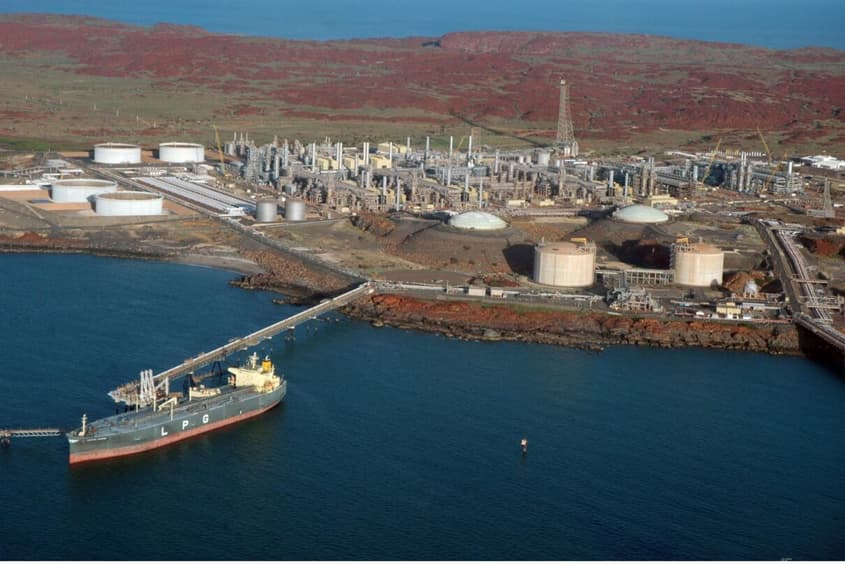
Image: AAP/Rebecca Le May


There’s a shift happening in Australian politics right now.
And it runs straight through the gas industry.
For years, the idea of properly taxing gas exports has been treated as politically untenable – something governments approached dismissively, if at all. But as global conflict pushes up energy prices and gas company profits surge, that dismissiveness is starting to look like negligence.
A recent piece in The Guardian by Greg Jericho captures the moment well: Australia is experiencing the effects of global fuel shocks, yet the companies exporting our gas are enjoying extraordinary profits from these fossil fuel conflicts- while contributing relatively little back.
And new research from the Australia Institute adds another layer to this story. Not only are Australians missing out on revenue from exported gas, but we are also actively subsidising the fossil fuel industry.
According to the Institute’s 2026 fossil fuel subsidies report, Fossil fuel subsidies cost Australian governments $16.3 billion in 2025–26, an increase of 9.4% on the previous year. This is a larger increase than the 7.6% growth of the National Disability Insurance Scheme.
Growth in fossil fuel subsidies is driven by the federal government’s Fuel Tax Credit Scheme, which cost $10.8 billion in 2025–26.
In other words, while gas companies benefit from high global prices, Australian taxpayers are helping fund the very industry exporting those profits offshore.
That disconnect is becoming harder to dismiss.
A speech that cut through.
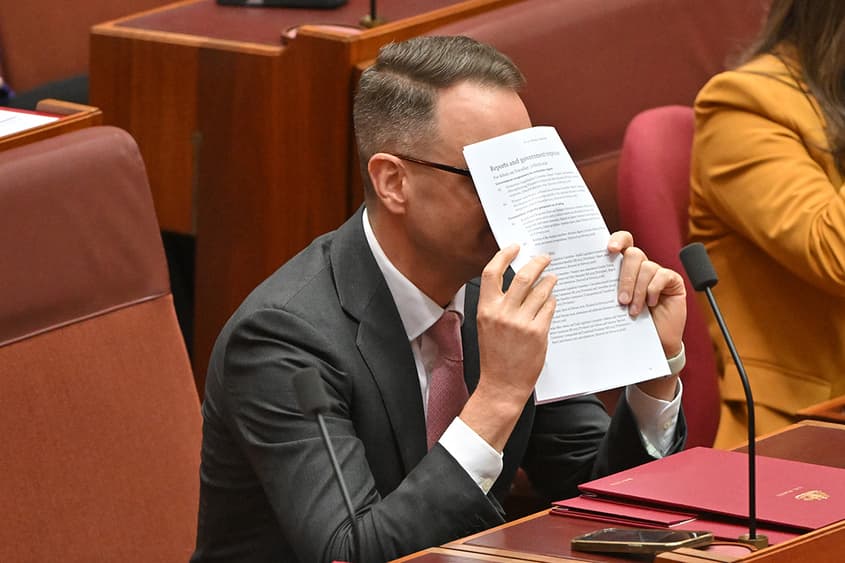
Into this moment stepped Australian Labor Party Member for Chifley Ed Husic, with a speech that, while perhaps not headline-grabbing at the time, may well prove to be very influential.
As highlighted in The Point, Husic challenged one of the gas industry’s most persistent claims: that Australia faces a shortage. Instead, he argued we have something else entirely – a “glut of greed.”
It’s a striking phrase, because it’s an accurate one.
The issue has never really been about how much gas Australia has. We are one of the world’s largest exporters. The issue is where that gas goes (about 80 percent of it) – and who benefits.
Around 30% of exported gas is uncontracted and sold at higher prices on global spot markets.
So, when Australians are told supply is tight, it’s worth asking: tight for who?
What makes Husic’s intervention notable is not just the argument, but the source. These are not the words of an outsider; they come from a former Minister for Science and Industry and a brave voice who speaks out on issues of importance. This is a big signal that the political centre of gravity is shifting.
Husic is not alone.
Support for stronger taxation of gas exports – including a flat 25% export tax – is now coming from across the political spectrum.
The Australian Greens have long advocated for higher taxes on fossil fuel exports, including a minimum 25% tax on export gas as part of the transition away from fossil fuels.
Senator David Pocock has been one of the most consistent voices calling out the imbalance, pointing to the stark reality that Australians often pay more in beer excise than gas companies pay in resource taxes.
And a growing number of crossbenchers, including One Nation and Clive Palmer Australia United Party are converging around the same idea: that Australia should introduce a simple, transparent export tax to ensure the public gets a fair return on our resources.
What was once dismissed as fringe is now being openly debated across Parliament and in the public sphere.
If Husic’s speech reframes the problem, the numbers explain why the politics are shifting.
When Russia invaded Ukraine in early 2022, global fossil fuel prices surged. LNG prices followed. Rising from around $530 per tonne before the invasion to $848, then peaking at $1,311 in 2022-23. Even now, prices remain well above historical averages.
For gas exporters, this has been extraordinarily lucrative.
For Australia, it should have been, but we’re just paying higher prices at home.
Analysis drawing on Australia Institute research shows that if a 25% tax on gas exports had been introduced when the Albanese government came to office – and applied from July 2022 – it would have raised $63.8 billion in just three years.
That’s not a hypothetical future gain. That’s money we’ve already missed out on.
What that means in real terms
Big numbers can feel distant, but what we missed out on matters.
$63.8 billion is enough to fund:
Instead, those windfall profits from conflicts have largely flowed to gas exporters.
This is where the debate shifts from technical policy to lived experience. Because it’s no longer just about how the tax system works. It’s about what Australians are going without.
What’s emerging is a broader shift from technical arguments to questions of fairness.
Australians are paying more for energy. They are paying more for insurance due to fossil fuel driven climate disasters. They’re seeing pressure on household budgets. And at the same time, they’re watching gas companies export around 80% of gas extracted in Australia, pay very little tax back to the Australian coffers, and report extraordinary profits.
That is unfair.
It’s why Husic’s speech cuts through. It’s why Pocock’s comparisons resonate. And it’s why the Greens’ long-standing position is finding a wider audience.
At current levels, a 25% export tax could raise around $17 billion every year – revenue that could strengthen public services, ease cost-of-living pressures, or support the renewable energy transition.
The policy tools exist. What remains uncertain is whether the politics will catch up in time. You can only tax gas exports once, and we’ve been missing out for decades.
Slowly, but decisively, the gas tax debate is moving from the margins to the mainstream. From something governments avoid to something they’re expected to deliver.
Ed Husic’s speech is part of that shift. So too are the growing calls from the Australian Greens and David Pocock, and others who argue that Australia should be getting a fairer return on its resources.
Because once you know the number we’ve already missed out on since the Albanese government took power – $63.8 billion – it’s hard to unsee it.
And harder still to explain why we’ve missed out on that much revenue, and on current tax policies will keep missing out.
When Russia invaded Ukraine, it triggered something far less discussed in Australia: one of the biggest unplanned gas export profits in modern history. Gas prices spiked. Exporting companies made off like bandits. Australians failed to reap any benefit from our exported gas price spike
Advertisement

In February the unemployment rate rose from 4.1% to 4.3%, providing further evidence the Reserve Bank misread the economy when it raised rates in both February and this week.
The Senate Select Committee on the Operation of the Capital Gains Tax Discount tabled its report on Tuesday. In short, it found that Australia’s current tax system favours investors and fuels intergenerational inequality. But the Coalition maintains the CGT discount is “working as intended.”