The fuel crisis: your questions answered
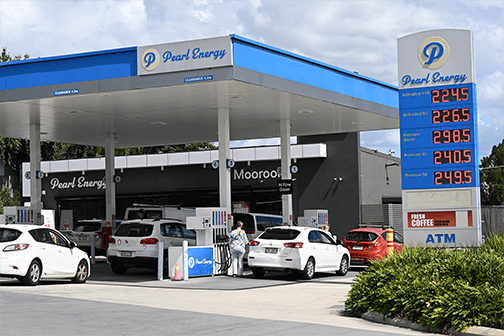
The global fuel crisis has left many Australians confused and overwhelmed, as fuel prices surge and ‘sold out’ signs start appearing at some petrol stations. Matt Grudnoff, Senior Economist at The Australia Institute, breaks down what’s happening and answers a few key questions.
Tue 7 Apr 2026 00.00

Photo: AAP Image/Susie Dodds


The global oil crisis triggered by the US and Israel’s war on Iran has left many Australians confused and overwhelmed, as fuel prices surge and ‘sold out’ signs start appearing at some petrol stations.
Matt Grudnoff, Senior Economist at The Australia Institute, breaks down what’s happening and answers a few key questions.
How is the price of fuel linked to the conflict in the Middle East?
Around 20 percent, or a fifth, of the world’s oil goes through the Strait of Hormuz and that’s not flowing. It’s effectively been closed in a retaliatory move by Iran. So, the world has 20 percent less oil, and because there’s a restriction in supply, the price has been bid up and we take, like everybody else, the world price. That’s why petrol prices have increased. It’s a worldwide lack of supply.
Is there a possibility that Australia will run out of petrol and diesel?
No. To be clear, while around 20 percent of the world’s oil passes through the Strait of Hormuz, that still leaves roughly 80 percent of global supply. Australia isn’t about to run out of fuel – this isn’t Mad Max, where people are fighting over the last litre of fuel. Most oil is still being produced, transported, and refined into petrol, diesel, and jet fuel.
Will we see fuel rationing?
Yes. Fuel is already being rationed, just not in a way most people recognise: it’s being rationed through price.
The fact that the price has gone up, that’s rationing. Price increases in fuel mean that some people can’t afford fuel, whether it’s petrol or diesel or jet fuel. If they can’t afford it, then they drop out of the market.
Because Australia is a wealthy country, we can pay that higher price. And so that’s why we haven’t seen a drop off in the supply of fuel coming to Australia because we’re wealthy.
If you were to look around the world and you look at poorer countries, you will see that they’re suffering from genuine shortages. Their supply has gone down because large portions of their population simply cannot afford that higher price, so they’re having to cut back.
What are other ways fuel can be rationed?
If fuel is going to be rationed, it’s going to be rationed by restricting how much people can buy. Petrol pumps already have that capability – when you prepay, the pump automatically shuts off once you reach the set amount.
It’s not that fuel would disappear entirely – it will simply be restricted in another way.
Why are some petrol stations in Australia running out of fuel?
There are some people, particularly farmers and big transport companies, that have their own giant tanks that they fill from, and they’ve probably gone out and topped them all up because they’re worried about shortages, and they want to get in and make sure they have that fuel.
That’s probably why also you notice that most of the shortages are happening more in regional areas. That’s partly because they’re even further down the supply chain than big cities, but it’s also partly because most of the additional demand is coming from those areas, particularly around farmers who are wanting to guarantee that they have the fuel that they need to harvest their crops and do the farming that they need to do.
We haven’t had an increase in the consumption of fuel; we’ve just had an increase in the demand for fuel.
How much fuel does Australia have left?
Australia now has 39 days of petrol – 1.6 billion litres – which is up very slightly. Diesel reserves sit at 30 days, holding steady at 2.7 billion litres, while jet fuel also remains at 30 days, or 828 million litres.
What that shows is that while fuel is flowing strongly out the door – particularly to regional Australia – it is also continuing to flow in, with every expected shipment arriving and the international supply chain remaining secure for now.
It’s effectively being stored in locations across Australia that aren’t easily accessible or clearly visible, but the fuel is still there – it’s just being hoarded a bit in different areas.
Who is going to be impacted the most?
It’s going to impact poorer households hardest – and we’re seeing that already. Rationing by price simply means those who can’t afford it miss out.
Housing is a clear example: rising prices over the past 25 years have pushed many Australians out of the market. Fuel works the same way. As prices climb beyond what people can pay, households are squeezed – not because demand falls, but because fuel is largely inelastic (it doesn’t have many substitutes) and hard to go without.
Will rising fuel costs increase inflation?
Yes. Petrol prices are part of the Consumer Price Index (CPI) – a key economic indicator that measures the average change over time in the prices paid by households.
When interest rates go up, households spend more on mortgages and have less to spend elsewhere, reducing overall demand. Petrol works the same way: if people are forced to spend more on fuel, they have less left over for everything else, which dampens demand across the economy.
The Australia Institute’s Chief Economist, Greg Jericho, estimates the surge in petrol prices is roughly equivalent to almost two 25-basis-point rate hikes.
With the RBA already having lifted rates, this could reduce the need for further increases, as the inflation pressure is being driven by supply, not demand.
Could Australia have been better prepared for an oil crisis?
Yes. For more than a decade Australia could have been making real strides to reduce its dependence on oil and protect itself from global shocks such as this one. Instead, the previous Coalition government moved policy settings in the opposite direction.
It was providing tax incentives to make the Australian fleet of petrol and diesel cars less efficient, encouraging people to buy big, heavy utes that are less efficient. So, there have been plenty of missed opportunities to invest in alternatives such as public transport and electrified freight.
Now, the Opposition is proposing cutting tax incentives for electric vehicles and the home battery program – two things that are helping protect Australians from surging energy prices.
Hopefully if there’s one good thing that comes out of this, it is that we take this seriously in the future.
Will a tax on gas exports risk our ability to keep importing the oil we need?
No. Australia is a huge exporter of energy. We’re the third biggest fossil fuel exporter in the world. The idea that other countries, like Japan or Singapore that have no resources of their own are going to start threatening such a huge supplier is ridiculous. They’re certainly not going to try and cut Australia off from other fuel types because the retaliation from Australia would be massive and disproportional. They would suffer far more than we would.
Related Articles
Election landslides aren't legacies, but a 25% gas tax could define Albanese's
The decisions made by Anthony Albanese in the next month will likely define Labor’s legacy for decades to come. Surging energy prices give the PM a unique opportunity to tax the gas industry, fund the services Australians are crying out for, improve the budget bottom line and expose the shallowness of Pauline Hanson’s support for ‘ordinary Australians’.