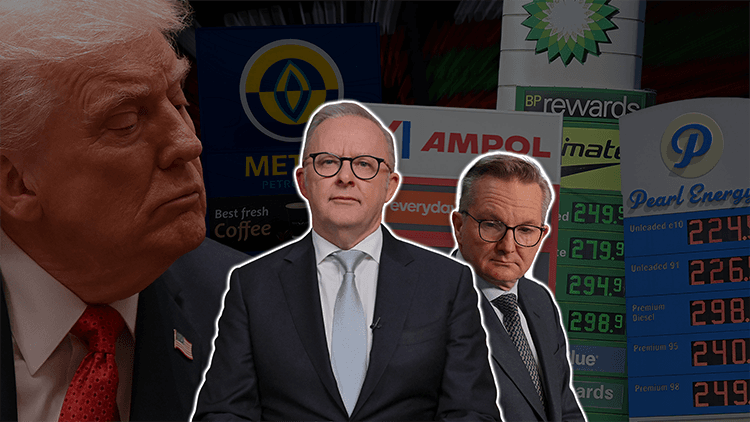
Election landslides aren't legacies, but a 25% gas tax could define Albanese's
The decisions made by Anthony Albanese in the next month will likely define Labor’s legacy for decades to come. Surging energy prices give the PM a unique opportunity to tax the gas industry, fund the services Australians are crying out for, improve the budget bottom line and expose the shallowness of Pauline Hanson’s support for ‘ordinary Australians’.

Thu 9 Apr 2026 13.00
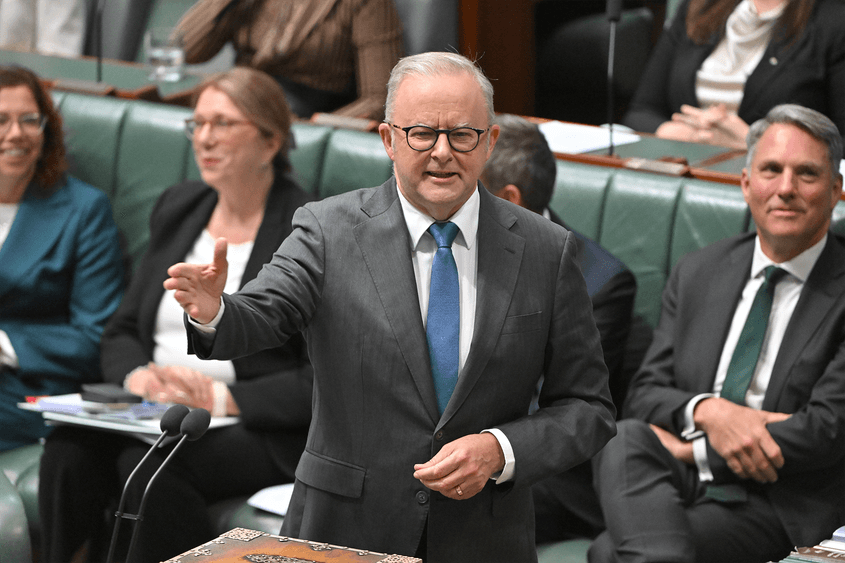
Photo: AAP Image/Mick Tsikas


The decisions made by Anthony Albanese in the next month will likely define Labor’s legacy for decades to come.
After his cautious first term and modest 2025 election agenda, the Prime Minister made a significant, and potentially career–defining, pivot late last year when he made clear that new ideas like capital gains tax reform and slashing diesel subsidies were on the agenda, even though they weren’t mentioned during last year’s campaign.
He clearly took heart from the fact that, like with his decision to reform the stage 3 tax cuts in his first term, few voters care about ‘mandates’ anymore. People just want things fixed. And fast.
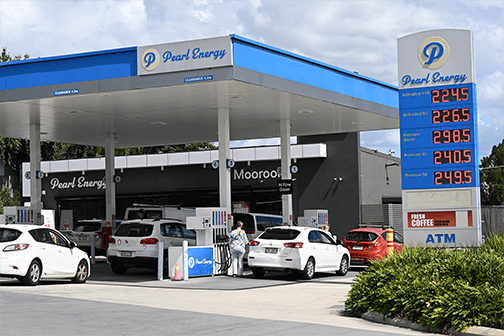
Trump’s war on Iran, and on the world economy is both a threat and an opportunity for the Albanese Government.
On the one hand, it disrupts last year’s plans for this year’s budget, but on the other hand, those plans were likely timid tinkering rather than bold restructuring.
Surging energy prices give the PM a unique opportunity to tax the gas industry, fund the services Australians are crying out for, improve the budget bottom line and expose the shallowness of Pauline Hanson’s support for ‘ordinary Australians’. All at once.
But only if he is willing to ignore the tears of the foreign–owned gas companies who export more than 80 per cent of the gas we produce and pay nothing for more than half of that gas.
If Australia embraces a simple 25 per cent gas export tax, it will raise around $17 billion per year, more than enough for the PM to deliver on his plans to make childcare free, add dental to Medicare or a raft of other big–ticket measures that would actually reduce people’s cost of living. Just six per cent of Australians oppose this idea, and its strongest supporters are One Nation voters who, unsurprisingly, are a bit nationalist when it comes to getting a fair share of our nation’s natural resources.
Implementing this simple, popular idea, supported by everyone from the Commonwealth Bank’s CEO to the ACTU, Clive Palmer, David Pocock, and the Greens, would not just genuinely reform our budget, it would transform Australia’s democracy.
Can anyone remember the last time a PM used a big new tax on foreign companies to fund a big new set of services for ordinary Australians? Democracy would be more popular if people saw it deliver such gains.
For decades, Australian workers have been told to tighten their belts, lower their expectations, and wait for the benefits of neoliberalism to ‘trickle down’ to them. Trump has done the world a lot of harm, but in declaring that the old economic order is dead, at least he has freed the Australian Labor Party from their decades–long embrace of one of modern history’s worst ideas, that helping big companies was the best way to help ordinary Australians. Spoiler: it didn’t work.
If the Prime Minister leans into taxing the foreign–owned gas export industry to improve the lives of ordinary Australians, he won’t just transform the debate about the cost-of-living crisis; he will destroy the idea that Pauline Hanson’s One Nation Party wants to prioritise the interests of this one nation of ours. Hanson has blamed foreigners for the plight of ‘ordinary Australians’ for decades, but even though two thirds of her supporters think corporations should pay a 25% gas export tax, Pauline seems determined to put the profits of foreigners ahead of the people she claims to represent.
Pauline Hanson has ridden a wave of resentment among former Liberal voters who have grown tired of waiting for things to improve.
Instead of waiting for benefits to trickle down to low and middle-income earners, Ms Hanson is encouraging them to rise up against ‘the elites’ instead. But of course, when it comes to taxing the gas export industry, which her key backer, Gina Rinehart, is a significant part of, One Nation is currently on the side of billionaires rather than the battlers.
This gives Labor an enormous opportunity.
Labor’s vote has been trending downwards for 40 years, from a primary of almost 50% in 1983 to just 35% in Albanese’s 2025 ‘landslide’. To date, they have hung on to their ‘traditional base’ even as the Greens and Teals consolidate their support among inner–city and younger voters. But like the Liberals and Nationals, Labor faces the real risk that Hanson, or some other populist, will splinter their outer suburban support.
Doing something big, popular, and as transformative for ordinary Australians as Medicare was when it was introduced is the easiest way for Labor to show voters what democracy can do and, at the same time, show them who Hanson really is.
Anthony Albanese exceeded all expectations last year when he delivered Labor a record 94 seats, routing Peter Dutton. But while the size of the victory may be one for the history books, virtually no one has any idea how many seats Robert Menzies won in 1949 or Gough Whitlam won in 1972.
While day–to–day politics is all about the numbers, history remembers the bold things Prime Ministers do, not the margin by which their legislation passes through the parliament.
In one fell swoop, a gas export tax will transform our budget, boost the supply, and lower the price of, gas for Australians, restore voters’ faith in the ability of their democracy to deliver and expose Pauline Hanson’s real priorities. And that one fell swoop already has diverse allies; from unions and the Greens, to big bank bosses and a coal baron. And almost no one outside the gas industry boardrooms is actually opposed to it.
Albo has played it safe for his first four years. It’s not clear whether he will paddle on to the wave of a lifetime as it rises up behind him. But it’s hard to imagine a better wave ever coming his way again. Who says it doesn’t matter who we vote for?
Fingers crossed.
Richard Denniss is co-chief executive of the Australia Institute
Related Articles
Australia’s fashion future: the new national strategy to rebuild local manufacturing
Launched in March 2026, The National Manufacturing Strategy for Australian Fashion and Textiles 2026–2036 emerges in response to the reality that approximately 97 per cent of clothing and textile products consumed in Australia are manufactured offshore. Developed by the Australian Fashion Council (AFC) in partnership with R.M.Williams, it is the first national roadmap aiming to rebuild capability across the textile sector.