Australia’s fashion future: the new national strategy to rebuild local manufacturing
Launched in March 2026, The National Manufacturing Strategy for Australian Fashion and Textiles 2026–2036 emerges in response to the reality that approximately 97 per cent of clothing and textile products consumed in Australia are manufactured offshore. Developed by the Australian Fashion Council (AFC) in partnership with R.M.Williams, it is the first national roadmap aiming to rebuild capability across the textile sector.

Thu 9 Apr 2026 01.00
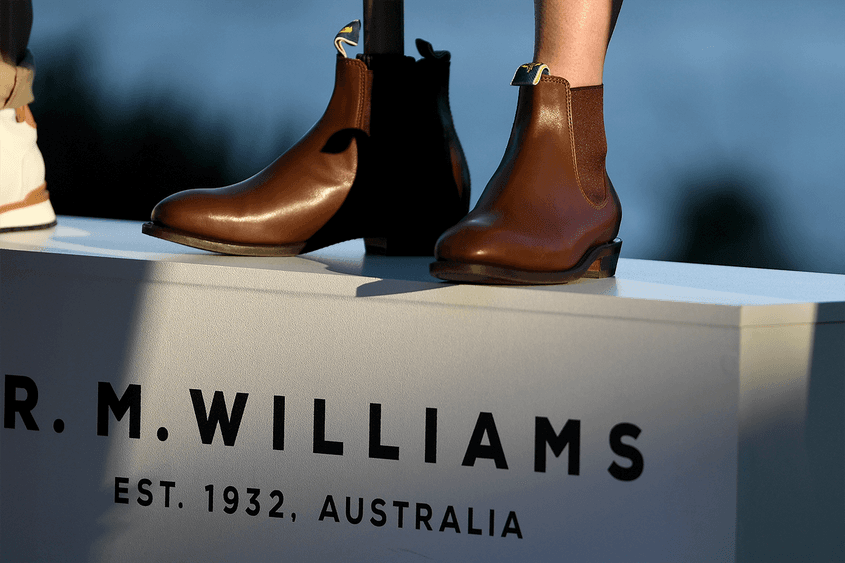
Photo: AAP Image/Bianca De Marchi


In an era of supply chain fragility, a struggling Australian fashion & textiles sector, geopolitical instability, and growing scrutiny of globalised production, a new strategy aims to strengthen Australian manufacturing.
Launched in March 2026, The National Manufacturing Strategy for Australian Fashion and Textiles 2026–2036 emerges in response to the reality that approximately 97 per cent of clothing and textile products consumed in Australia are manufactured offshore. Developed by the Australian Fashion Council (AFC) in partnership with R.M.Williams, it is the first national roadmap aiming to rebuild capability across the textile sector.
The Legacy of Economic Reform
Australia’s reliance on offshore manufacturing did not happen overnight. It can be partially traced back to economic reforms introduced under the Hawke and Keating governments in the 1980s and 1990s. These reforms reduced tariffs and opened Australia up to global trade, making imported goods cheaper and more accessible.
While these changes improved efficiency in some areas of the economy, they also led to the decline of labour-intensive industries like textiles and clothing. Over time, factories closed, production moved offshore, and critical skills were lost. More than 30 years later, the sector is still dealing with the long-term effects of these policy decisions.
A Coordinated National Response: The National Manufacturing Strategy
The Strategy is the outcome of extensive, year-long industry consultation, drawing on input from more than 300 stakeholders across 14 national forums. The consultation highlighted an increasing consensus within the sector that, without targeted intervention, Australia risks further erosion of its manufacturing base.
Rather than competing with low-cost overseas production, the Strategy focuses on Australia’s strengths: high-quality natural fibres such as Australian wool and cotton, strong design capabilities and emerging advanced manufacturing technologies. It aims to rebuild domestic manufacturing, strengthen sovereign capability, and support skilled jobs.
Closing the ‘Missing Middle’
One of the key challenges identified within the industry is the lack of domestic fibre processing and yarn spinning — often referred to as the ‘missing middle’ of the supply chain. Although Australia is a major producer of wool and cotton, these raw materials are typically processed overseas and returned as finished goods at a higher cost.
Exported wool since the 1980s has resulted in an annual loss of approximately $2.6 billion for the fashion industry. Rebuilding this part of the supply chain is seen as essential to enhancing value locally and improving supply chain resilience.
The Strategy’s three pillars for change
The Strategy is built around three key pillars: activating demand, securing the workforce, and accelerating advanced manufacturing.
The first pillar, demand, is identified as the most immediate lever for change. Without steady demand, manufacturers cannot invest in new technology or workforce development. Government procurement is seen as a critical opportunity to support local production.
“One of the biggest things that the government already does today is it buys lots of garments and footwear,” said R.M.Williams Chief Operating Officer Tara Moses. “We want to make government procurement more focused on supporting local manufacturing.”
The second pillar looks at workforce development. The sector faces a growing skills shortage, with a median workforce age of 57 and declining numbers of skilled workers in areas like sewing and textile production. At the same time, the industry has strong female representation, with women making up 58 per cent of manufacturing roles.
“This is a serious economic blueprint for communities,” said Matt Burnell MP, Co-Chair of the Parliamentary Friends of Australian Fashion & Textiles. “It supports skilled jobs, strengthens regional manufacturing, and creates clearer pathways for women into trades and long-term careers.”
However, lower wages and outdated perceptions of the industry remain barriers to attracting new workers.
The third pillar focuses on advanced manufacturing. Rather than competing on price, the Strategy promotes investment in modern machinery, automation, and digital technologies. These tools can improve productivity, support sustainable practices and enable high-quality production at scale.
Economic Potential and Policy Challenges
According to modelling by RMIT University and RPS, full implementation of the Strategy could increase the sector’s manufacturing value from $2.6 billion to $2.9 billion by 2030–31. It could also generate $1.4 billion in economic benefits and create more than 1,000 skilled jobs.
Despite this potential, the success of the Strategy will depend on strong coordination between industry and government. While it aligns with national initiatives such as the ‘Future Made in Australia’ agenda, long-term commitment and investment will be critical.
A Shift Toward Resilience
Ultimately, the Strategy proposes a practical roadmap for rebuilding and developing parts of the fashion and textiles supply chain while addressing deeper structural issues. It is attempting to set a direction for a more balanced, future-focused industry—one where more value, skills, and opportunities remain onshore.
Rebuilding local manufacturing holistically will require resilience, security, substantial financial investments over many years, a circular-economy agenda, and long-term sustainability.
Nina Gbor is the Director of the Circular Economy & Waste Program at The Australia Institute.
Related Articles
Election landslides aren't legacies, but a 25% gas tax could define Albanese's
The decisions made by Anthony Albanese in the next month will likely define Labor’s legacy for decades to come. Surging energy prices give the PM a unique opportunity to tax the gas industry, fund the services Australians are crying out for, improve the budget bottom line and expose the shallowness of Pauline Hanson’s support for ‘ordinary Australians’.