Renewables are the cheapest form of electricity generation, and this is being highlighted by the fact that soon electricity will be free for 3 hours a day.
Wed 5 Nov 2025 06.00
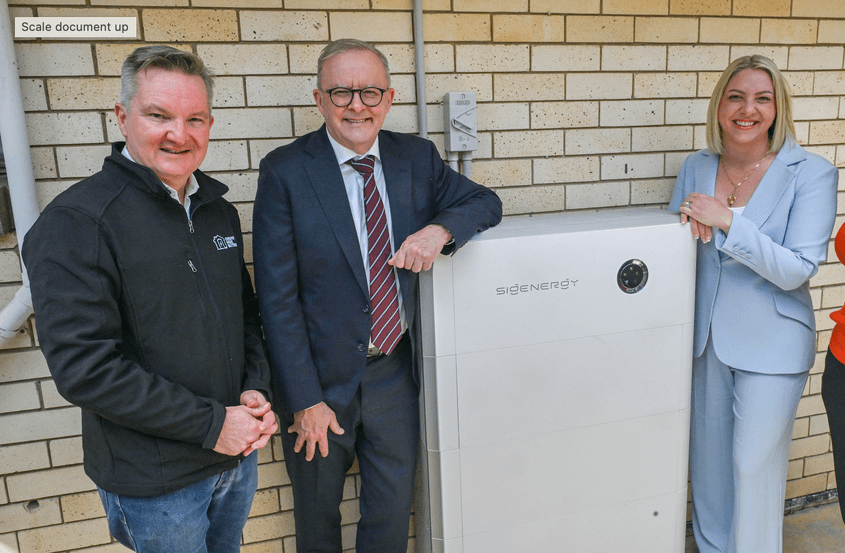
Photo: AAP Image


The Climate Change and Energy Minister Chris Bowen has announced that he will change the default market offer to force power companies to offer 3 hours of free electricity in the middle of the day from next July.
This will initially be for NSW, southeast Queensland, and South Australia. It will be available to all households who have smart meters.
Solar power is producing an abundance of electricity in the middle of the day, pushing down electricity prices. The wholesale price often goes negative around noon. That means generators are paying retailers to take electricity.
Households wanting to take advantage of this could schedule to run their dishwashers, washing machines, dryers and hot water systems when free electricity is available. The government estimates this could save up to $800 a year.
Making electricity free in the middle of the day will encourage households to shift their demand for electricity to when there is this glut of supply, and away from times of peak demand, usually in the late afternoon and evening.
This is called load shifting and it will not only save people money because they are “buying” electricity when it is free, but also because it will reduce peak demand in the afternoons and evenings, meaning less generating capacity needs to be built.
Importantly, this will mean the benefit of solar power will be extended to people who aren’t able to instal solar panels, perhaps because they live in an apartment, or they rent.
This also highlights that renewables are the cheapest form of new generation. While electricity prices have increased recently, that has been because of the increase in fossil fuel prices, particularly gas, and the increasing costs with running a fleet of old clapped-out coal generators. The slow roll out of renewables is also adding to prices.
This great decision by Chris Bowen is spreading the benefits of the cheapest form of generation. But the Minister could go further. Australia Institute research showed in 2023 around 9% of utility scale renewable generation was wasted, or “curtailed”.
This is when the Australian Energy Market Operator instructs solar farms to disconnect from the grid because of an oversupply of electricity, usually in the middle of the day.
Instead of wasting this electricity it could be funnelled into residential off-peak hot water systems. Some of this might start to happen by making electricity free in the middle of the day.
Previously off-peak hot water would turn on in the middle of the night when inflexible coal-fired generators would need to keep running even though demand was low. But now the off-peak period is the middle of the day.
Another great load shifting solution is through commercial buildings. These buildings use large amounts of electricity to heat themselves in winter and cool themselves in summer. Small changes in these buildings commercial air conditioners could shift electricity use to match the peak in the middle of the day and reduce demand in the evening when demand is high.
For example, if it is forecast to be a hot day a commercial building could lower the internal temperature by 1 degree from the morning to early afternoon and then allow the temperature to increase back to normal over the rest of the afternoon.
Renewable electricity is here to stay. Not because it is clean but because it is cheap. But the transition to renewables means we have to think differently to how we have done things in the past. If we do, not only will we substantially reduce emissions, but we will also save billions of dollars.
Chris Bowen and the Federal Labor Government should be congratulated for making electricity free in the middle of the day. But they should also go further and continue to spread these savings as widely as possible.
New South Wales is the first state in Australia to ban new coal mines. The State Government announced on Friday that it will no longer consider applications for new mines or allow new coal exploration, while extensions to existing mines will still be considered.
The Reserve Bank’s decision to raise interest rates this week was a double whammy for Australians struggling with petrol price increases in the past month that have already cost them more than the impact of the rate rise.
In February the unemployment rate rose from 4.1% to 4.3%, providing further evidence the Reserve Bank misread the economy when it raised rates in both February and this week.