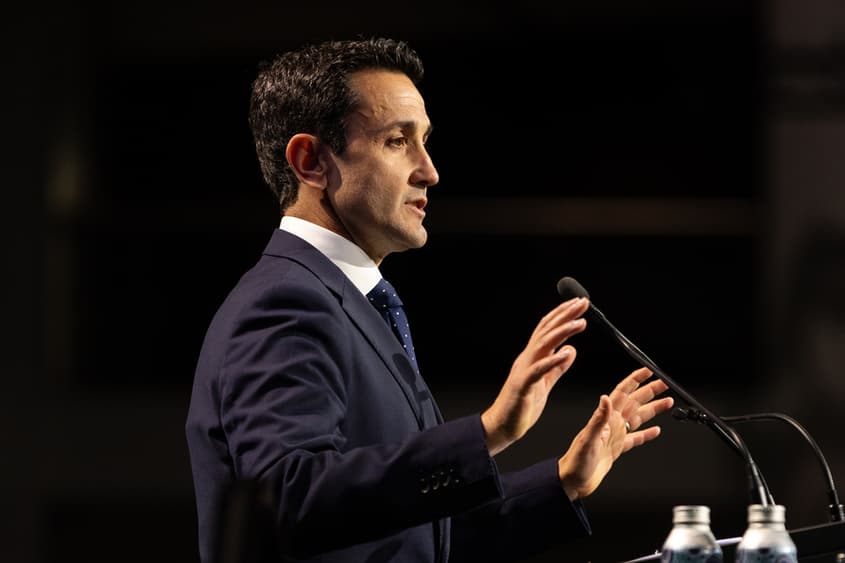
The latest update from the department of industry shows that the September quarter in 2025 saw Australia’s highest volume of thermal coal exports, ever. it is a remarkable comeback for thermal coal after China re-established imports.
Wed 4 Feb 2026 10.00

Photo: AAP Image/Lukas Coch


It feels like a long time ago, but late last year in Brazil, we learned that the Australian Government lost its bid to host the 2026 COP31 climate conference in Adelaide. Instead, the conference will be held in Turkey.
As a consolation prize, Australia’s energy minister Chris Bowen will play a big role in the event. As “President of Negotiations” Bowen will be in a central position and able to set a certain tone or focus for the event.
According to the Guardian, Bowen said “the fact Australia was itself a major exporter of fossil fuels meant it had “credibility” when it came to lobbying petrostates to do more”.
This doesn’t make a lot of sense: surely Australia would have more credibility in this space if it were actually reducing fossil fuel exports?
If you had to find a motivational speaker for a gambling addicts group, would you bring in:
(a) a reformed addict who gave it up or
(b) an active punter who is betting more than ever before?
If you answered (b) then Australia is the country for you.
The latest update from the department of industry shows that the September quarter in 2025 saw Australia’s highest volume of thermal coal exports: EVER.
While metallurgical coal has been on the decline, it is a remarkable comeback for thermal coal after China re-established imports. Increasing supply of coal into the market helps to prolong its use, bringing the price down and delaying climate action in other countries.
And in the longer term, it’s a pointless hill to die on. Both China and India, Australia’s core thermal coal export destinations, reported reductions in coal power use for the first time in 52 years, in 2025. Once this trend really kicks in, Australia’s fossil fuel subsidies will become bailouts for a collapsing fleet of coal mines that should’ve been shut a long time ago.
Somehow, there is still a massive pipeline of new coal mining projects in Australia – 42 of them, to be precise. We recently found that “The 42 new coal projects combined could extract 335 million tonnes per year”.
If Bowen wants credibility at COP31, he’s going to have to take the first steps towards a controlled wind down of coal exports, for the sake of the customers and the communities around these coal projects.
New South Wales is the first state in Australia to ban new coal mines. The State Government announced on Friday that it will no longer consider applications for new mines or allow new coal exploration, while extensions to existing mines will still be considered.
Advertisement

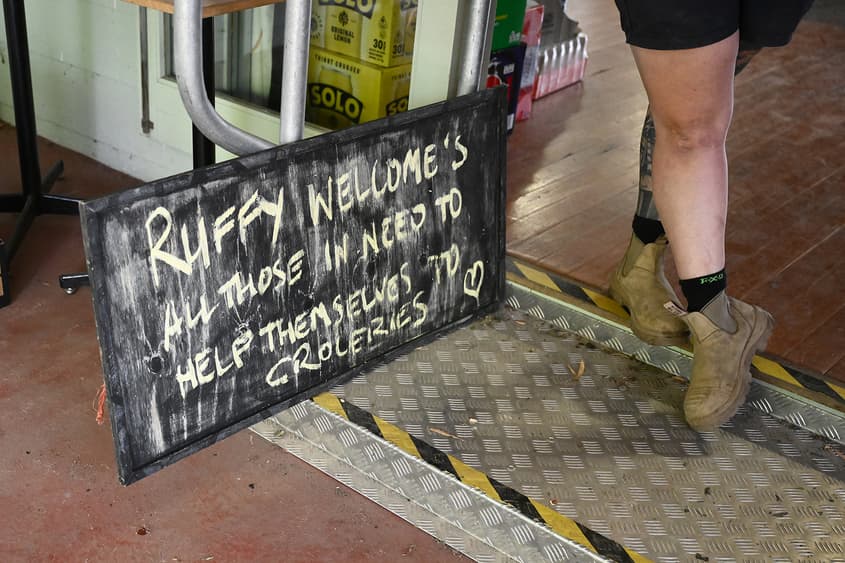
Australia is already paying the price of climate change. The evidence appears almost daily on the national emergency map. Just this week alone, major flooding has inundated communities in Queensland, with homes and businesses flooded in Bundaberg. Flooding across the Northern Territory has forced evacuations in remote communities.
The Federal Government is facing calls to intervene and stop the expansion of a central Queensland coal mine that environmental groups have labeled a “carbon bomb”.